Original Story
The Real Kraken Was Bigger Than a School Bus and Probably Hunted Mosasaurs. Scientists Just Found the Proof.
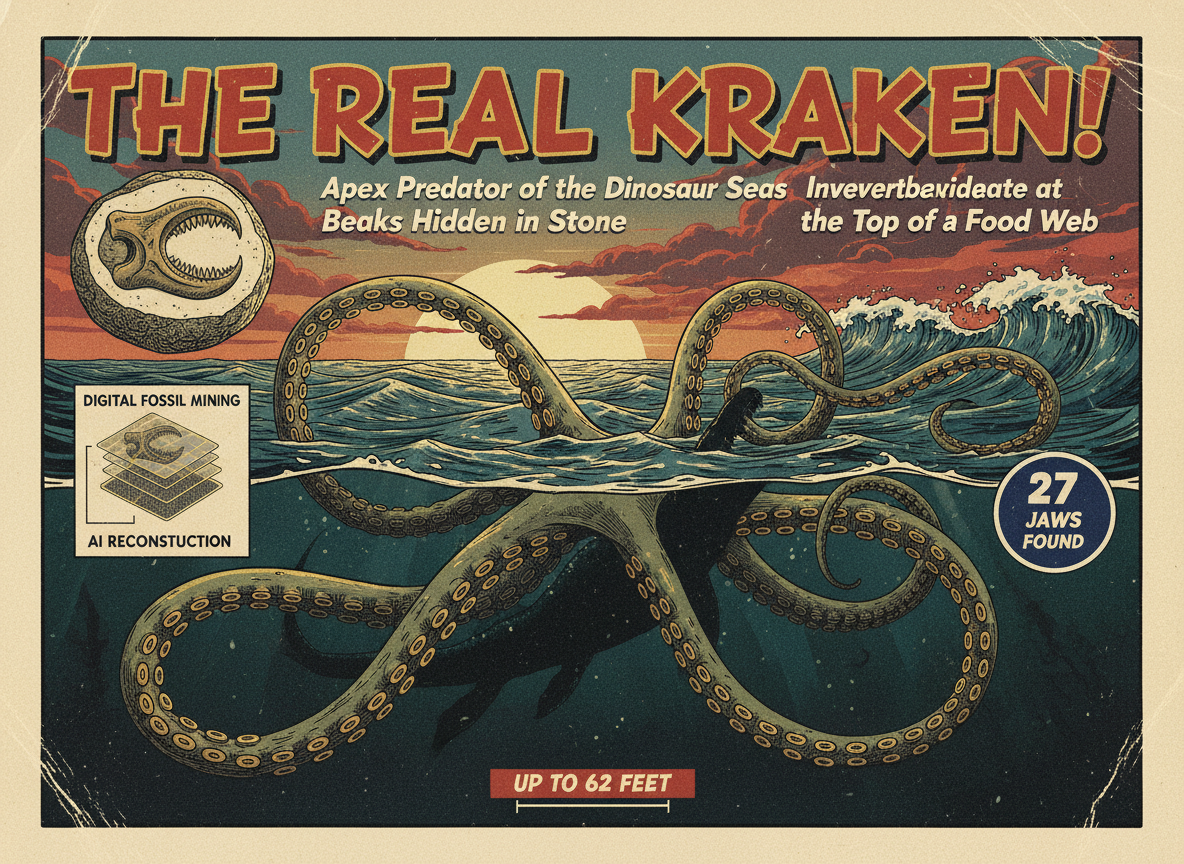
A study published April 23, 2026, in the journal Science has confirmed that ancient octopuses up to 62 feet long — as large as a sperm whale, roughly six times the size of an elephant — were apex predators in the oceans of the Late Cretaceous period, between 100 and 72 million years ago. These were not just big octopuses. They were most likely the largest invertebrates that have ever existed, and they shared their ocean with mosasaurs, plesiosaurs, and sharks — the vertebrate giants that scientists previously assumed ran the top of the ancient food chain. The species is named Nanaimoteuthis haggarti. It was real. And almost nobody knew it existed until a team at Hokkaido University in Japan figured out how to read its bones from inside solid rock.
Octopuses do not fossilize easily. Most animals leave bones behind when they die. Octopuses — soft-bodied, no shell, no skeleton — leave almost nothing. This is why the history of octopus evolution has long had enormous gaps. You cannot study what does not preserve.
What octopuses do have, however, is a jaw. It is hard, beak-shaped, roughly parrot-like, and capable of surviving geological time inside a rock. The jaw is the one piece of octopus anatomy that leaves a reliable trace in the fossil record. For most of paleontology’s history, that was still not enough, because the jaws were difficult to extract from the dense rocks called concretions that form around organic material on the seafloor. Nobody had a good way to see inside them without destroying the specimen in the process.
Lead researcher Yasuhiro Iba of Hokkaido University solved this problem more than a decade ago using a technique his team calls “digital fossil mining.” They cut concretions into thin slices, photograph the cross-sections at high resolution, and use an AI model to stitch the slices into three-dimensional reconstructions of whatever is hidden inside. The result is a complete fossil — shape, structure, wear patterns — without physical destruction of the specimen.
When Iba’s team ran the technique on a collection of large concretions from northern Japan and Vancouver Island in Canada, they found beaks. Lots of them. Twenty-seven jaws from two related species, spanning a time range of 100 to 72 million years ago.
How Big Were They?
Researchers estimated body size by comparing the ancient jaw dimensions to the known proportional relationship between jaw size and body length in modern octopus species. The math produced numbers that surprised even the researchers.
Nanaimoteuthis haggarti, the larger of the two species, came in at somewhere between 22 and 62 feet in estimated total length. The upper end of that range is roughly the length of a sperm whale. A closely related species, Nanaimoteuthis jeletzkyi, reached between 9 and 25 feet. For comparison, the modern giant squid — which most people consider the largest invertebrate alive — tops out at around 39 feet, and the largest known modern octopus species rarely exceeds 14 feet.
The jaws themselves carried additional clues. The wear patterns on the fossilized beaks were severe — about 10 percent of the total jaw length had been worn away in the largest specimens, more than researchers typically see in modern octopuses that eat hard-shelled prey. These animals were regularly crushing bones and shells. They were eating large, hard things. Things that might include the armor of ammonites, the shells of sea turtles, and, potentially, the bones of mosasaurs and other large marine reptiles.
Some paleontologists not involved in the study noted that size estimates based on jaw-to-body proportions carry inherent uncertainty, and that the lower range of the estimate — around 22 feet — may be more representative of typical adults. Lead author Iba acknowledged the uncertainty but said the jaws are unambiguous in demonstrating these were enormous, powerful, apex-level predators.
What This Changes
For roughly 370 million years, the standard model of ocean ecosystems assumed large vertebrates — fish, sharks, marine reptiles, whales — ran the top of the food chain. The Nanaimoteuthis findings push back on that assumption directly. “These findings revise the view of the Cretaceous ocean as a world dominated only by large vertebrate predators,” Iba told Live Science. “Their existence changes how we view ancient oceans. Instead of ecosystems dominated solely by vertebrate predators, we now see that giant invertebrates such as octopuses also occupied the very top of the food web.”
The Kraken is one of the oldest sea-monster legends in Western culture, describing a massive, many-armed creature capable of pulling ships beneath the surface. Sailors have been telling stories about it since at least the 12th century. As of April 23, 2026, the creature those stories were describing existed. It was just extinct, and it hunted during the age of dinosaurs.
Sources: Science — Ikegami, Mutterlose, Iba et al., New Fossil Evidence for Colossal Cretaceous Octopuses (April 23, 2026) — NPR — A Real-Life Kraken Stalked the Seas of the Late Cretaceous (April 24, 2026) — National Geographic — Jaw Fossils Suggest a 60-Foot Octopus Was the Kraken of the Cretaceous (April 2026) — Live Science — Kraken Octopus That Lived at the Time of the Dinosaurs Was a 62-Foot-Long Apex Predator (April 23, 2026) — ScienceDaily — Giant Octopuses May Have Ruled the Oceans 100 Million Years Ago (April 24, 2026) — MSN / Reuters — Scientists Discover Massive Kraken-Like Octopus That Roamed Seas in Dinosaur Era (April 2026) — Unexplained Mysteries — The Real-Life Kraken: Whale-Sized Giant Octopuses Actually Existed (April 24, 2026)
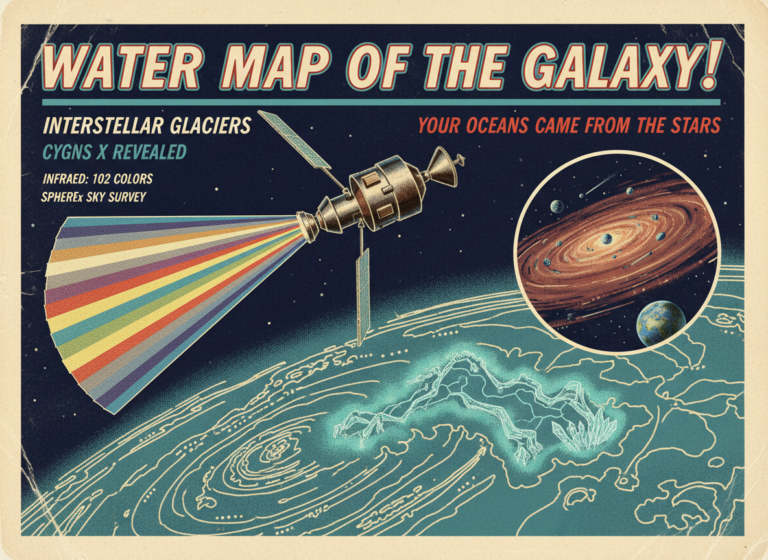
NASA Has Mapped the Water in the Galaxy. The Ocean Beneath Your Feet Came From Out There.
A study published in The Astrophysical Journal on April 15, 2026, based on data from NASA's SPHEREx mission, has produced the first…
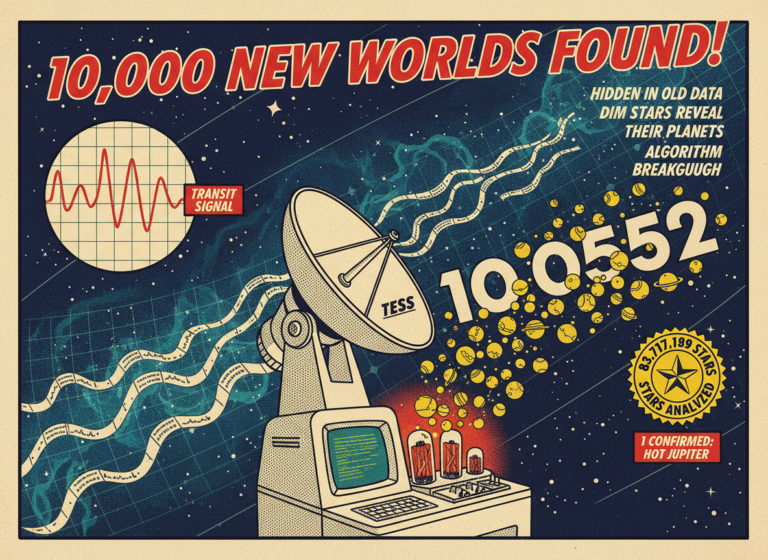
A Machine Learning Algorithm Just Found 10,000 Alien Planets Nobody Had Seen Before. They Were Hidden in Data We Already Had.
The current official count of confirmed exoplanets — planets orbiting stars other than our sun — sits at roughly 6,300. It took…
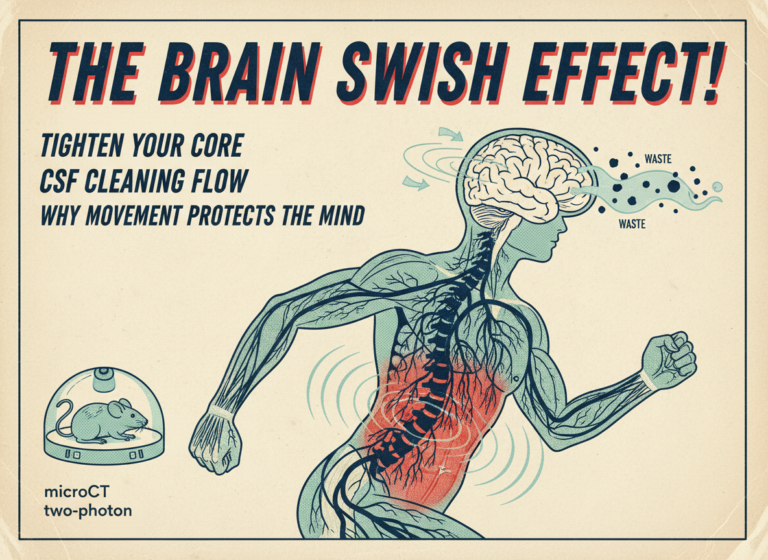
Every Time You Tighten Your Core, Your Brain Gently Swishes Around. That Might Be Keeping You Sane.
When you tighten your abdominal muscles — whether you are walking, standing up from a chair, or doing anything that engages your…
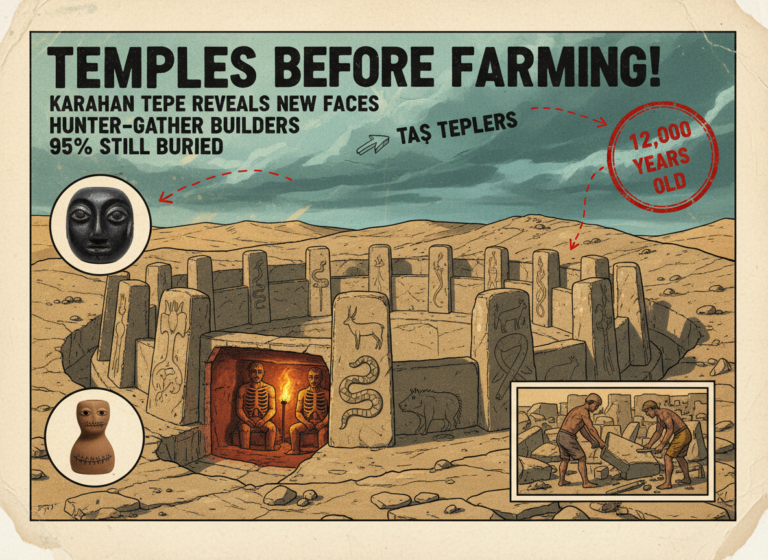
They Built a Temple Complex Before They Had Farming, Writing, or Pottery. New Finds at Karahan Tepe Just Made the Mystery Bigger.
Fresh discoveries at a 12,000-year-old site in Turkey called Karahan Tepe, the possible earliest village in human history, have uncovered more carved…