Original Story
Star Wars Got It Right. Planets With Two Suns May Actually Be the Norm, Not the Exception.
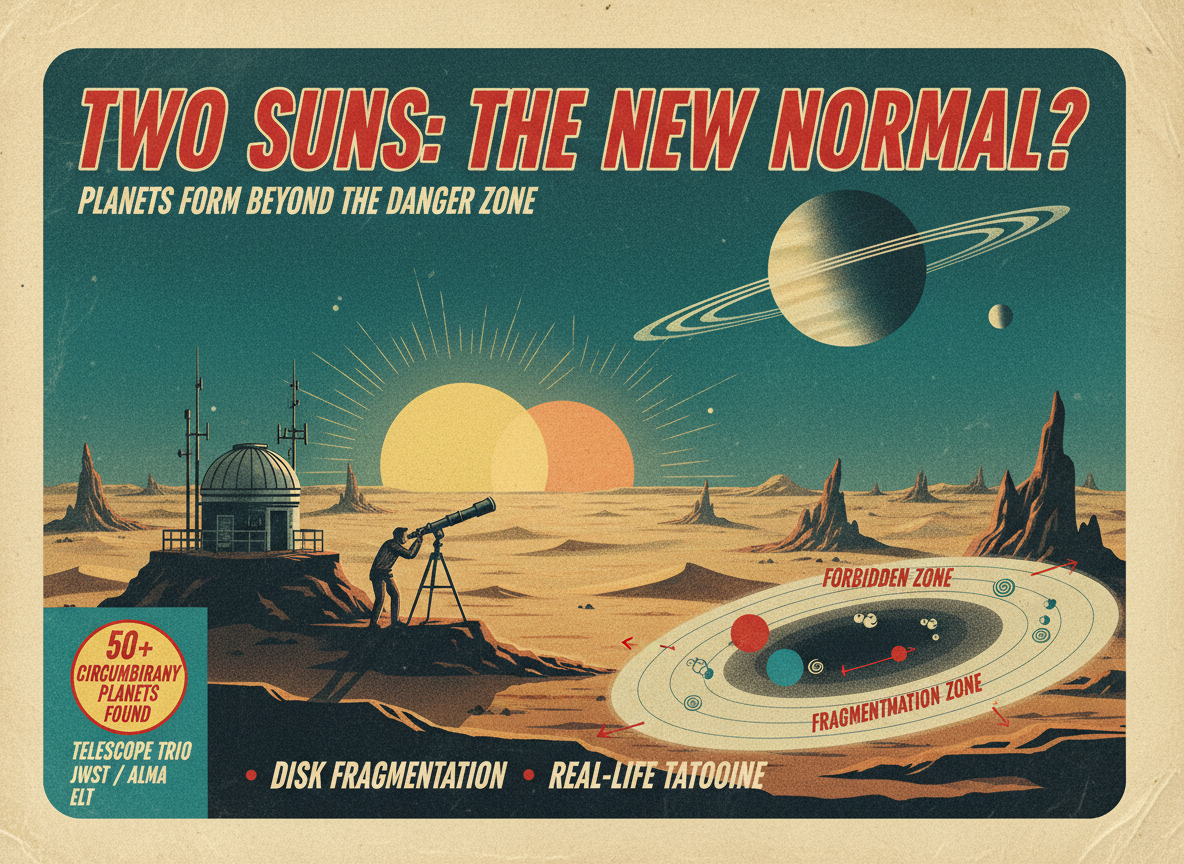
For most of the history of astronomy, the assumption was that solar systems like ours — one star, one collection of orbiting planets — were the standard model. Binary star systems, where two stars orbit each other, were considered hostile environments for planet formation. The gravitational tug-of-war between two stars, it was thought, would churn up the surrounding disk of gas and dust and prevent stable planets from ever taking shape. Now a study published in Monthly Notices of the Royal Astronomical Society by astrophysicists at the University of Lancashire has turned that assumption around. Not only can planets form around binary stars, the research suggests they may actually form more easily and in greater numbers in the outer regions of binary systems than around single stars like our sun. Real-life versions of Tatooine, Luke Skywalker’s two-sun home planet in Star Wars, may be far less rare than anyone imagined.
First, the scale of the problem the new study addresses.
Binary star systems are not a small category of cosmic curiosity. Roughly half of all sun-like stars in the Milky Way are thought to be in binary or multi-star systems. That means the standard single-sun model that our entire astronomical framework is built around may describe a minority of planetary environments, not the majority. If planets form easily around binary stars, that has immediate implications for how many worlds might exist in the galaxy, what fraction of them might be in habitable zones, and how the search for life beyond Earth should be prioritized.
The previous assumption — that binary stars are hostile to planet formation — was based on reasonable physics. When two stars orbit each other, they generate complex gravitational fields that affect the disk of gas and dust surrounding them. In the inner regions close to the stars, that gravitational complexity creates what the new research calls a “forbidden zone”: a region where competing forces prevent stable orbits from establishing and where any material trying to coalesce into a planet gets torn apart before it can get started.
This part of the old assumption turns out to be correct. The inner region really is too chaotic for planets.
What Happens Beyond the Forbidden Zone
The key finding of the University of Lancashire study is what happens farther out. Lead author Matthew Teasdale and his colleagues used state-of-the-art computer simulations to model how gas disks evolve around young binary star systems over time. In the outer regions of these disks — beyond the gravitational chaos of the inner forbidden zone — the models showed something unexpected: the disk becomes gravitationally unstable and fragments rapidly.
Disk fragmentation is one of the two main proposed mechanisms for planet formation. In the standard model applied to single-star systems, planet formation happens through a process called core accretion, where small particles gradually stick together over millions of years until they accumulate enough mass to become a planet. Disk fragmentation is faster and more dramatic — when a gas disk becomes unstable, regions within it collapse directly under their own gravity, producing large planets quickly.
“Close to a binary star it’s simply too violent for planets to form,” Teasdale said. “But once you get past the danger zone, planets can form quickly and in large numbers.”
His co-author Dr. Dimitris Stamatellos added: “While planets may struggle to survive near their twin suns, further out these systems transform into dynamic planet-forming environments, suggesting that real-life Tatooines may be far less rare than we once imagined.”
What Has Already Been Found
The observational record is beginning to match this picture. Astronomers have already confirmed more than 50 planets that orbit both stars in a binary system — these are called circumbinary planets. Several have been found on wide outer orbits, exactly the zone the new study identifies as favorable. The first of these was confirmed by NASA’s Kepler Space Telescope in 2011 and was named Kepler-16b, a gas giant orbiting two stars roughly 200 light-years from Earth.
The new research suggests there should be far more of them waiting to be found. The James Webb Space Telescope, ALMA, and the upcoming Extremely Large Telescope all have the capability to look for planets in the outer regions of binary systems with greater precision than previous instruments. The new study gives those searches a specific theoretical target: look past the forbidden zone.
Whether any of those worlds orbit at a distance that could support liquid water — and the complex chemistry that makes life possible — is a question the study does not answer. But the implication is significant: billions of stars in our galaxy have a companion star. If planets form around binary systems routinely, the number of worlds out there may be far larger than any previous estimate assumed.
Star Wars got one thing right. Two suns at sunset may be someone’s everyday reality on countless worlds we have not yet found.
Sources: [Monthly Notices of the Royal Astronomical Society — Teasdale et al., The Formation of Circumbinary Planets Through Disc Fragmentation (2026). DOI: 10.1093/mnras/stag476] — Phys.org — Two Suns Are Better Than One: Planets Thrive Around Binary Stars (April 27, 2026) — Space.com — Is Tatooine the Norm? Planets May Prefer Living with Two Suns Instead of One (April 29, 2026) — BBC Sky at Night Magazine — Double Suns, More Worlds: Tatooine-Style Planets With Two Sunsets Are More Common Than Thought (April 2026) — Unexplained Mysteries — Planets Like Tatooine With Two Suns May Be the Norm, Study Finds (May 1, 2026)
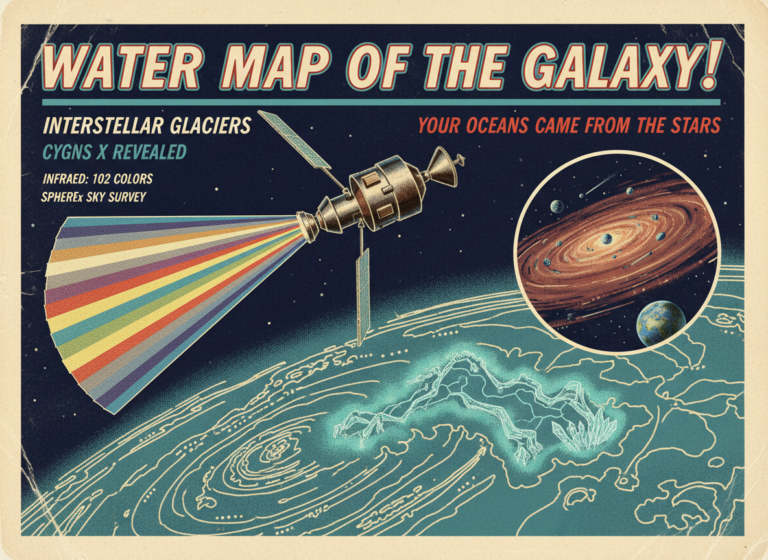
NASA Has Mapped the Water in the Galaxy. The Ocean Beneath Your Feet Came From Out There.
A study published in The Astrophysical Journal on April 15, 2026, based on data from NASA's SPHEREx mission, has produced the first…
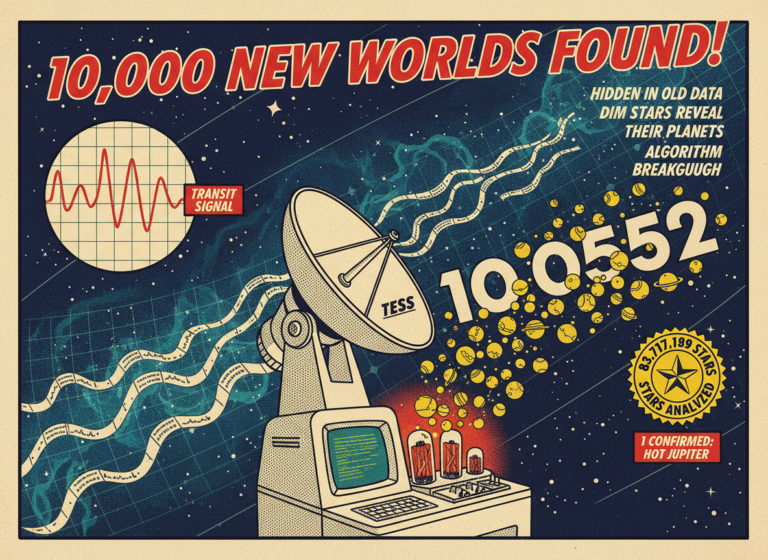
A Machine Learning Algorithm Just Found 10,000 Alien Planets Nobody Had Seen Before. They Were Hidden in Data We Already Had.
The current official count of confirmed exoplanets — planets orbiting stars other than our sun — sits at roughly 6,300. It took…
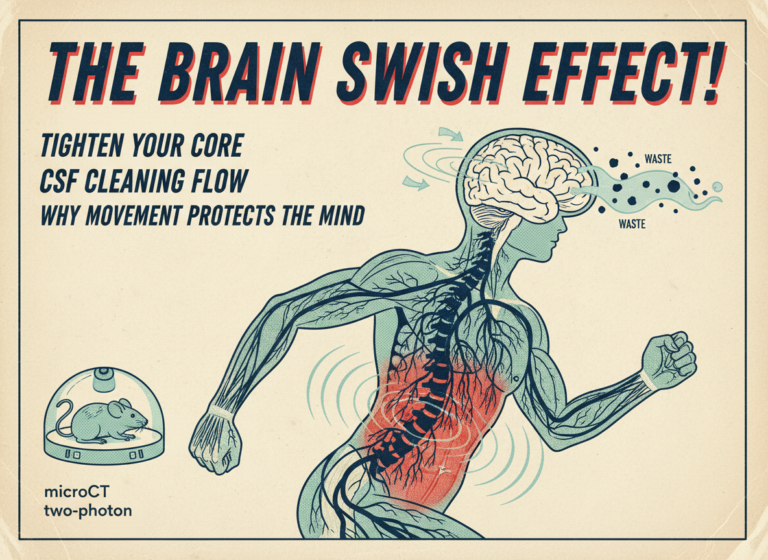
Every Time You Tighten Your Core, Your Brain Gently Swishes Around. That Might Be Keeping You Sane.
When you tighten your abdominal muscles — whether you are walking, standing up from a chair, or doing anything that engages your…
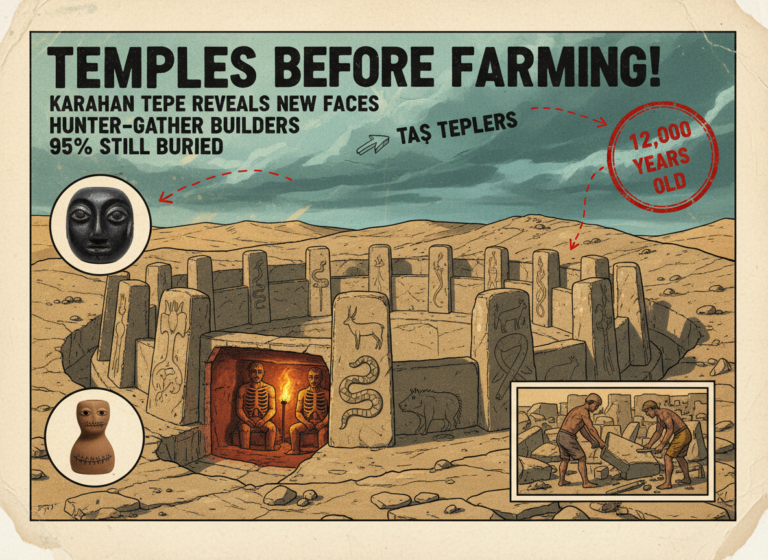
They Built a Temple Complex Before They Had Farming, Writing, or Pottery. New Finds at Karahan Tepe Just Made the Mystery Bigger.
Fresh discoveries at a 12,000-year-old site in Turkey called Karahan Tepe, the possible earliest village in human history, have uncovered more carved…