Original Story
Norway Just Unearthed the Largest Viking Coin Hoard in the Country’s History. The Detectors Never Stopped Beeping.
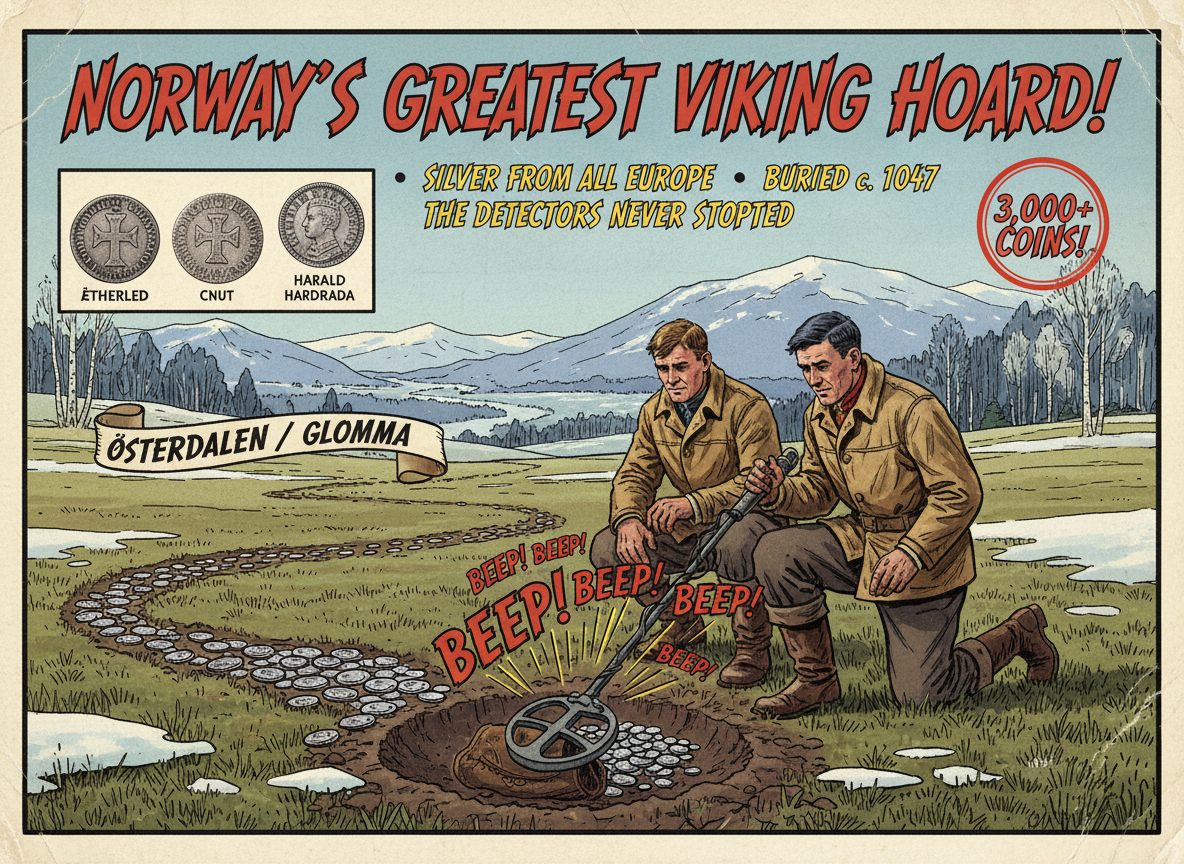
On April 10, 2026, two metal detectorist hobbyists named Vegard Sørlie and Rune Sætre swept a farm field near Rena in eastern Norway and hit a signal that didn’t stop. They pulled nineteen silver coins from the soil, immediately recognized they were on top of something significant, stopped digging, and called the archaeologists. That decision turned out to be the right one. By the time professional excavation teams joined the search the following day, the count climbed to seventy. Local archaeologist May-Tove Smiseth thought perhaps they’d reach five hundred. A week later they had passed three thousand coins — far surpassing any Viking Age hoard previously found anywhere in Norway. The find has been named the Mørstad Hoard after the farm. The detectors, as of late April, were still beeping.
The coins are silver, mostly well preserved, and cover a date range from the 980s to the 1040s CE. They come from a remarkable geographic spread: England, Germany, Denmark, Norway, Poland, and Bohemia. This diversity is not surprising to historians familiar with how money moved through the Viking world.
The Viking Age is often imagined primarily as a period of raiding — longships, warriors, plunder. That was part of it. But the Viking Age was also one of the most active periods of long-distance commercial exchange in European history. Viking traders operated routes from Scandinavia across the British Isles, along the Atlantic coast to the Iberian Peninsula, through continental Europe into the Mediterranean, and east along Russian river systems all the way to the Byzantine Empire and the Islamic world. Silver moved through all of these routes: as trade profit, as tribute, as payment for mercenary service, and occasionally as diplomatic gifts between rulers.
The coins in the Mørstad Hoard are, as numismatist Professor Svein Harald Gullbekk of the Museum of Cultural History in Oslo described them, the “euro or dollar of the Viking Age” — a hard currency that was recognized and valued across national and cultural boundaries in a way that local currencies could not match.
Why English Coins Were in a Norwegian Field
The most numerous coins in the hoard are Anglo-Saxon pennies. Several were minted under two of the most famous rulers of the era: Æthelred II — known to history as Æthelred the Unready, who ruled England from 978 to 1016 — and Cnut the Great, the Danish king who conquered England and ruled it from 1016 to 1035, also controlling Denmark and Norway at the peak of his power. The coins also include examples minted under Otto III, the Holy Roman Emperor from 996 to 1002.
The presence of these coins in inland Norway tells a story about connectivity. The farm where the hoard was found sits in Østerdalen, a valley in eastern Norway that runs alongside the Glomma river. It is not a coastal trading port. But the region was a major iron-producing area during the Viking Age, extracting iron from local bog deposits and processing it into a valuable export commodity traded across Europe. A wealthy iron merchant, or a regional lord controlling that trade, would have accumulated exactly this kind of foreign silver.
What remains unknown is why the coins were never retrieved. They were buried around 1047 CE, according to Gullbekk’s dating based on the Norwegian coins in the collection, which were minted after Harald Hardrada established Norway’s first national coinage system around 1045, following his return from years as a mercenary commander in the Byzantine Empire. Someone buried this fortune — possibly enough wealth to purchase an entire farm, based on later property records from the region — and never came back for it.
“What we know about these kinds of deposits that are found today is that they were never retrieved. For various reasons,” Gullbekk told Science Norway. “It could have been an offering to the gods, or an attempt to hide their fortune from thieves and war.”
The Coins That Almost Looked Newly Minted
The condition of the hoard has surprised even experienced researchers. The field near Rena contains very little stone in the soil, which typically means less abrasion during centuries of plowing. Many of the coins, after roughly 975 years in the ground, are sharp enough that Smiseth described them as looking almost newly minted. Some have traces of having been worn as jewelry — hung from a hole drilled through them, pressed against skin and clothing for years before being buried with the rest.
Archaeology Magazine confirmed that the coins were likely originally stored in a leather pouch, which decayed over time, allowing the coins to scatter across a zone approximately 150 meters long and 20 to 30 meters wide — which is why the detectors never stopped. The field had not previously been searched by metal detectorists. There may still be coins in it.
“This is the kind of thing that only happens once in a lifetime,” Smiseth said. She means that literally. The previous largest Viking Age coin hoard in Norway was found in 1950.
Sources: Science Norway — Norway’s Largest Viking Age Coin Hoard Has Been Discovered: Truly Exceptional (April 30, 2026) — Ancient Origins — Truly Exceptional: Norway’s Largest Viking Hoard Found With 3,000 Silver Coins (April 2026) — Live Science — The Detectors Never Stopped Beeping: Nearly 3,000 Coins Discovered in Field Are Norway’s Largest Viking Hoard on Record (April 2026) — Greek Reporter — Record Viking Coin Hoard of Nearly 3,000 Pieces Found in Norway (April 30, 2026) — Arkeonews — Unprecedented Find of More Than 3,000 Coins Becomes Norway’s Largest Viking Age Hoard (April 2026) — Nordisk Post — Norway’s Largest Viking Coin Hoard Has Been Found in Østerdalen (April 30, 2026) — Archaeology Magazine — Viking Coin Hoard Discovered in Norway (April 30, 2026)

NASA Has Mapped the Water in the Galaxy. The Ocean Beneath Your Feet Came From Out There.
A study published in The Astrophysical Journal on April 15, 2026, based on data from NASA's SPHEREx mission, has produced the first…

A Machine Learning Algorithm Just Found 10,000 Alien Planets Nobody Had Seen Before. They Were Hidden in Data We Already Had.
The current official count of confirmed exoplanets — planets orbiting stars other than our sun — sits at roughly 6,300. It took…

Every Time You Tighten Your Core, Your Brain Gently Swishes Around. That Might Be Keeping You Sane.
When you tighten your abdominal muscles — whether you are walking, standing up from a chair, or doing anything that engages your…
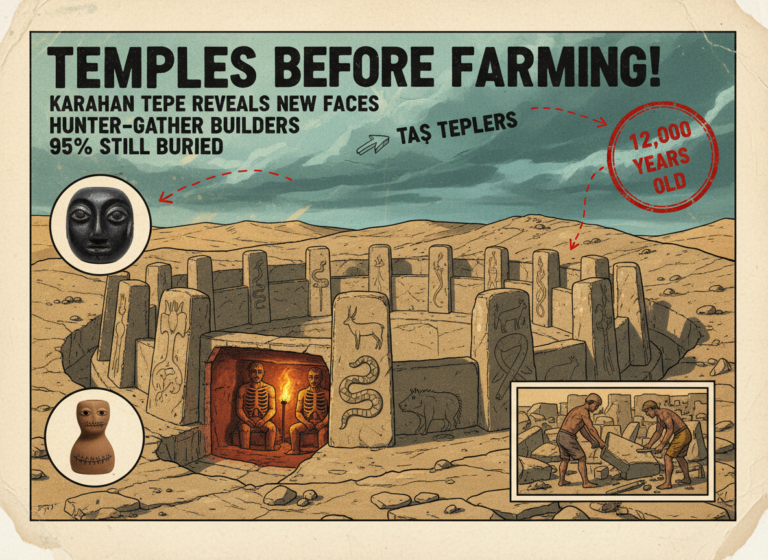
They Built a Temple Complex Before They Had Farming, Writing, or Pottery. New Finds at Karahan Tepe Just Made the Mystery Bigger.
Fresh discoveries at a 12,000-year-old site in Turkey called Karahan Tepe, the possible earliest village in human history, have uncovered more carved…