Original Story
A Giant Shadow Has Been Moving Across Mars for 50 Years and Nobody Knows Why.
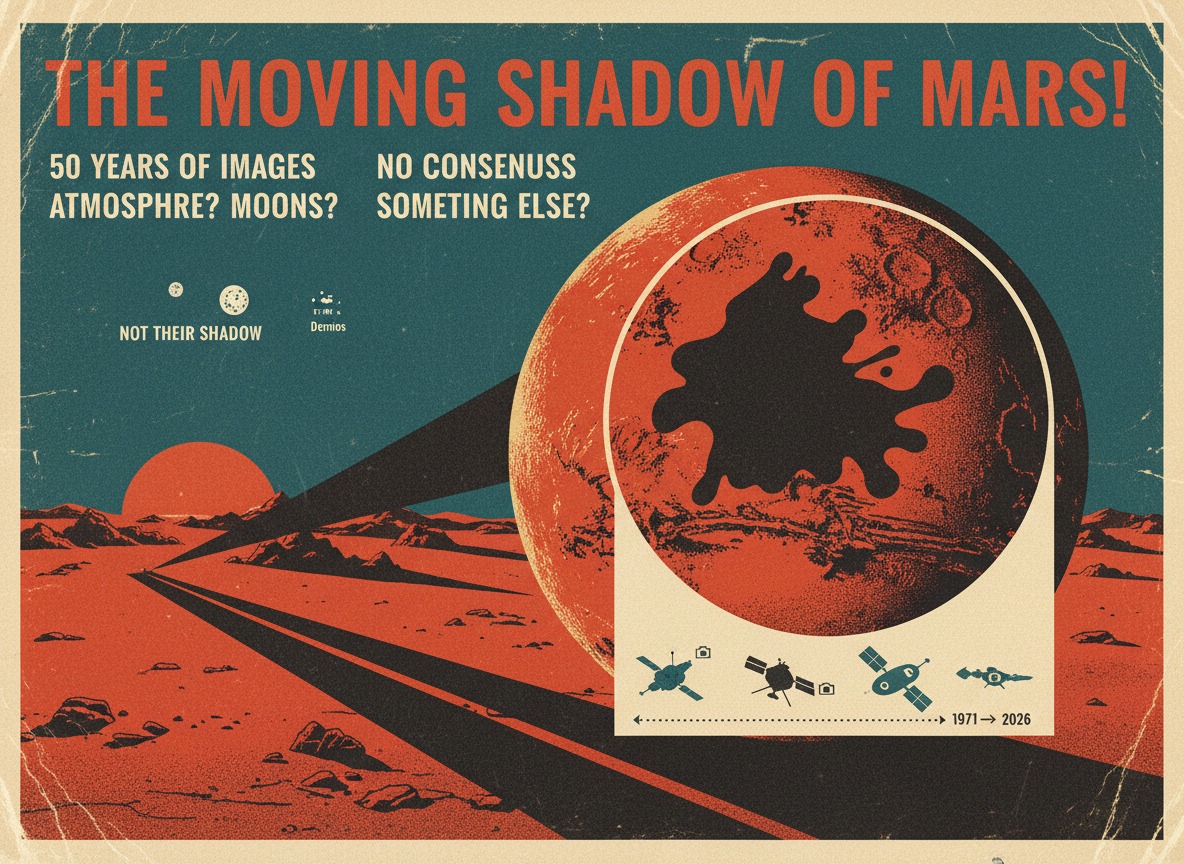
A recurring shadow phenomenon on the surface of Mars has been documented for approximately fifty years and remains unexplained. The shadow, described as giant in scale, appears periodically in imaging data from successive generations of Mars orbital missions and does not conform to the expected behavior of shadows cast by known geological features, known cloud formations, or the orbital mechanics of Mars’s two moons. The phenomenon was flagged in a forum thread on Unexplained Mysteries in April 2026 and is circulating across space-adjacent fringe communities. The underlying scientific question is genuine: what is casting it, and why does it move in the patterns that have been observed?
Mars has been continuously photographed from orbit since Mariner 9 arrived in 1971 and produced the first complete global map of another planet. Since then, orbital imaging from Viking, Mars Global Surveyor, Mars Reconnaissance Orbiter, Mars Express, and successive generations of spacecraft has built an archive of Martian surface imagery spanning decades. Large-scale shadow phenomena have been noted in this archive periodically, some explicable, some still subject to scientific discussion.
The specific shadow described in current circulation appears in multiple independent imaging datasets from different missions and different orbital inclinations, which makes a simple instrument artifact an unlikely explanation. Shadows produced by volcanic mountains such as Olympus Mons — the largest volcano in the solar system, rising roughly 22 kilometers above the surrounding plains — can stretch hundreds of kilometers across the Martian surface when the sun is at low angles, but these shadows follow predictable geometric patterns consistent with the mountain’s position and orientation. What makes the phenomenon in question notable to researchers is the apparent inconsistency between its behavior and what those known geological shadow sources would predict.
Mars has two moons, Phobos and Deimos. Phobos is large enough and close enough in its orbit to produce a genuine shadow on the Martian surface — solar eclipses caused by Phobos have been photographed from the surface by multiple rovers, including Curiosity — but its shadow is small, dark, and fast-moving across the surface, following a predictable orbital path. The shadow under discussion behaves differently.
What Makes It Strange
The scientific puzzle, as currently documented, is the persistence and mobility of the phenomenon across an observation window of approximately fifty years and across data from multiple independent imaging systems. Atmospheric phenomena on Mars do produce large shadows: dust storms can blot out sunlight across continental scales, and cloud formations in the thin Martian atmosphere can create localized shadow effects. But the documented behavior in the long-term imaging archive has features that do not reduce cleanly to these explanations, specifically the way the phenomenon’s apparent position changes across different imaging epochs in ways that researchers have found difficult to attribute to simple seasonal or atmospheric variation.
The thread on Unexplained Mysteries, logged in the Space: Astronomy and Astrophysics forum under the title “A giant shadow has been creeping across Mars for 50 years and scientists aren’t sure why,” has attracted active discussion. The linked source material from scientific and space media coverage documents that the phenomenon is being actively tracked and that no consensus explanation has emerged.
It joins a small catalog of Mars observations that persist in scientific discussion: the recurring methane spikes that Curiosity detected at Gale Crater (periodic peaks in atmospheric methane concentration with no confirmed geological or biological source), and the dust devil population that proved larger and more active than early climate models predicted. In each of those cases, the unexplained observation preceded a satisfying explanation by several years of dedicated study. In the shadow’s case, fifty years have passed.
What is casting it remains an open question in planetary science. Whether the answer turns out to be elegant, mundane, or genuinely surprising, the fact that decades of continuous imaging from one of the most studied bodies in the solar system have left a shadow unexplained is, at minimum, worth paying attention to.
Sources: Unexplained Mysteries forum — A Giant Shadow Has Been Creeping Across Mars for 50 Years and Scientists Aren’t Sure Why (April 2026) — [Space.com / Live Science — coverage of the Mars shadow phenomenon (April 2026)]
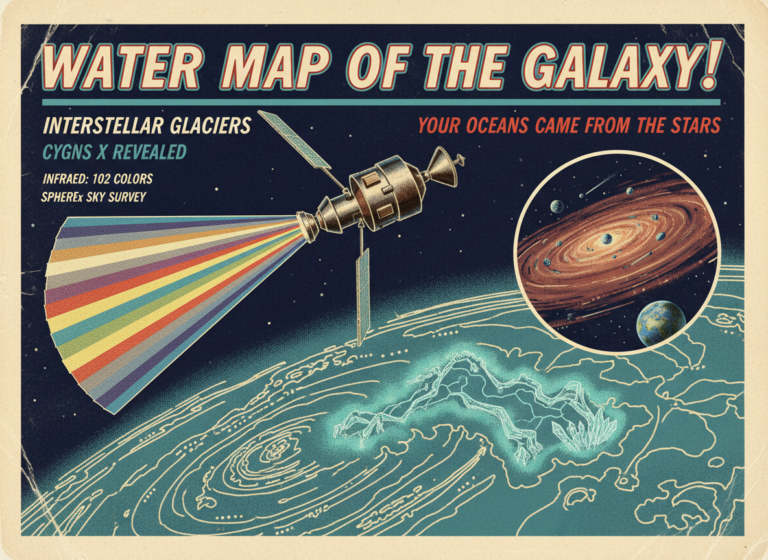
NASA Has Mapped the Water in the Galaxy. The Ocean Beneath Your Feet Came From Out There.
A study published in The Astrophysical Journal on April 15, 2026, based on data from NASA's SPHEREx mission, has produced the first…

A Machine Learning Algorithm Just Found 10,000 Alien Planets Nobody Had Seen Before. They Were Hidden in Data We Already Had.
The current official count of confirmed exoplanets — planets orbiting stars other than our sun — sits at roughly 6,300. It took…

Every Time You Tighten Your Core, Your Brain Gently Swishes Around. That Might Be Keeping You Sane.
When you tighten your abdominal muscles — whether you are walking, standing up from a chair, or doing anything that engages your…

They Built a Temple Complex Before They Had Farming, Writing, or Pottery. New Finds at Karahan Tepe Just Made the Mystery Bigger.
Fresh discoveries at a 12,000-year-old site in Turkey called Karahan Tepe, the possible earliest village in human history, have uncovered more carved…