Original Story
People Who Came Close to Death Started Dreaming of Events Before They Happened. Scientists Spent Years Studying Why.
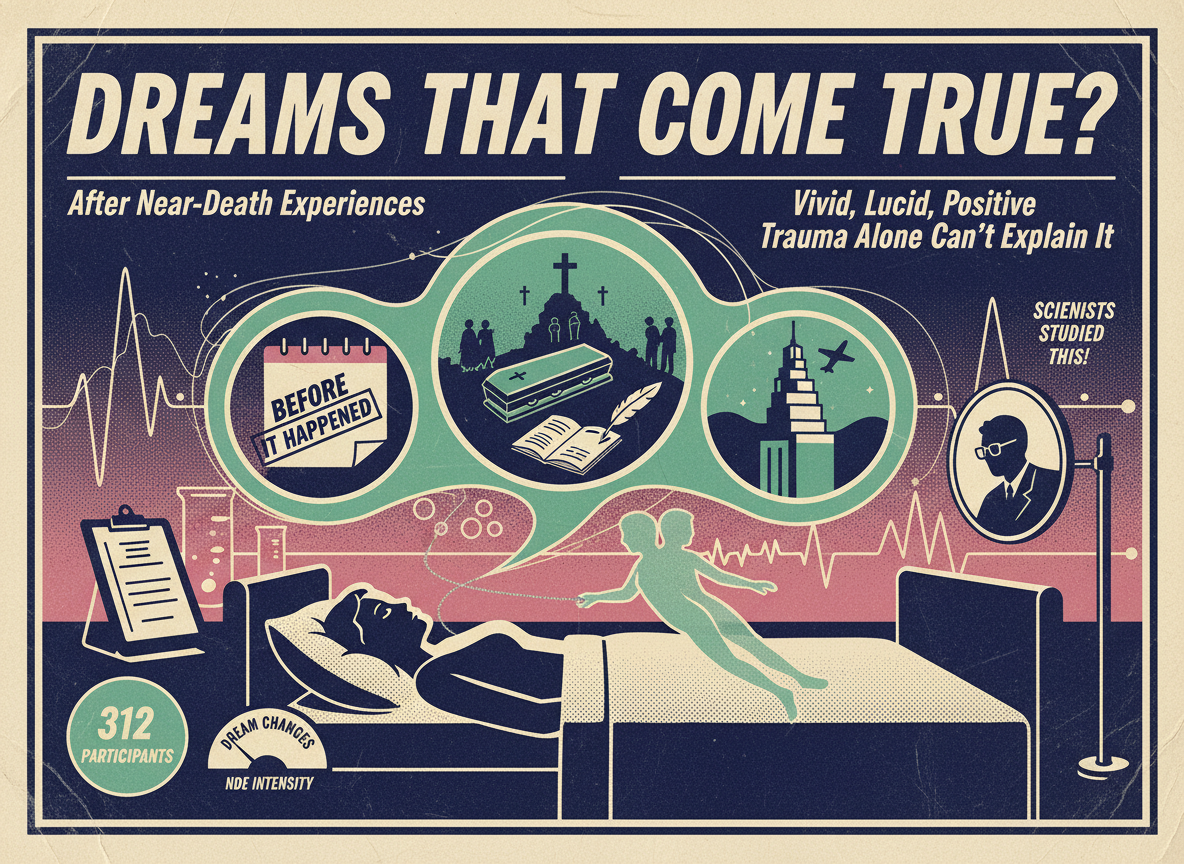
Two new studies from Nicole Lindsay, a senior psychology lecturer at Massey University in New Zealand, have produced the most comprehensive empirical portrait yet of what happens to the dream life of people who survive near-death experiences — and the results are substantially stranger than anyone anticipated. The first study, published in the journal Dreaming and surveying 312 total participants across three groups, found that people who had experienced an NDE reported significantly more vivid, frequent, emotionally intense, and positive dreams than people who had come close to death without an NDE, or people who had never faced a life-threatening situation. The second study, published in Psychology of Consciousness: Theory, Research, and Practice, documented what those changes look like in specific human terms. Some of the participants reported dreaming of events before they occurred. Some reported entering another person’s consciousness. Some reported nightly out-of-body experiences during sleep that they described as indistinguishable from waking perception.
The structure of the research was designed to isolate the NDE effect from the confounding variable that would seem most obvious: trauma. The near-death experience group had, by definition, also experienced a life-threatening event. If the dream changes were simply a consequence of that threat — a PTSD-like hyperactivation of memory and emotional processing — then the control group who nearly died without an NDE should show similar effects. They did not. When statistical controls for trauma symptoms were applied, the elevated lucid dreaming, precognitive dreaming, and out-of-body experiences during sleep tracked with the nature and depth of the near-death experience itself, not with trauma indicators. People who had more intense NDEs showed more dramatic dream changes. People who had life-threatening events without NDEs showed far fewer.
Lindsay, who completed her PhD on near-death experiences in 2018 and has been studying them since, has been careful about causal language. “It may be that a specific neurological or personality configuration may increase the likelihood of experiencing NDEs as well as other unusual conscious states such as lucid dreaming,” she has said. The research cannot confirm that the NDE caused the dream changes. It can confirm the correlation is real and that trauma alone does not explain it.
What the Participants Said
The qualitative study, titled “Outside the Matrix: Dreaming After Near-Death Experiences,” allowed participants to describe their experiences in their own terms.
One participant, referred to as Basil, said that before his NDE he could recall perhaps one dream every week or two. After it, dream recall became a nightly occurrence. He described the shift as permanent and progressive.
Others described the boundary between sleeping and waking as having become significantly more ambiguous after their NDE — not that they couldn’t tell the difference, but that the quality of awareness was more similar across the two states than it had been before. Several participants described what they called “shared consciousness” during dreams: entering the perspective of another person and experiencing their thoughts or sensations.
The precognitive dream accounts were among the most striking documented in the study. One participant described dreaming of a best friend’s funeral months before the friend died unexpectedly, including specific visual details that matched the actual service and that she had written in a journal before the event. Another described dreaming of a plane hitting a tall building roughly six months before the September 11 attacks. A third described a vivid dream of the death of Queen Elizabeth II the night before the announcement was made, which was recorded in writing before the news was public.
The researchers acknowledge the inherent limitations of retrospective self-reporting and the impossibility of controlled NDE induction. What they are more confident about is that precognitive and out-of-body dream phenomena appear consistently correlated with the depth of the NDE rather than with trauma, and that something is happening to consciousness in the aftermath of near-death experiences that current neurophysiological models do not adequately account for.
The Science Behind the Science
The research emerges at a moment of unusual institutional openness to these questions. UVA’s Division of Perceptual Studies, one of the world’s most rigorous university-based research programs studying consciousness and near-death phenomena, recently challenged a major new neurophysiological model of NDEs called NEPTUNE for failing to explain the duration, multi-sensory complexity, and lasting cognitive changes that documented NDE survivors consistently report. The debate is no longer about whether NDEs produce real changes — that question has been settled by decades of evidence. The debate is now about what kind of mechanism could produce changes this specific and this lasting.
Lindsay’s summary of where the research points: “Dreams may potentially serve as a continuation or extension of the state of consciousness accessed during the NDE.”
Sources: Journal Dreaming — Lindsay et al., Trauma or Transcendence? The Relationship Between Near-Death Experiences and Dreaming (2025) — Psychology of Consciousness: Theory, Research, and Practice — Lindsay et al., Outside the Matrix: Dreaming After Near-Death Experiences (2026) — Popular Mechanics — Scientists Studied the Dreams of People Who Nearly Died. What They Found Is Incredible (April 17, 2026) — Indian Defence Review — People Who Cheated Death Are Dreaming Things That Shouldn’t Be Possible — Augusta Free Press — UVA Researchers Telling Us More About Near-Death Experiences (April 18, 2026) — Massey University — Near-Death Experience Study Achieves International Recognition — Anomalist — April 22, 2026 update referencing the Popular Mechanics piece and UVA study
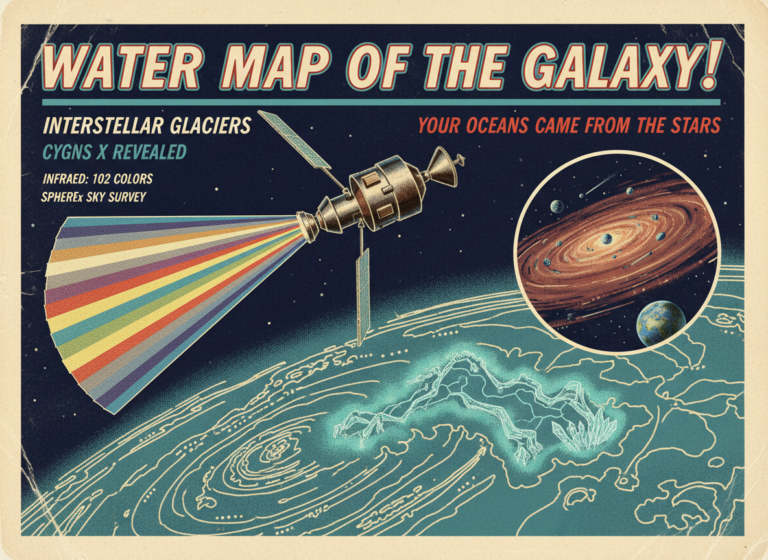
NASA Has Mapped the Water in the Galaxy. The Ocean Beneath Your Feet Came From Out There.
A study published in The Astrophysical Journal on April 15, 2026, based on data from NASA's SPHEREx mission, has produced the first…
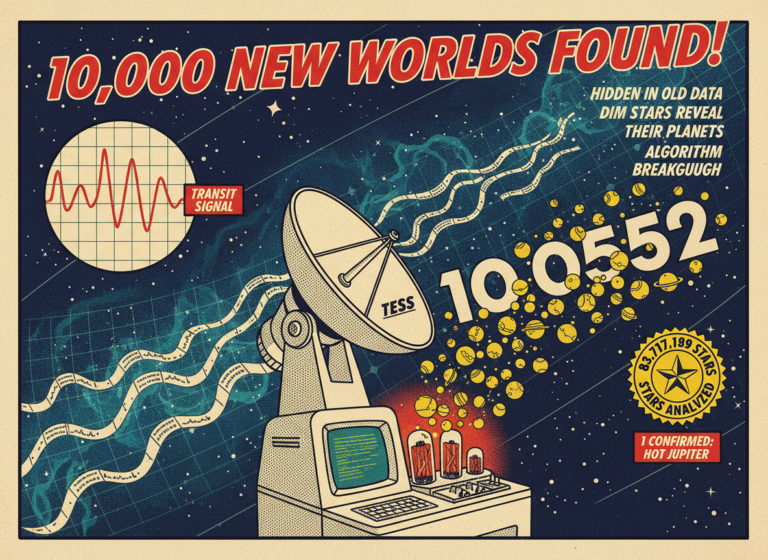
A Machine Learning Algorithm Just Found 10,000 Alien Planets Nobody Had Seen Before. They Were Hidden in Data We Already Had.
The current official count of confirmed exoplanets — planets orbiting stars other than our sun — sits at roughly 6,300. It took…
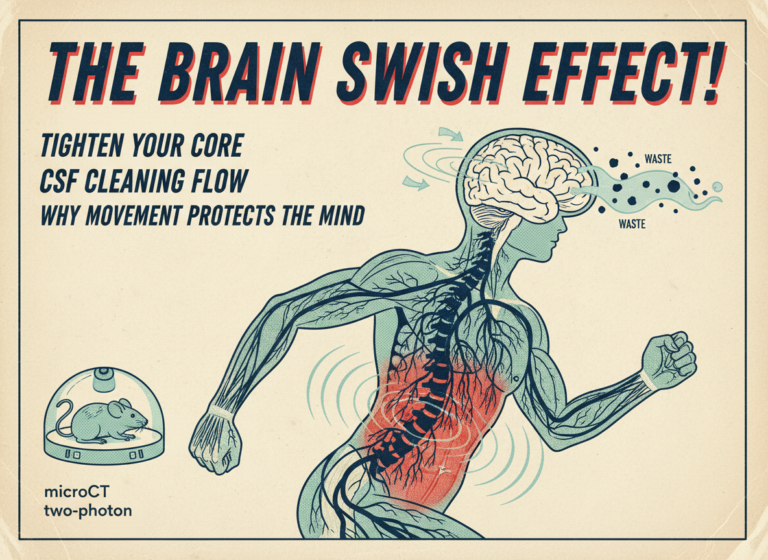
Every Time You Tighten Your Core, Your Brain Gently Swishes Around. That Might Be Keeping You Sane.
When you tighten your abdominal muscles — whether you are walking, standing up from a chair, or doing anything that engages your…

They Built a Temple Complex Before They Had Farming, Writing, or Pottery. New Finds at Karahan Tepe Just Made the Mystery Bigger.
Fresh discoveries at a 12,000-year-old site in Turkey called Karahan Tepe, the possible earliest village in human history, have uncovered more carved…