Original Story
Two Bigfoot Clusters in Two Weeks: West Virginia Railroad Workers and Three Ontario Witnesses Are All Telling the Same Story.
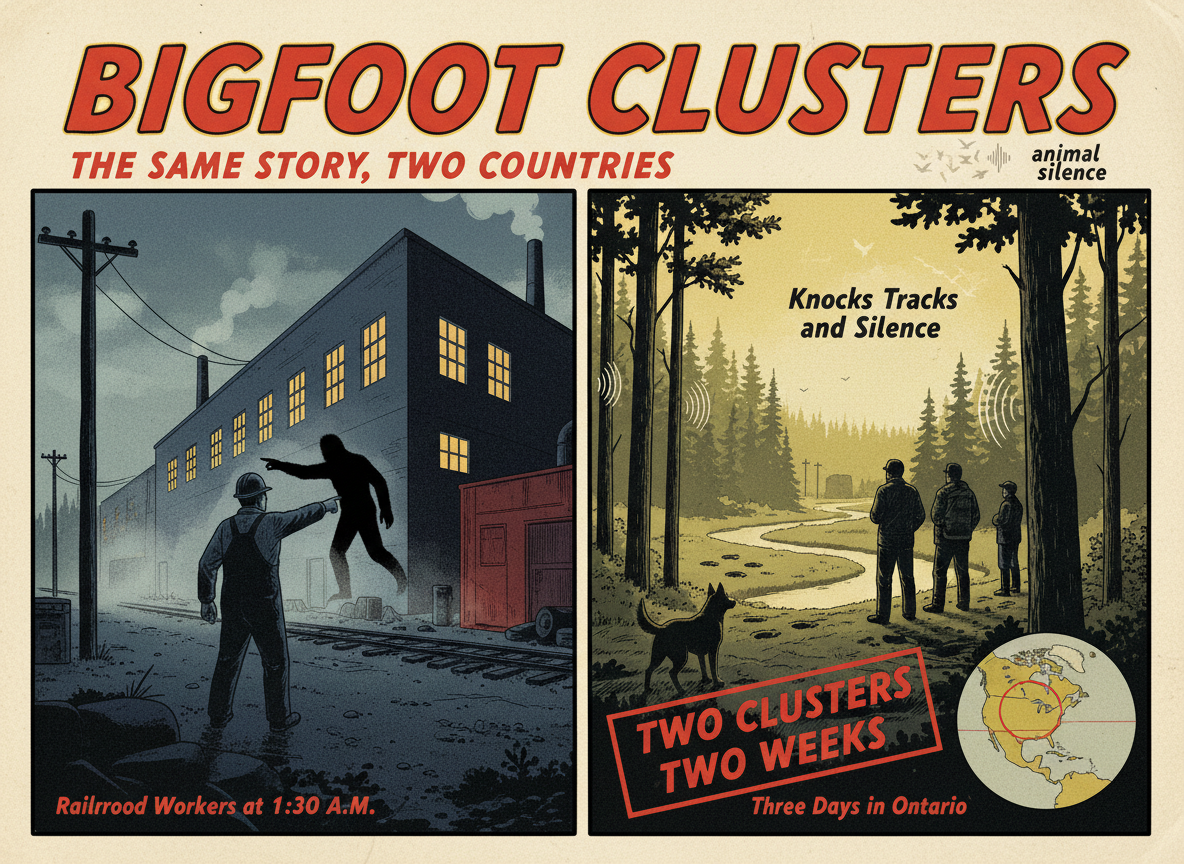
Two separate clusters of Bigfoot sightings from two different countries, both within the last three weeks, have landed on the Bigfoot Field Researchers Organization (BFRO) and the Bigfoot Mapping Project (BMP) with enough specificity to generate attention beyond the usual social media churn. In West Virginia, two overnight industrial workers watched an eight-foot-tall figure darker than the surrounding night move along a building at approximately 1:30 a.m. In southwestern Ontario’s Chatham-Kent municipality, three different witnesses on three consecutive days in early April reported bipedal figures between seven and eight feet tall, including footprints, wood knocks, and an abrupt animal silence preceding one encounter. The Bigfoot Mapping Project’s creator, Scott Tompkins, stated publicly that the concentration of Ontario activity is unlike anything logged in that corridor since the mid-1970s.
The West Virginia sighting occurred during the overnight shift at an industrial plant in the community of Tabler Station. The two workers were loading railroad cars when they “looked off in the distance at a building that had a light source” and noticed a large figure moving against the backlit structure. The report was submitted to the BFRO by the girlfriend of one of the witnesses. Both workers described the figure as approximately eight feet tall and, notably, “blacker than black” — a description that recurs in Bigfoot reports from the Appalachian corridor, often attributed to the contrast a large dark figure produces against low-light industrial backgrounds. The distance was estimated at roughly 400 feet. The sighting was reported to Coast to Coast AM on April 14, 2026.
The Ontario cluster is more complex, involving three separate witnesses across three separate communities over three consecutive days.
April 3, Chatham-Kent: A seven-foot black figure was spotted at a tree line at 6:15 a.m.
April 4, Thamesville: A witness walking along the edge of a wooded area described an abrupt, unsettling silence before a creature appeared — broad-shouldered, male in appearance, covered in thick, dark cinnamon-colored hair, standing close to eight feet tall. The witness also reported wood knocks and observed footprints. Time of sighting: 5:35 p.m.
April 5, Raglan: On Easter morning at 7:30 a.m., a dog alerted its owner to a seven-foot black creature at the tree line. Wood knocks were again reported.
All three communities fall within the southwestern Ontario corridor following the Thames River drainage system, a route that Tompkins and the BMP have characterized as a long-recognized potential habitat zone with historical sighting density.
What the Researchers Said
Tompkins, speaking to CTV News, was direct about the significance of the concentration: “This type of activity has not been reported since the mid-70s in this type of concentration and frequency.” He added that the BMP applies an investigative vetting process to submitted reports — witnesses can be asked for additional details, photos, or video, and reports confirmed to be verifiably incorrect are removed from the mapping database.
The BFRO, which covers the North American continent systematically, has logged over 106 documented Bigfoot sightings in West Virginia alone across 33 counties since its database was first compiled. Pendleton, Randolph, and Pocahontas counties lead West Virginia’s historical tally, with the Greenbrier River region the site of active BFRO expeditions as recently as September 2025. Tabler Station, in the more populated northern panhandle corridor, is a somewhat atypical location for a BFRO-documented sighting, which adds a layer of interest to the railroad workers’ account.
The Pattern Question
What makes back-to-back clusters from two different regions notable is not any single sighting but the corroborating behavioral signature across them: large bipedal figure, dark coloration, proximity to wooded or transitional habitat, encounters near dawn or overnight, and the specific wood-knock-plus-animal-silence pattern in two of the three Ontario reports. None of these details were shared between witnesses across the clusters, and none of the Ontario witnesses knew each other.
Tompkins summed up the epistemological position for cryptid research in a comment that could apply equally to all three: “It’s easy to refute somebody who thinks every twig snapping is a Bigfoot. That guy’s a tinfoil hat guy. There is so much more to the community than that.”
Sources: Coast to Coast AM — Overnight Workers Report Bigfoot Sighting in West Virginia (April 14, 2026) — Coast to Coast AM — Three Bigfoot Sightings Reported in Canadian Community (April 9, 2026) — BroBible — Three Credible Bigfoot Sightings Reported on Consecutive Days in Canadian Community (April 2026) — CP24 / CTV News — Chatham-Kent’s Bigfoot: Three Sightings Reported Across the Region (April 9, 2026) — OutKick — Three Bigfoot Sightings in Three Days Across Ontario Has Canadians Talking (April 2026) — Anomalist — April 20, 2026 update referencing both clusters

NASA Has Mapped the Water in the Galaxy. The Ocean Beneath Your Feet Came From Out There.
A study published in The Astrophysical Journal on April 15, 2026, based on data from NASA's SPHEREx mission, has produced the first…

A Machine Learning Algorithm Just Found 10,000 Alien Planets Nobody Had Seen Before. They Were Hidden in Data We Already Had.
The current official count of confirmed exoplanets — planets orbiting stars other than our sun — sits at roughly 6,300. It took…

Every Time You Tighten Your Core, Your Brain Gently Swishes Around. That Might Be Keeping You Sane.
When you tighten your abdominal muscles — whether you are walking, standing up from a chair, or doing anything that engages your…
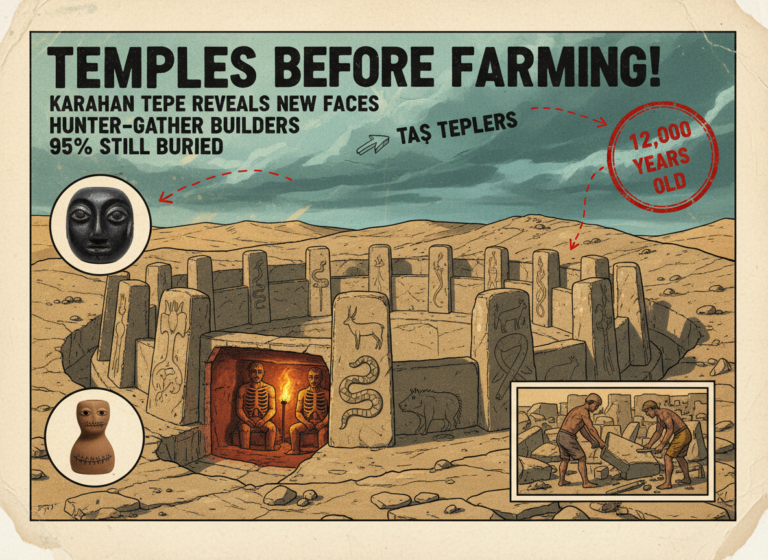
They Built a Temple Complex Before They Had Farming, Writing, or Pottery. New Finds at Karahan Tepe Just Made the Mystery Bigger.
Fresh discoveries at a 12,000-year-old site in Turkey called Karahan Tepe, the possible earliest village in human history, have uncovered more carved…