Original Story
The CIA Used Vampire Folklore to Win a War. Here Is Exactly How They Did It.
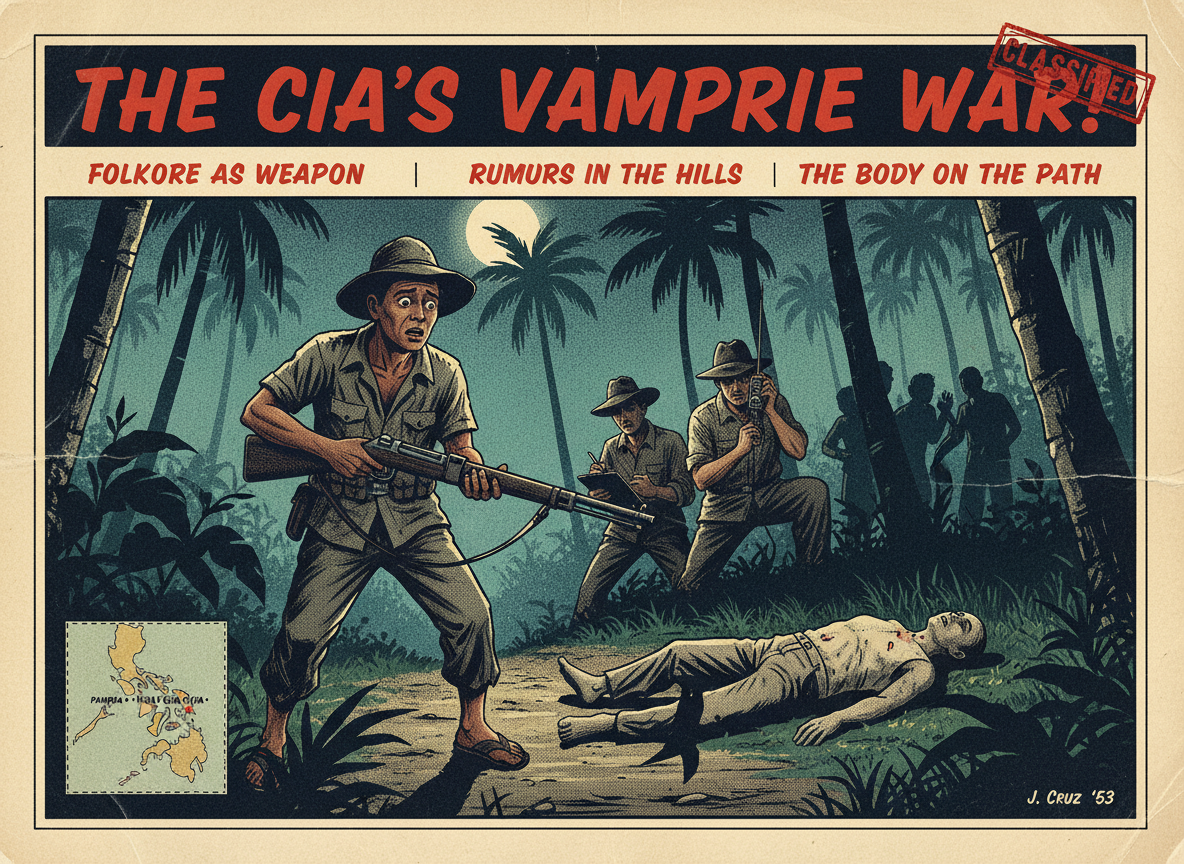
In 1950, a former advertising man named Edward Lansdale arrived in the Philippines as a US Air Force colonel and CIA operative, tasked with helping the Philippine government suppress a communist insurgency called the Huk Rebellion. The Huks — formally the Hukbalahap, a wartime resistance group that had fought Japanese occupation and then turned against the US-backed Philippine government — were well-organized, ideologically motivated, and had survived World War II and its immediate aftermath with their fighting structure largely intact. Lansdale was not primarily a military man. He was an unconventional warfare specialist who believed that the most powerful weapons were not bullets but ideas, and more specifically, that the most powerful ideas were the ones people already believed. In the rural Philippines of 1950, one of the things people already believed in was the aswang.
The aswang does not map cleanly onto any single Western monster. It is described differently across the Philippines’ many regional traditions, but the common elements include a creature that moves at night, that targets isolated individuals, that drains blood or vital essence from its victims, and that can take on alternate forms — a pig, a large dog, a vulture-sized bird. It is not a literary vampire in the European sense. It is a genuinely feared element of Philippine folk belief, one that had survived centuries of Spanish colonial rule and continued to shape how people in rural areas understood danger and the night.
Lansdale understood the aswang’s power not as superstition to be dismissed but as psychological infrastructure to be weaponized.
His PSYOPS team, working in the provinces of Pampanga, Nueva Ecija, and Tarlac between 1950 and 1954, devised a campaign that operated on two tracks simultaneously. The first was the spread of rumors. Lansdale’s operatives spread word through villages — the communities on which the Huk fighters depended for food, shelter, and local information — that an aswang had been seen in the hills where the Huks were operating. The rumors were designed to travel the way folk beliefs travel: mouth to mouth, with each retelling amplifying the fear.
The Body on the Path
The second track was physical.
According to historical accounts documented by military historians, intelligence researchers, and journalists including those at Military.com and Spotter Up, Lansdale’s team identified a location where a Huk patrol was known to operate. They ambushed the patrol and captured its last soldier. What happened next was documented in Lansdale’s own memoir and in subsequent historical research.
The captured soldier was killed. His body was punctured with two wounds at the throat, consistent with bite marks. The blood was drained. The body was left on the path the other fighters would use when they moved through the area.
When the Huk patrol returned and found the exsanguinated body of their comrade — punctured at the throat, drained, left in a place where the aswang was rumored to hunt — the unit abandoned the area. The psychological impact spread beyond that single unit. The combination of the rumor campaign and the physical evidence of an apparent aswang attack hollowed out Huk support in the targeted region, making fighters reluctant to operate in areas already associated with the creature.
Lansdale himself described the operation in his memoir as a successful example of psychological warfare using local cultural material. He used similar approaches in Vietnam after departing the Philippines in 1954, and was later involved in efforts related to Cuba before his retirement in 1963.
What the Critics Said
Not everyone accepts the tactic’s effectiveness at face value. Folklore researcher Jordan Clark, speaking to HowStuffWorks, noted that the aswang is not native to the specific regions where Lansdale’s team was operating: “There was no vampire-like aswang lore in the region, so I am skeptical that this psywar tactic even worked — other than the terrifying visual of seeing your friend strung up like that.”
Clark’s point introduces a genuine caveat. If the aswang was not a central local belief in those specific provinces, the fighters may have fled simply because they encountered something horrifying, not because they specifically attributed it to supernatural agency. Whether the belief framework mattered, or whether the sheer brutality of the staged scene was sufficient, the historical record is clear on one point: the fighters left.
The declassified record of the Huk counterinsurgency includes the broader PSYOPS campaign as documented, even if the specific details of the vampire operation vary across sources. Lansdale’s broader approach — using cultural belief as a weapon — became a template referenced in later US counterinsurgency doctrines. The story surfaced this week on Unexplained Mysteries, where it drew immediate discussion about the intersection of folklore, intelligence operations, and what governments are willing to do when they decide fear is more effective than force.
Sources: Military.com — Cold War Operation Used Vampire Folklore to Intimidate Philippine Insurgents (May 3-4, 2026) — Spotter Up — Folklore as a Weapon: The CIA’s Aswang Operation — Skillset Magazine — Aswang: US Troops Scared Communist Insurgents Using Vampire Folklore — Mental Floss — False Fang: When the CIA Staged a Vampire Attack — HowStuffWorks — How the CIA Used Vampires to Fight Communism in the Philippines — Republic World — How CIA Operatives Employed Vampire Tactics in the Fight Against Communism (2026) — Unexplained Mysteries — US Military Once Spooked Cold War Insurgents with Vampire Folklore (May 5, 2026)

Scientists Just Published a Formal Warning: AI Could Start Evolving on Its Own. Darwinian Selection Would Make It Impossible to Control.
A paper published April 20, 2026, in PNAS — the Proceedings of the National Academy of Sciences, one of the most prestigious…
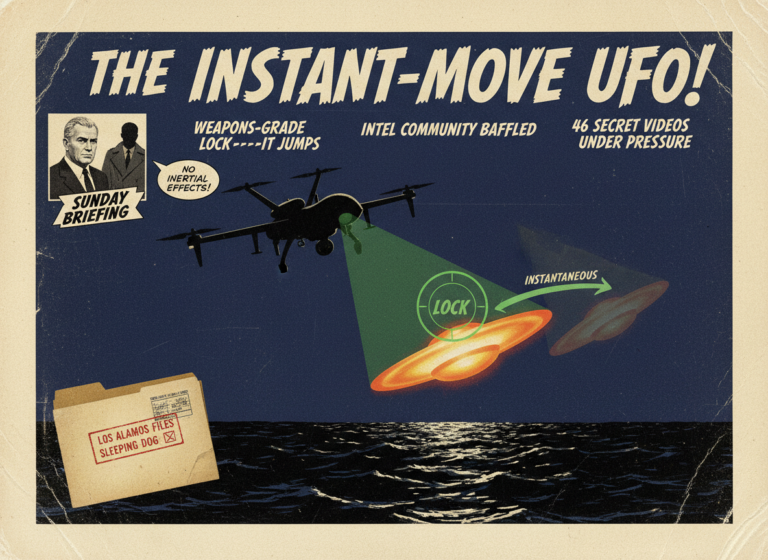
Jeremy Corbell Told Fox News That UAP Can Move Instantaneously. He Says the Intelligence Community Is Baffled.
On Sunday, May 3, 2026, investigative journalist Jeremy Corbell appeared on Fox News' Sunday Briefing and made a series of specific and…
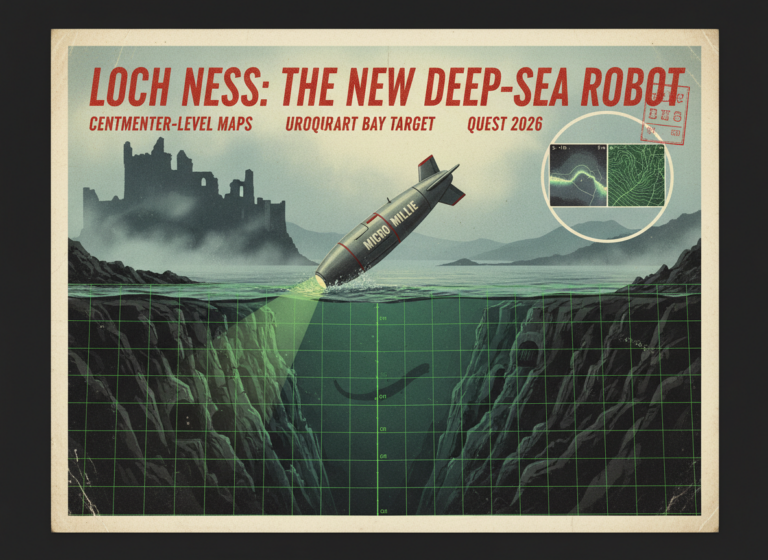
The Most Advanced Underwater Robot Ever Used in the Search Is About to Map Loch Ness
A marine exploration company that previously hunted the Titanic is bringing its Micro Millie autonomous underwater vehicle to Loch Ness for The…

NASA Has Mapped the Water in the Galaxy. The Ocean Beneath Your Feet Came From Out There.
A study published in The Astrophysical Journal on April 15, 2026, based on data from NASA's SPHEREx mission, has produced the first…