Original Story
Bronze Age Scandinavians Were Getting Their Metal from Spain. Someone Had to Organize That Trade Network.
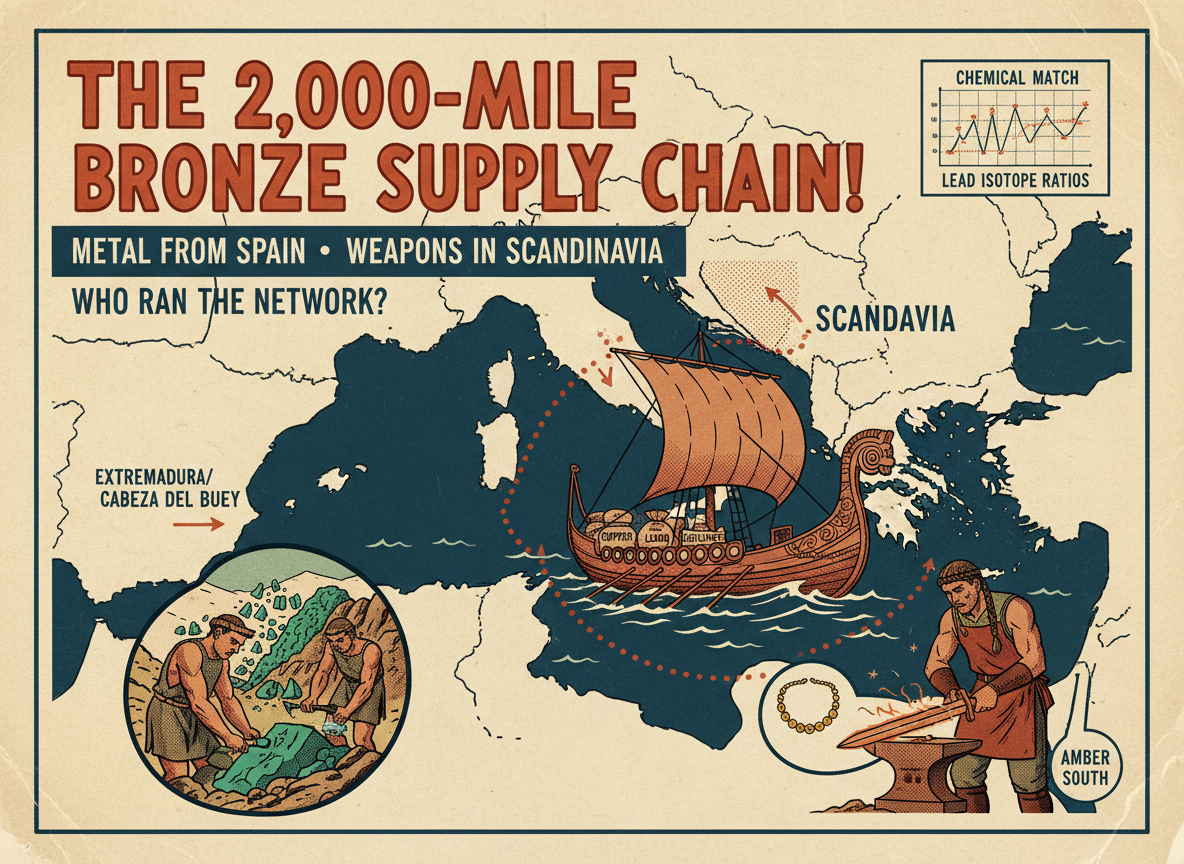
Six new Bronze Age mines discovered in southwestern Spain in early 2026 confirm what chemical analysis of Viking-era artifacts has been suggesting for years: the metal in ancient Scandinavian swords, axes, and ornaments was mined 2,000 miles away in Iberia. To make that trade work, someone had to run a supply chain across prehistoric Europe that most historians are only now beginning to take seriously.
If you picked up a Bronze Age sword from a museum in Denmark or Sweden and ran a chemical analysis on the metal, there is a good chance it would match ore from the hills of southwestern Spain.
This has been quietly clear in the scientific literature for years. Lead isotope studies, which trace the chemical signatures of metal back to specific geological deposits, have been suggesting a Spanish origin for significant portions of Scandinavian Bronze Age artifacts since at least the 1990s. But without the physical mines to match the chemistry to, the connection remained theoretical.
In early 2026, researchers from the Maritime Encounters program at the University of Gothenburg conducted a survey of the Extremadura region in southwestern Spain and found six previously unknown Bronze Age mines near a town called Cabeza del Buey. The mines contain copper, lead, and silver. One of them was packed with around 80 stone axes that would have been used to crush ore.
The connection is now physical. The ore from these mines matches the chemical signature in Scandinavian Bronze Age objects. The mines existed. The ore was extracted. And somehow, over a distance of roughly 2,000 miles, it ended up in the hands of craftspeople working in Denmark, Sweden, and Norway thousands of years ago.
What This Means for How We Think About Prehistoric Trade
The standard image of Bronze Age Europe tends toward fragmentation. Tribal groups occupying defined territories, limited contact between distant cultures, trade happening mostly over short distances between neighboring communities.
The Spanish-Scandinavian metal connection destroys that image.
A trade network that reliably moved heavy, valuable ore over 2,000 miles of mixed terrain, including mountain ranges, rivers, forests, and open sea crossings, is not a primitive or accidental arrangement. It requires sustained relationships between multiple groups across multiple generations. It requires trust, communication, standardized exchange values, and some form of logistical coordination that modern historians would call infrastructure.
Professor Johan Ling of the University of Gothenburg, who led the research, was direct about the implications: “These discoveries demonstrate that metal extraction in southwestern Europe was far more extensive and organized than previously recognized, and they provide a concrete archaeological context for the chemical and isotopic analyses that point to long-distance connections during the Bronze Age.”
He described it as transforming understanding of how interconnected Europe was already 3,000 years ago.
That word “interconnected” is doing a lot of work. An interconnected Europe 3,000 years ago, before writing existed in most of northern Europe, before coinage, before formal political states, means that something was organizing the connections. Communities across an enormous distance shared enough common understanding of value, exchange, and relationship to keep a supply chain running.
The People Who Made It Possible
Bronze Age Scandinavia left behind remarkable material culture. The Trundholm Sun Chariot, a bronze sculpture of a horse pulling a sun disc, was found in a Danish bog and dates to approximately 1400 BC. It is one of the most sophisticated artistic objects from this period in northern Europe. The bronze it was made from almost certainly came from somewhere else.
Rock carvings from the same period across Scandinavia depict boats, ships, and sea voyages in detail that suggests maritime travel was not unusual or extraordinary. These were communities with genuine seafaring capacity, capable of coordinating movement across open water.
The researchers behind the 2026 mine discovery believe the route between Spain and Scandinavia ran along the Atlantic coast. Maritime travel from Iberia up through France, around Brittany, across the English Channel, up the North Sea coast to Scandinavia is a route that requires significant navigational knowledge but no individual ocean crossing of unusual length. It is a coastal route, hugging shorelines, using river mouths as stopping points, connecting communities along a chain that spans the whole western edge of Europe.
Ports, or at least landing points, along that route would have been essential. People living in coastal Brittany, southwest England, and western France would have been participants in this network, probably as intermediaries, probably taking a cut of the metal as it passed through.
This is beginning to look less like primitive barter and more like organized long-distance commerce operating before most of the civilizations that historians focus on had even formed.
What Remains Unknown
The 2026 survey identified six previously unknown mines. Professor Ling’s group has documented around 20 new mines between 2024 and 2026 alone, adding to earlier discoveries by other research teams. The picture of Bronze Age mining in southwestern Spain is expanding rapidly.
What the physical discoveries cannot yet show is the human side of the network. Who organized it? What were the exchange relationships? How were disputes resolved when trade relationships broke down? What did Scandinavian communities offer in return for ore, given that they did not have comparable mineral resources to trade?
Amber is one likely answer. Baltic amber, the fossilized resin of ancient trees, is found at Bronze Age sites across the Mediterranean and as far as Egypt. A necklace containing Baltic amber beads was found in the tomb of Tutankhamun. The amber trade ran in the opposite direction from the metal trade, from north to south, from Scandinavia and the Baltic coast down through Europe to the Mediterranean. The metal went north. The amber went south.
If that was the exchange, then Bronze Age Scandinavia was sitting at the intersection of two enormous prehistoric trade networks simultaneously, importing copper and exporting amber across the full length of Europe.
That would make it not a peripheral, marginal region at the edge of the known world, but an active participant in a continental economy that the history books have consistently underestimated.
Sources: ScienceDaily, Bronze Age Mines Discovered in Spain May Explain Scandinavian Metal Mystery, April 29, 2026, Wikipedia, Bronze Age Europe, Wikipedia, Trundholm Sun Chariot, Wikipedia, Amber Road
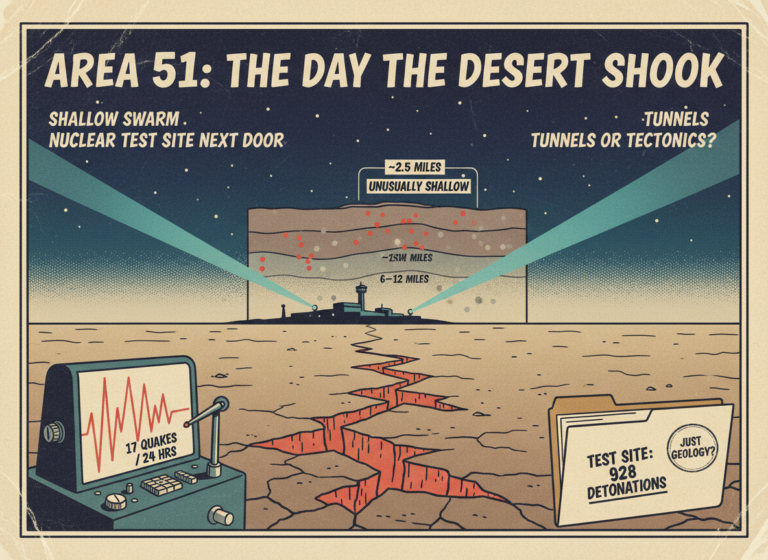
Area 51 Had 17 Earthquakes in One Day. Scientists Have an Explanation. Nobody Fully Believes It.
On April 30, 2026, at least 17 earthquakes struck within 24 hours near the most secretive military base in the United States.…
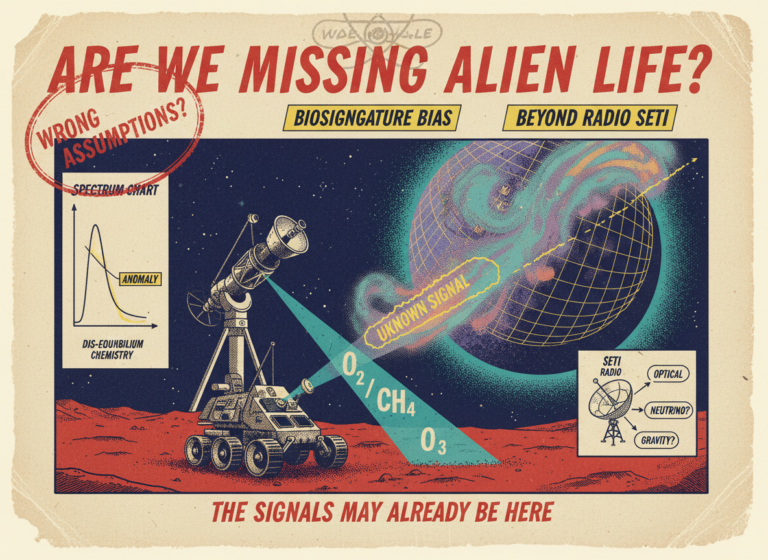
NASA Admits It May Be Looking for Alien Life the Wrong Way. The Signals Could Already Be Here.
A study published in the International Journal of Astrobiology and flagged by Unexplained Mysteries on May 21, 2026, contains a warning from…
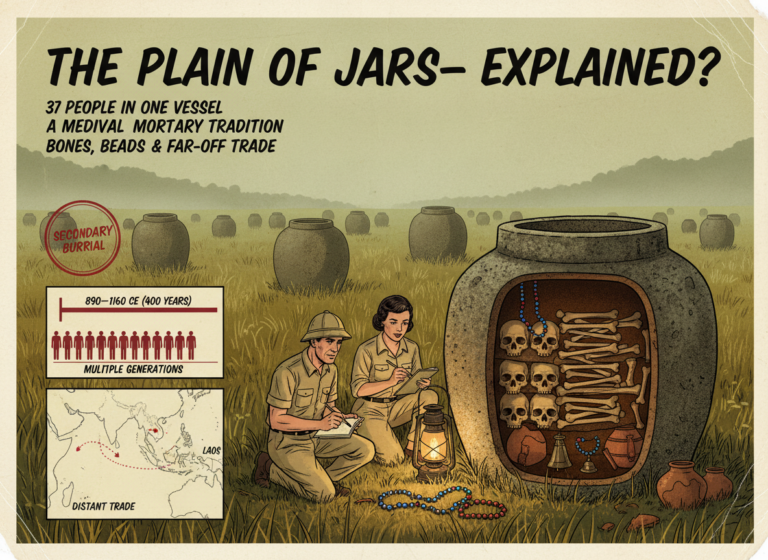
A Stone Jar in Laos Held the Bones of 37 People Across 400 Years. It May Finally Explain What the Plain of Jars Was For.
In the highlands of northeastern Laos, scattered across mountain plateaus and grassy plains, there are thousands of enormous stone jars. The largest…
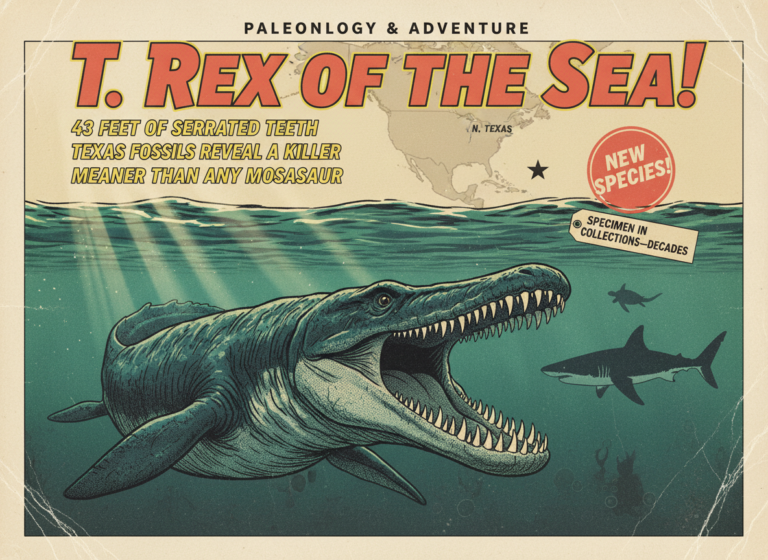
Scientists Just Named a New Sea Monster After T. Rex. It Was Twice as Long as a Great White and "Meaner Than Any Mosasaur."
A 43-foot marine reptile that patrolled the shallow seas covering what is now northern Texas 80 million years ago has been formally…