Original Story
The Mary Celeste Sailed Without Its Crew for Ten Days Through the Open Atlantic. A New Chemical Experiment Finally Explains Why.
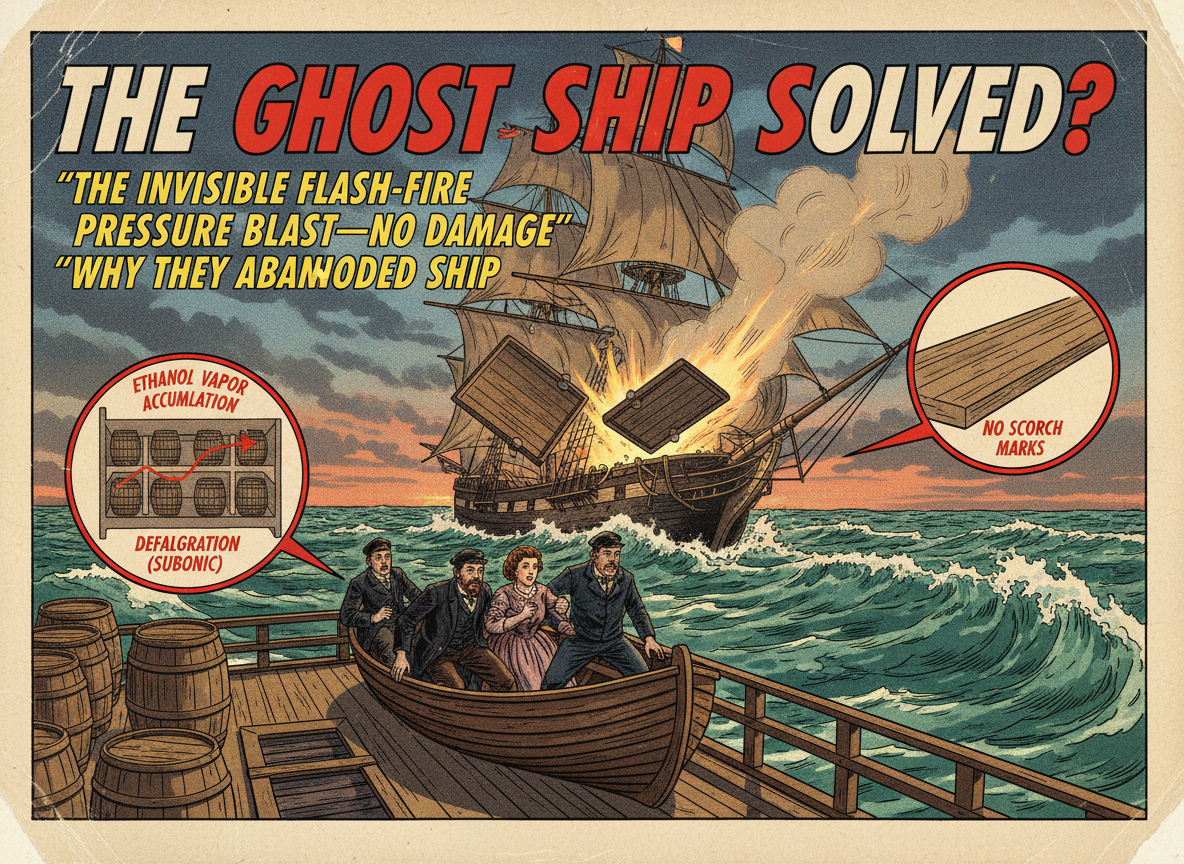
In December 1872, a British merchant ship called the Dei Gratia was sailing east across the Atlantic when her crew spotted another vessel behaving strangely ahead of them. The ship was the Mary Celeste, an American brigantine that had left New York on November 7 bound for Genoa with a cargo of industrial alcohol. She was sailing partially, on a heading roughly consistent with her intended route, but oddly — too slowly, too erratically, with no one at the helm. When a small crew from the Dei Gratia boarded her, they found a vessel completely intact, seaworthy, largely undamaged, with food and provisions for six months, personal belongings still in the crew quarters, and not a single living person aboard. The ship’s cat was there. The captain’s logbook was there, with the last entry dated November 25 — ten days before the discovery. Ten days. Every human being who had been on the Mary Celeste — Captain Benjamin Briggs, his wife Sarah, their two-year-old daughter Sophia, and seven crew members — was gone. For 154 years, nobody has been able to definitively explain why. Now, a chemist at the University of Manchester thinks he can.
The Mary Celeste carried 1,701 barrels of denatured industrial ethanol in her hold. That cargo — ordered by shippers in Genoa to be used in wine fortification — was high-proof, volatile, and, as would later be discovered when the ship was inspected, partially leaked. Nine barrels were empty or nearly empty on arrival. The contents of those nine barrels had gone somewhere.
The ethanol-leak theory is not new. It has been proposed, in various forms, for decades, always running into the same obstacle: there were no signs of fire or explosion on the ship. If ethanol vapors had accumulated in the hold and ignited, you would expect scorch marks, blackened wood, soot, structural damage. There was none. The ship was in good enough condition that the salvage court in Gibraltar ultimately awarded prize money — the standard payment for bringing in a recoverable vessel — to the Dei Gratia crew. A ship with explosion damage does not get a prize award from an admiralty court.
The Deflagration Explanation
The new work, by chemist Jack Rowbotham of the University of Manchester, was published in Chemistry World in April 2026 and has resurfaced across maritime history and mystery communities in May. Rowbotham used modern computational fluid dynamics — a mathematical modeling technique for predicting how fluids, including gases, move through enclosed spaces — to model what would have happened in the Mary Celeste’s hold if a substantial amount of ethanol vapor had accumulated there.
The answer, in his modeling, is a deflagration. Not a detonation.
These two words sound similar but describe completely different events. A detonation is a supersonic explosive shockwave — the kind of explosion most people imagine when they hear the word. A deflagration is a subsonic combustion wave: the fuel burns very rapidly but the flame front travels slower than the speed of sound through the material. The physical effect of a deflagration in an enclosed space, like a ship’s hold, is a sudden, powerful pressure blast — enough to blow open a hatch or a door violently — but because the combustion is subsonic, it produces very little soot or charring. The heat is real and dangerous, but it is intense for a very brief time and then gone before it can transfer deeply into surrounding surfaces.
Rowbotham built a scale model of the hold and triggered an ethanol vapor deflagration inside it. The results: a powerful, terrifying pressure wave that would have sent any hatch covers flying and filled the hold with a flash of flame — and almost no visible physical evidence afterward. No scorch marks. No blackening. No structural damage.
A ship’s captain, standing on the deck and watching hatch covers blow off his hold in a fireball, with no visible fire remaining a moment later — in 1872, with no understanding of deflagration chemistry — would almost certainly have ordered his crew off the ship immediately. He would have been convinced an explosion was imminent. He would have believed the cargo was still burning invisibly inside the hold. He would have launched the lifeboat.
Captain Briggs was experienced and careful. He was traveling with his wife and young daughter. He would not have abandoned his ship without compelling reason. A deflagration in the hold, Rowbotham argues, was a compelling reason.
What Remains Unexplained
The ethanol deflagration theory explains the abandonment. It does not explain what happened next. The lifeboat was gone when the Dei Gratia found the ship. The crew had not returned. No lifeboat was ever recovered. No bodies were ever found.
Rowbotham’s hypothesis ends at the moment Briggs and his crew stepped off the ship. What happened to them in the open Atlantic — whether the lifeboat capsized in the November seas, whether they were picked up and died elsewhere, whether some other fate entirely overtook them — remains unknown.
The Mary Celeste sailed without them for ten days and arrived, largely intact, in the middle of the Atlantic. The people who left it on November 25, 1872, were never seen again.
Sources: Unexplained Mysteries — Mystery of the Mary Celeste Ghost Ship May Have Finally Been Solved (May 18, 2026) — ZME Science — Chemists Solved the Ultimate Ghost Ship Mystery of the Mary Celeste (2026) — greenMe — Solved After 150 Years: The Last Mystery of the Ghost Ship Mary Celeste (April 2026) — CPG Click Oil and Gas — Mystery of the Mary Celeste, the Ghost Ship of 1872, May Finally Have Been Unraveled (April 2026) — ua-stena.info — Mary Celeste Ghost Ship Mystery Finally Explained (May 20, 2026)
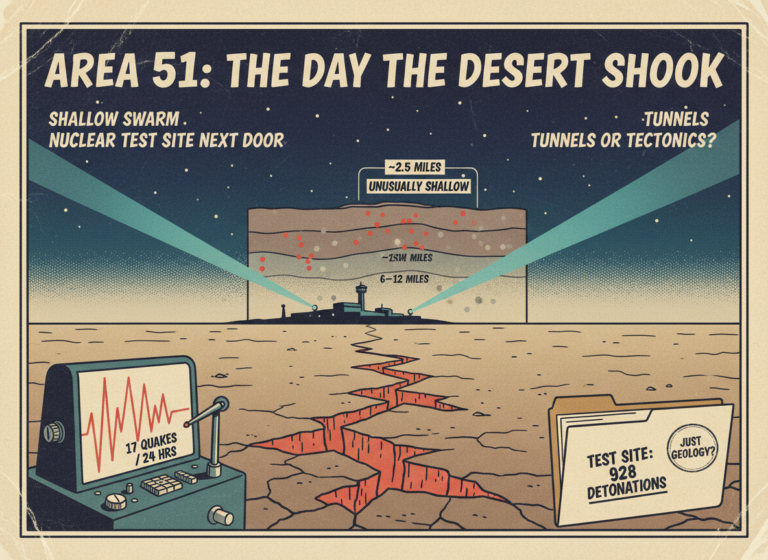
Area 51 Had 17 Earthquakes in One Day. Scientists Have an Explanation. Nobody Fully Believes It.
On April 30, 2026, at least 17 earthquakes struck within 24 hours near the most secretive military base in the United States.…
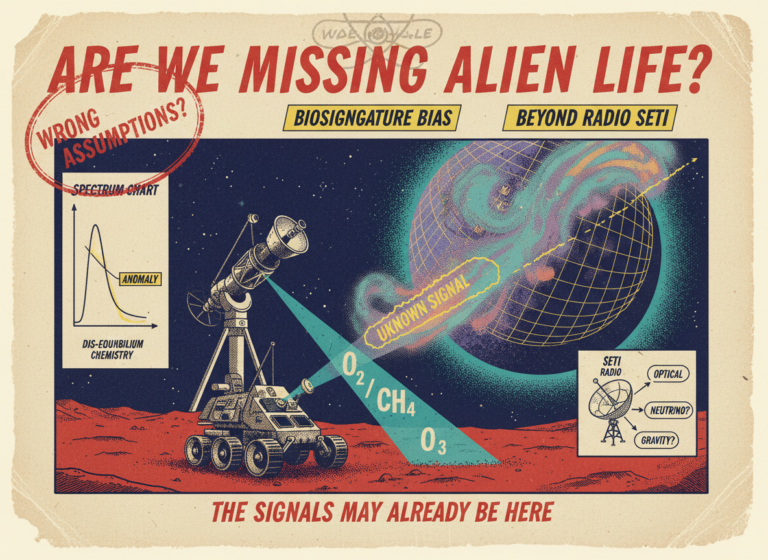
NASA Admits It May Be Looking for Alien Life the Wrong Way. The Signals Could Already Be Here.
A study published in the International Journal of Astrobiology and flagged by Unexplained Mysteries on May 21, 2026, contains a warning from…
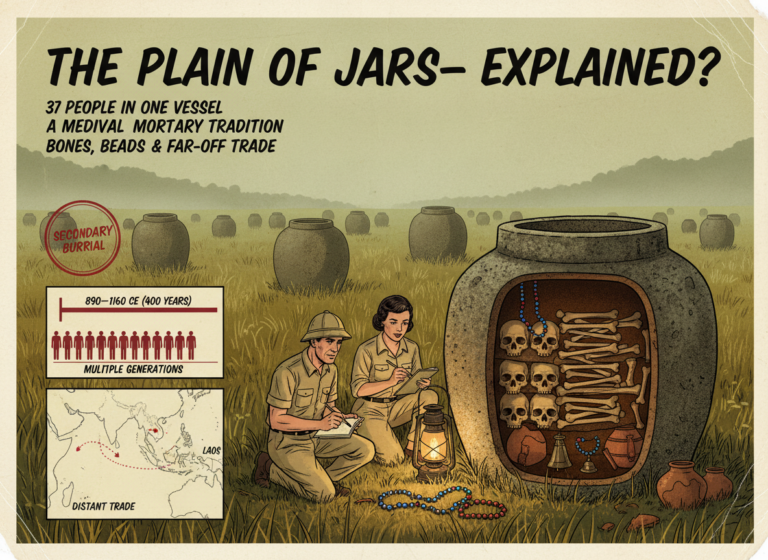
A Stone Jar in Laos Held the Bones of 37 People Across 400 Years. It May Finally Explain What the Plain of Jars Was For.
In the highlands of northeastern Laos, scattered across mountain plateaus and grassy plains, there are thousands of enormous stone jars. The largest…
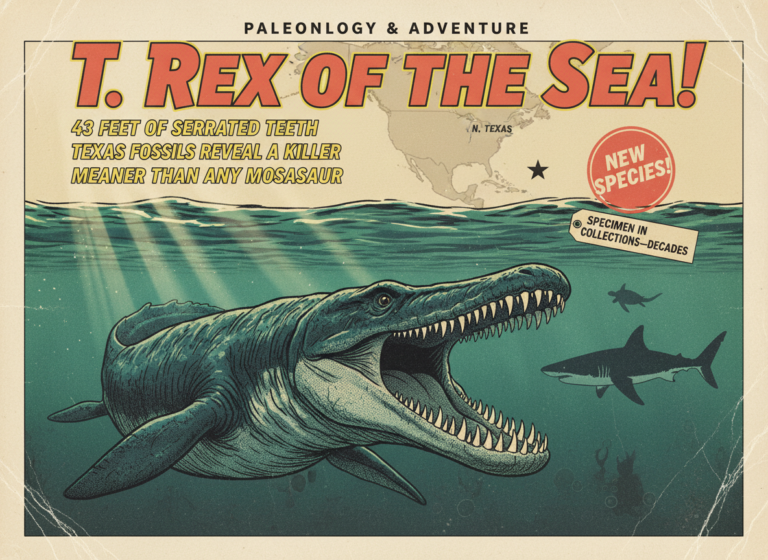
Scientists Just Named a New Sea Monster After T. Rex. It Was Twice as Long as a Great White and "Meaner Than Any Mosasaur."
A 43-foot marine reptile that patrolled the shallow seas covering what is now northern Texas 80 million years ago has been formally…