Original Story
A CIA Document From 1952 Listed a “Temple Under Sphinx” Among Its Photo Inventory. Nobody Has Looked Under There Yet.
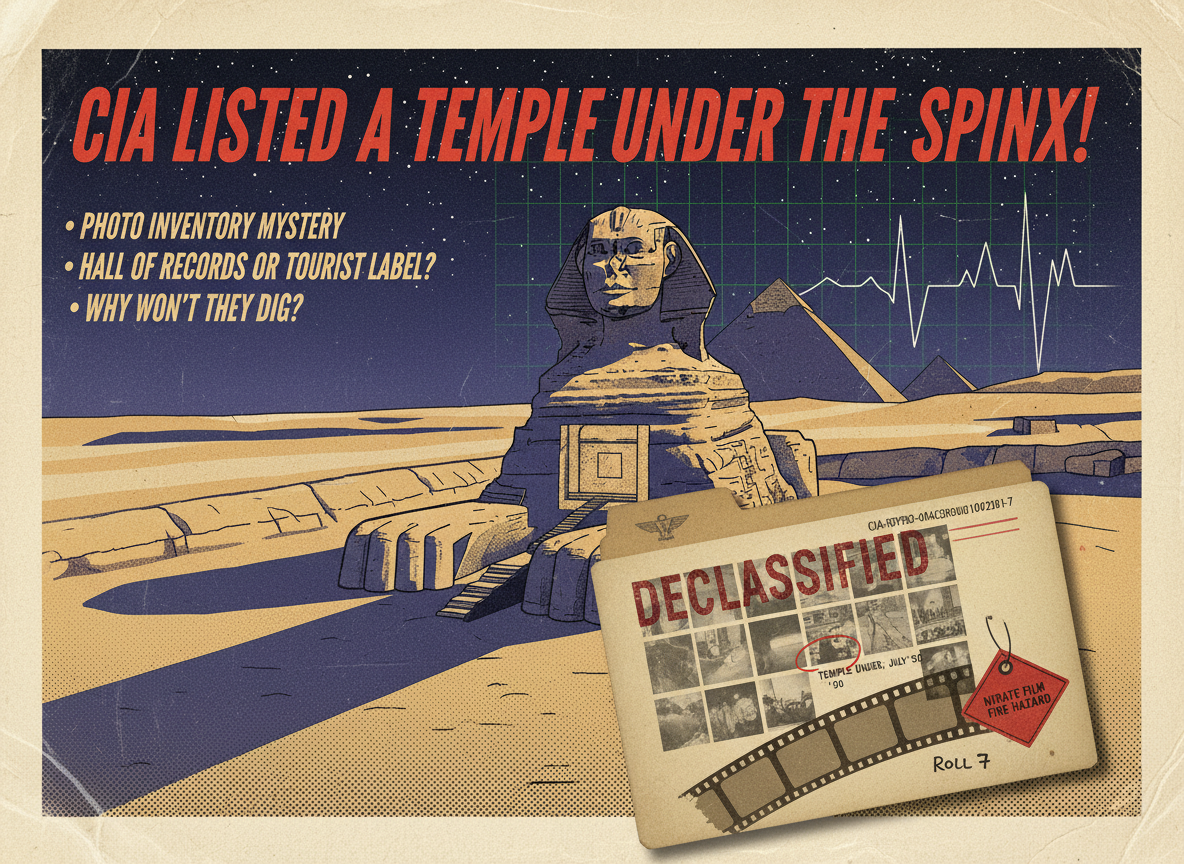
A declassified CIA document from November 20, 1952, publicly available through the CIA’s own FOIA reading room, has resurfaced this week and set off a fresh wave of discussion across ancient mysteries communities. The document — officially referenced as CIA-RDP83-00423R000100200001-7 and titled “Presentation Form for Graphic Material” — is an administrative catalog listing 11 rolls of 35mm black-and-white photographic negatives taken by an unidentified traveler in the Middle East and Afghanistan between July and December 1950. Among entirely routine inventory entries like “Sphinx,” “Tourist at Pyramids,” and “Ruins near Sphinx,” the catalog includes one line that reads: “Temple under Sphinx; July ’50.” That four-word phrase is the source of all the current excitement. The Egyptian Supreme Council of Antiquities has consistently denied excavation permits for proposed investigations beneath the Sphinx plateau. No one has gone down to look.
Before building the case for hidden chambers, it is worth being clear about what the document actually is. The CIA is not describing a classified intelligence operation about subterranean structures. It is cataloging photographs — the equivalent of a very organized person numbering their slides. The document is not a report. It contains no analysis, no speculation, and no context about why the photographs were taken or who took them. Its front page warns that the nitrate film is a fire hazard that requires careful handling during transport to CIA headquarters. The bulk of the inventory covers Afghanistan, documenting caves, bazaars, villages, archaeological excavations, and geological surveys.
The Egypt section is brief. Most of the Egyptian entries are exactly what you would expect: tourism photographs of a well-traveled site. And then, between the other entries, “Temple under Sphinx; July ’50.”
The most likely mundane explanation is that the photographer was describing the Sphinx Temple — a known Old Kingdom structure discovered in the 19th century and formally excavated beginning in the 1920s, which sits directly in front of the Sphinx at a lower elevation. From many angles, it appears to sit beneath the statue’s gaze, and could be reasonably described by a casual photographer as being “under” the Sphinx. In which case the entry is a slightly imprecise description of a known, documented ancient structure that anyone visiting Giza in 1950 could have photographed.
Why People Are Not Satisfied With That Explanation
The skeptical explanation is reasonable. It is also not the only possible explanation, and the people who have spent decades investigating the Giza plateau have reasons for treating it cautiously.
The Hall of Records is the name most often applied to the legendary hidden chamber beneath the Sphinx. Its modern associations come primarily from Edgar Cayce, the early 20th century American mystic known as the “Sleeping Prophet,” who during trance readings in the 1930s and 1940s described a subterranean repository of ancient knowledge buried beneath the right paw of the Sphinx. Cayce claimed the chamber contained records of Atlantis, brought to Egypt by survivors of a cataclysm that destroyed the civilization. He predicted it would be discovered between 1996 and 1998. That prediction did not come true in any confirmed form, though what happened in the 1990s is genuinely interesting.
In the early 1990s, seismologist Dr. Thomas Dobecki conducted seismic surveys near the Sphinx and found anomalous rectangular cavities in the bedrock beneath the monument’s paws. Rectangular cavities in natural limestone typically indicate artificial construction. The Egyptian government, working with the Schor Foundation, announced a “joint scientific project” to investigate. Before any excavation began, the project was halted by Egyptian authorities and the permits were pulled.
More recently — and this is the piece that gives the current CIA document discussion its sharpest edge — Italian and Scottish researchers using synthetic aperture radar (SAR) claimed in 2025 to have detected a vast underground complex beneath the Giza plateau, including what they described as chambers comparable in size to the pyramids themselves, and evidence of what might be a second buried Sphinx. Spokesperson Nicole Ciccolo stated the findings could “redefine our understanding of the sacred topography of ancient Egypt.” The claims face significant scientific scrutiny and have not been peer-reviewed. But they are on the table.
What the Combination Means
The CIA document did not create the mystery. The mystery was already there in the seismic anomalies, the blocked excavation permits, the Cayce readings, and now the 2025 radar claims. What the CIA document adds is a government archival reference — however inadvertent and however mundane in origin — to something existing beneath that specific structure in 1950. Three words on a photographic inventory from a 74-year-old administrative catalog. “Temple under Sphinx.”
The Egyptian Supreme Council of Antiquities has consistently denied excavation permits for any investigation of the anomalous subsurface features. Their position, as they have stated repeatedly, is that the site requires protection from disturbance. Whether the protection is of a structural monument or of something inside it is a question only excavation can answer.
Non-invasive scanning continues. The Giza plateau has layers of history above ground that took two centuries of archaeology to begin to understand. What is below has not been studied to the same depth. Whatever the CIA photographer meant to write down in July 1950, the question those three words attach themselves to is a serious and unsettled one.
Sources: CIA FOIA Reading Room — Presentation Form for Graphic Material, CIA-RDP83-00423R000100200001-7 (1952) — Ancient Origins — CIA Document Reignites Hall of Records Beneath the Sphinx Theories (May 12, 2026) — Modernity — CIA Document Sparks Wild Theories of Ancient Knowledge Hidden Under Egypt’s Sphinx (May 11, 2026) — Gazeta Express — CIA Document Revives Mystery of Sphinx (May 12, 2026) — Smithsonian Magazine — Uncovering Secrets of the Sphinx (2010) — Unexplained Mysteries — 1950s CIA Document Hints of Mysterious Temple Under the Sphinx (May 13, 2026)
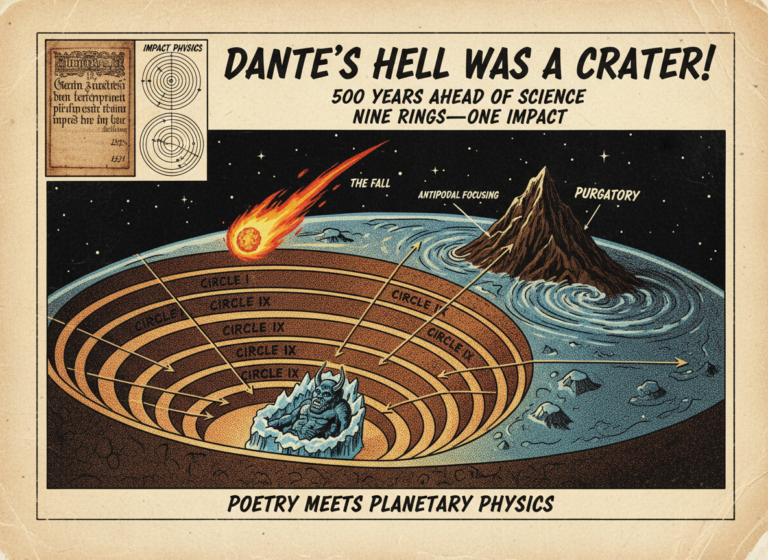
A Medieval Poet Described Hell as a Planetary Impact Crater 500 Years Before Science Had the Concept. Researchers Just Worked Out the Physics.
A new study presented at the European Geosciences Union General Assembly in Vienna in May 2026 makes a case that is extraordinary…
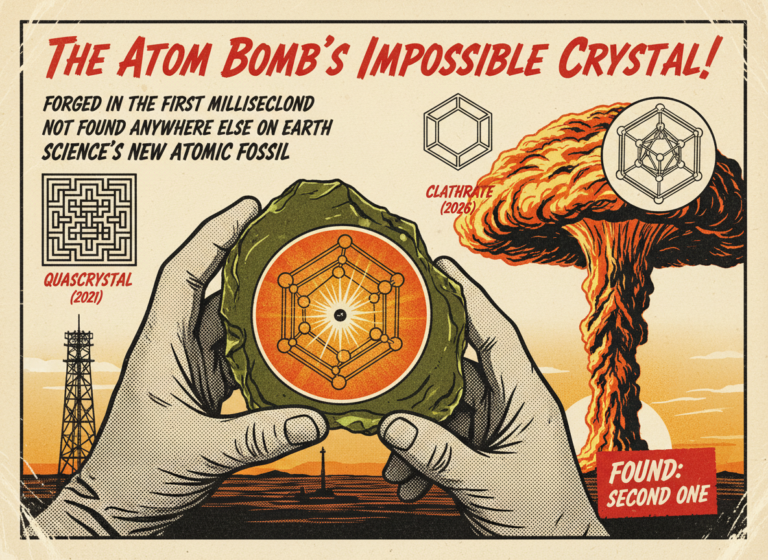
The First Nuclear Bomb Forged a Crystal That Doesn't Exist Anywhere Else on Earth. Scientists Just Found a Second One.
On July 16, 1945, at 5:29 a.m. in a remote stretch of desert in southern New Mexico, the United States Army detonated…
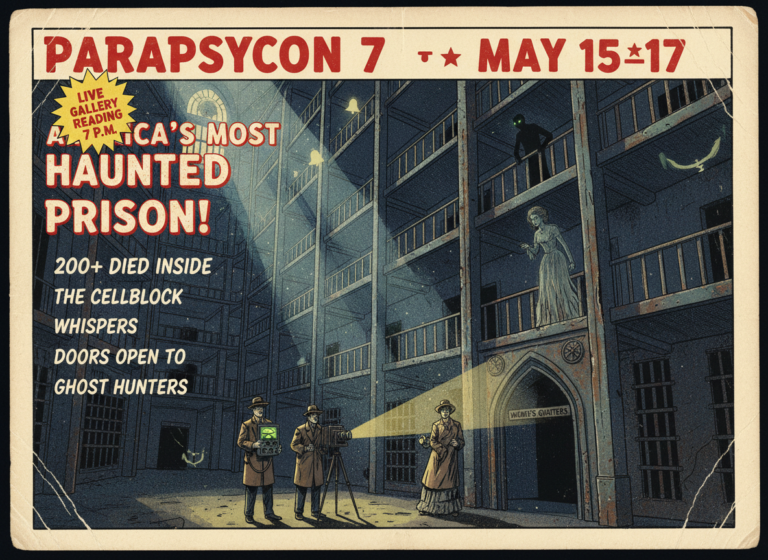
The Most Haunted Prison in America Opens Its Doors to Ghost Hunters Last Night. Over 200 People Died Inside.
The Ohio State Reformatory in Mansfield, Ohio, has been called the most haunted prison in America — and last night, May 14,…

A Neanderthal Had a Toothache 59,000 Years Ago. Someone Drilled It Out With a Stone Tool.
A tooth found in a Siberian cave just rewrote the history of medicine. Scientists confirmed on May 13, 2026, that a Neanderthal…