Original Story
An Astrophysicist Reviewed the Pentagon’s UFO Files. He Called Them “Just More Fuzzy Blob Videos.” Here Is What He Actually Saw.
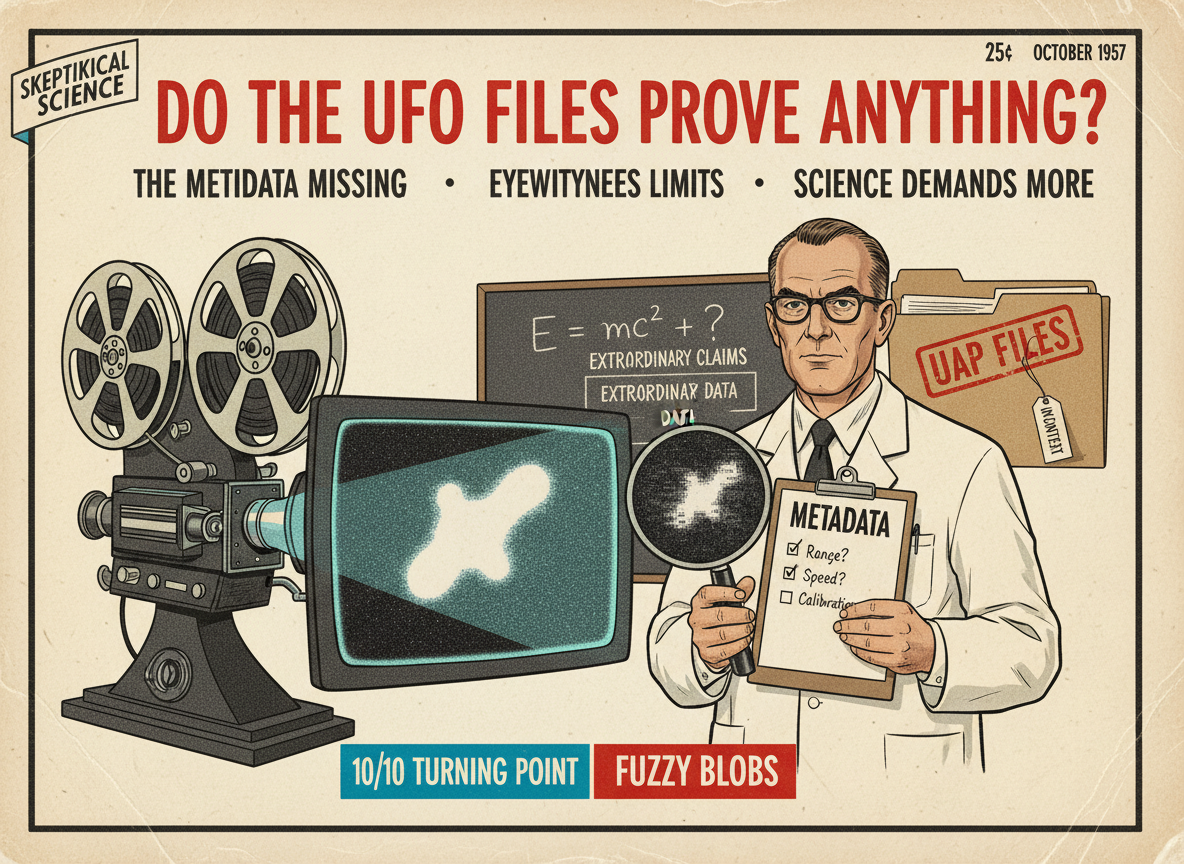
On May 13, 2026, NPR aired a segment in which astrophysicist Adam Frank, professor at the University of Rochester and author of multiple books on science and the cosmos, reviewed the Pentagon’s May 8 UAP file release and offered his professional assessment. “Just more fuzzy blob videos,” Frank told NPR’s Scott Detrow. “There’s nothing in these files that changes the scientific question of whether we’re being visited by intelligent life from another planet.” His critique was specific: most of the footage lacks the technical metadata required for scientific evaluation, many of the documents are eyewitness accounts that cannot be independently verified, and several pieces of material had already been circulating for years in paranormal and UFO communities before being included in the official government release. His assessment is not the consensus scientific reaction to the release. But it represents a position that is worth taking seriously, because the people making it are asking reasonable questions about what the files actually prove.
To understand Frank’s critique clearly, it is worth separating what the files contain from what they establish.
The files contain: approximately 160 declassified records including reports, photographs, videos, eyewitness transcripts, military memos, and historical documents from agencies including the Pentagon, FBI, NASA, and the State Department. They span cases from 1947 through 2025. They include Apollo mission transcripts in which astronauts discussed unusual lights. They include a two-minute, 57-second infrared video showing an object making multiple 90-degree turns at 80 miles per hour. They include the 1966 FBI memo describing eyewitness accounts of small humanoid figures in what witnesses called space suits. They include the French COMETA report from 1999. They include the Roswell Dallas field office memo.
What Frank and other skeptical scientists point out is that containing something and establishing something are not the same thing.
The Metadata Problem
The fundamental challenge Frank raised — and it is the same challenge raised by astrophysicist David Whitehouse, who reviewed the files independently and described the videos as containing “optical artefacts, others fuzzy blobs, and some light smears” — is that the videos lack the technical context required for scientific interpretation.
When a scientific instrument records a phenomenon, the recording comes with metadata: the wavelength it was recorded at, the exposure settings, the distance to the target, the velocity of the recording platform, the calibration status of the sensor, and the atmospheric conditions during recording. Without these data, an unusual-looking blob in an infrared video could be almost anything: a lens flare, an artifact of sensor compression, a temperature inversion, a classified man-made object filmed without identifying context, or, yes, something genuinely unexplained. The blob looks the same in all of those cases.
Michael Narlock, an astronomer at the Cranbrook Institute of Science who also reviewed the files, concurred: the videos lack sufficient context to assess. The eyewitness accounts, which constitute a large portion of the release, are, in his words, “notoriously unreliable” as primary evidence for determining the nature of observed phenomena — not because witnesses are lying, but because human perception under unusual circumstances is genuinely not a calibrated instrument.
What the Skeptics Are Not Saying
It is important to be precise about what this criticism does and does not imply.
Frank is not claiming that the government has definitively explained all the reported phenomena. He is not claiming that UAPs represent no genuine scientific puzzle. He is not claiming that the military encounters described in the files were all misidentifications. He is specifically addressing the quality and interpretability of the evidence released on May 8, and his assessment is that it does not, by itself, shift the scientific question of intelligent extraterrestrial visitation.
The position he is arguing against is the claim that the file release constitutes disclosure — that seeing these documents means we now know, or know better than before, that something non-human is visiting Earth. On that specific claim, Frank and Narlock and Whitehouse are saying: not from this evidence.
What the files do establish — and Frank acknowledged this — is that credible, trained, military-grade observers have been encountering objects for eight decades that they could not explain, that those encounters were serious enough to document in classified files, and that the government considered them worth keeping secret. That is not nothing. It is just, as Frank argued, a different thing from scientific proof.
The debate between those reactions — Michio Kaku’s “10 out of 10 turning point” and Adam Frank’s “just more fuzzy blob videos” — is the most productive scientific conversation the file release has generated. Both men are looking at the same documents. They are reaching different conclusions about what those documents mean. That is how evidence evaluation is supposed to work.
Sources: NPR — An Astrophysicist’s Take on the Government’s UAP Files: ‘Just More Fuzzy Blob Videos’ (May 13, 2026) — Wikipedia — United States UAP Files (updated May 13, 2026) — CNN — Pentagon Releases Initial Batch of Declassified Files Detailing UFOs (May 8, 2026)
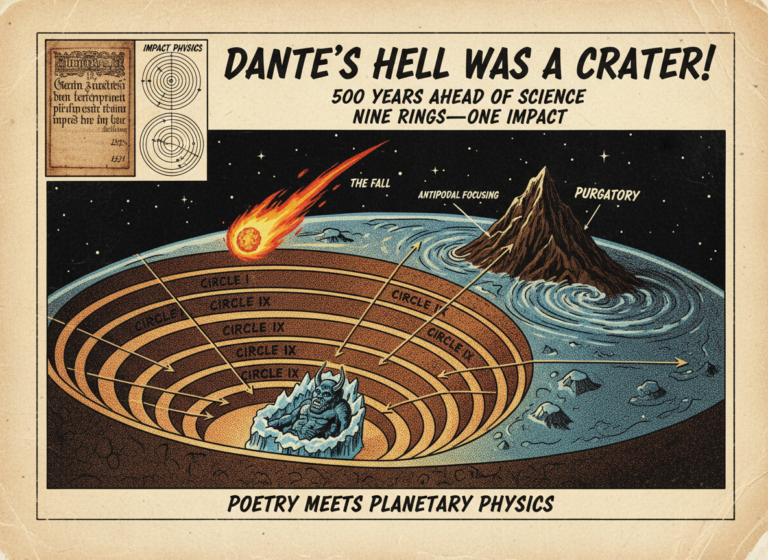
A Medieval Poet Described Hell as a Planetary Impact Crater 500 Years Before Science Had the Concept. Researchers Just Worked Out the Physics.
A new study presented at the European Geosciences Union General Assembly in Vienna in May 2026 makes a case that is extraordinary…
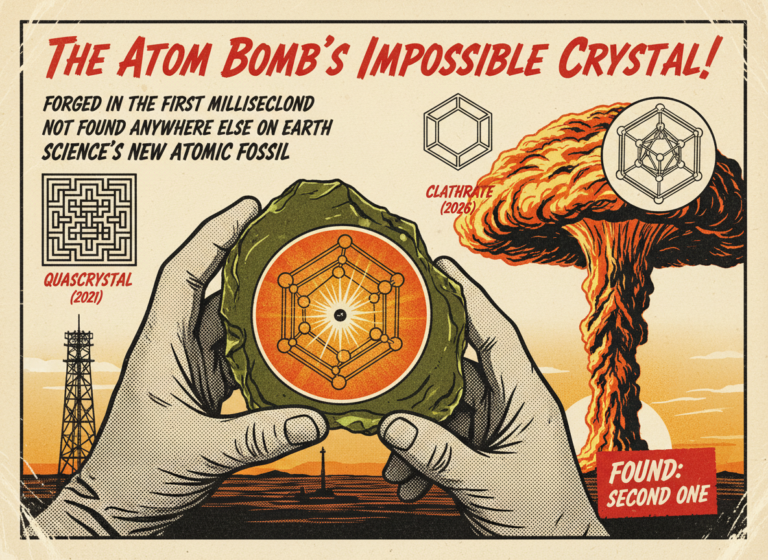
The First Nuclear Bomb Forged a Crystal That Doesn't Exist Anywhere Else on Earth. Scientists Just Found a Second One.
On July 16, 1945, at 5:29 a.m. in a remote stretch of desert in southern New Mexico, the United States Army detonated…
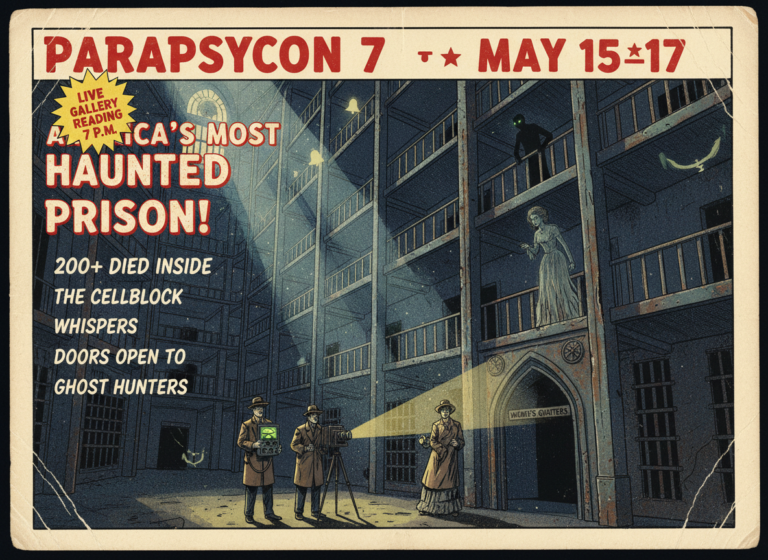
The Most Haunted Prison in America Opens Its Doors to Ghost Hunters Last Night. Over 200 People Died Inside.
The Ohio State Reformatory in Mansfield, Ohio, has been called the most haunted prison in America — and last night, May 14,…
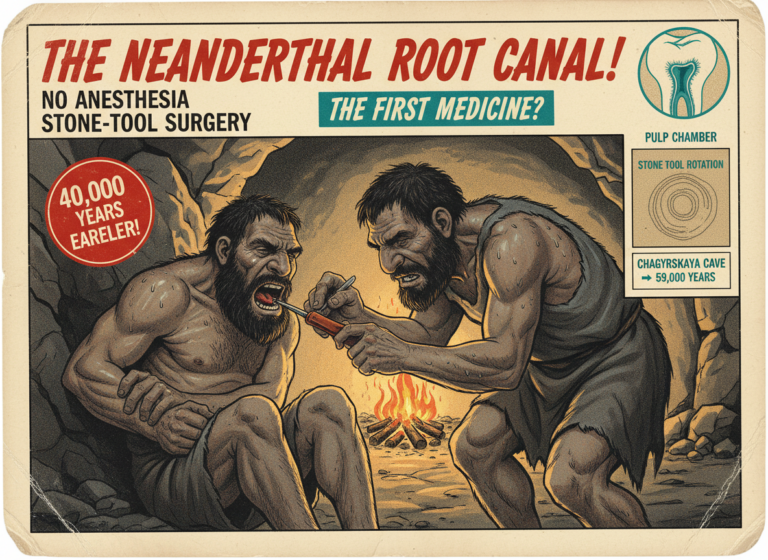
A Neanderthal Had a Toothache 59,000 Years Ago. Someone Drilled It Out With a Stone Tool.
A tooth found in a Siberian cave just rewrote the history of medicine. Scientists confirmed on May 13, 2026, that a Neanderthal…