Original Story
One Dose of Magic Mushrooms Changed the Physical Structure of People’s Brains. A Month Later the Changes Were Still There.
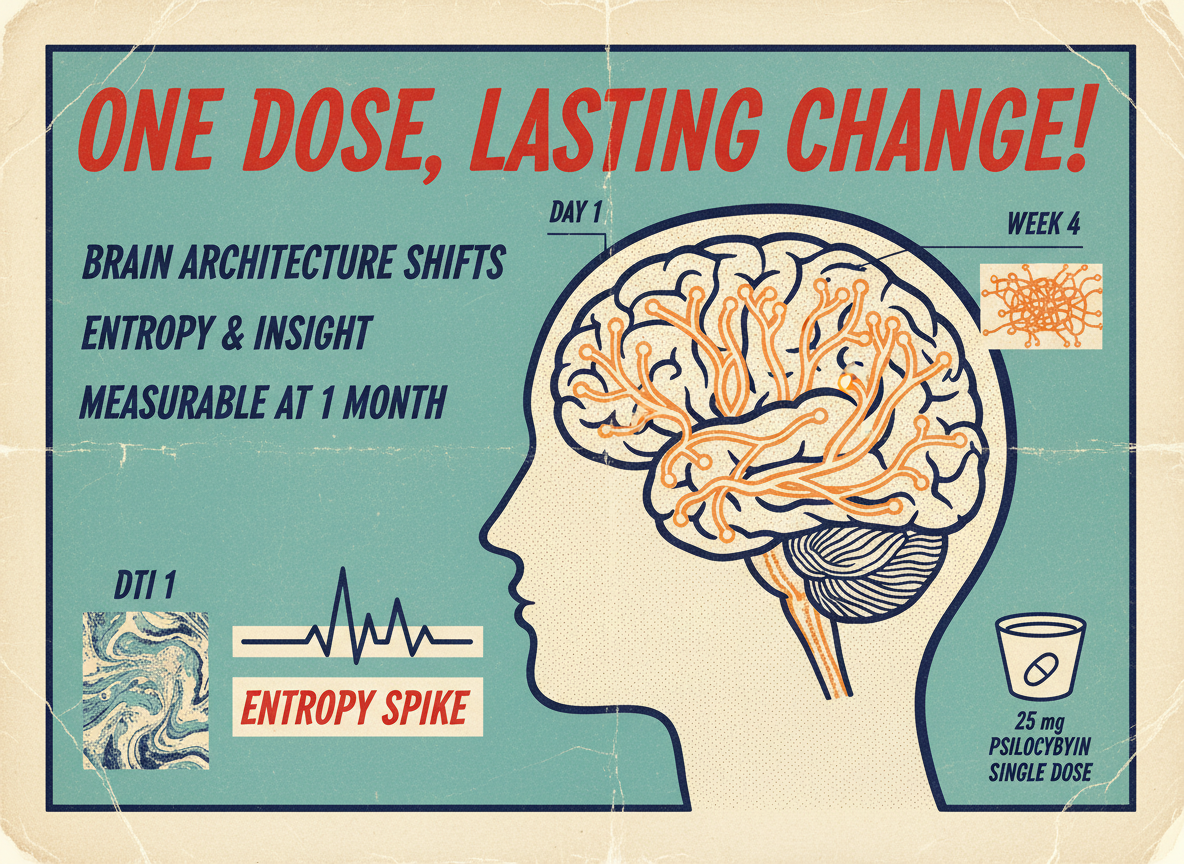
A study published May 5, 2026, in Nature Communications by researchers at UC San Francisco and Imperial College London is the most direct evidence yet that psilocybin — the active compound in what are commonly called magic mushrooms — causes changes to the physical architecture of the human brain, not just to its chemistry during an experience. The study gave healthy, first-time psychedelic users a single 25 mg dose of psilocybin and then scanned their brains with specialized MRI at intervals up to one month later. The scans showed structural changes in areas connecting the front to the middle of the brain — changes visible in the tissue itself, not just in activity patterns — that were still measurable four weeks after a single dose. The participants also showed improvements in cognitive flexibility, psychological insight, and emotional wellbeing that tracked directly with the degree of brain change. A single dose. One time. Lasting one month.
To understand why this is significant, it helps to know what most psychiatric medications actually do and how they do it.
Conventional antidepressants like SSRIs — selective serotonin reuptake inhibitors, the most commonly prescribed class of antidepressant worldwide — work by altering the availability of serotonin in the synaptic gap between neurons. They do not change the physical structure of the brain. They change its chemical environment, continuously, as long as they are being taken. Stop taking them and the chemical environment reverts. This is why antidepressants typically require daily dosing, take weeks to begin working, and stop working when discontinued.
What the UCSF and Imperial College study shows is something structurally different. Psilocybin does not just change brain chemistry during the experience — it apparently causes the brain to physically rewire in ways that persist after the drug has completely cleared the system. The changes detected by diffusion tensor imaging, a specialized form of MRI that maps the microstructural integrity of white matter tracts, were in prefrontal-subcortical connections: the pathways linking the prefrontal cortex (which handles planning, decision-making, and emotional regulation) to deeper subcortical structures involved in emotion, memory, and motivation.
What “Brain Entropy” Means and Why It Matters
The study’s mechanism centers on a concept called brain entropy — the diversity and complexity of neural activity across different brain regions simultaneously. Higher entropy means the brain is processing a richer, less predictable variety of signals. It is associated with flexible, open cognitive states. Lower entropy is associated with rigid, repetitive patterns — which is what researchers see in depression, anxiety, OCD, and addiction.
Within the first hour of taking the 25 mg dose, participants showed a large spike in brain entropy as measured by EEG. The brain suddenly became dramatically more complex in its firing patterns. The researchers found that the degree of entropy spike during the experience predicted how much psychological insight the participant felt the next day. And that insight, in turn, predicted how much improvement in cognitive flexibility and emotional wellbeing the participant showed at the one-month mark.
The chain of causation the researchers are proposing: psilocybin temporarily floods the brain with high entropy, essentially shaking its default wiring out of established patterns; this disruption triggers a reorganization process as the brain consolidates into new, slightly different structural connections; those new connections persist for at least a month and are associated with measurable improvements in psychological health.
This is why the researchers believe the psychedelic experience itself matters therapeutically — not just the drug’s chemistry, but the experience the drug produces. The entropy spike corresponds to the subjective experience of ego dissolution and expanded perception that users describe during a psilocybin session. Under this model, blunting the experience to reduce discomfort might also reduce the therapeutic benefit, because the experience and the brain change appear to be causally linked.
What the Study Does and Does Not Show
The study involved 28 participants — a small sample — who were healthy and had never taken psychedelics. This design choice was deliberate: it removes the confounding effect of pre-existing mental health conditions and establishes a clean baseline for what the drug does in an unaffected brain. But it means the results cannot be directly generalized to therapeutic contexts involving patients with depression or PTSD.
The researchers describe the findings as exploratory and emphasize that replication in larger studies is needed. What the study confirms for the first time, with MRI data, is that a single dose of psilocybin produces detectable anatomical changes in the human brain that last at least one month.
Whatever is happening when a person takes a therapeutic dose of psilocybin and reports that their depression has lifted, their rigid thinking has softened, and the world looks different — the physical trace of it is visible in the tissue of the brain a month later.
Sources: Nature Communications — Lyons et al., Human Brain Changes After First Psilocybin Use (May 5, 2026). DOI: 10.1038/s41467-026-71962-3 — UC San Francisco — One Dose of Psilocybin Changes the Human Brain (May 5, 2026) — Technology Networks — A Single Dose of Psilocybin Linked to Lasting Anatomical Brain Changes (May 5, 2026) — Medical Xpress — One Dose of Psilocybin Changes the Human Brain, Leading to Higher Entropy (May 5, 2026) — News Medical — Single Psilocybin Dose Linked to Lasting Brain and Mood Changes (May 5, 2026) — Unexplained Mysteries forum — Single Dose of Magic Mushroom Psychedelic Can Cause Anatomical Brain Changes (May 6, 2026)
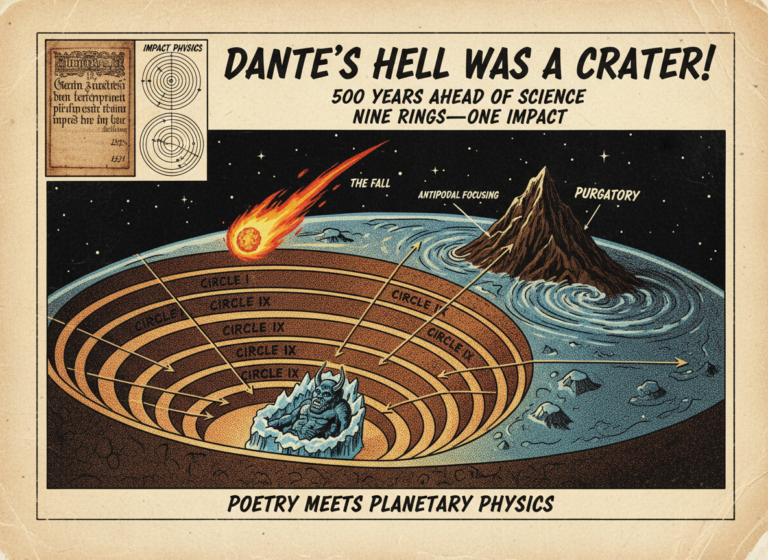
A Medieval Poet Described Hell as a Planetary Impact Crater 500 Years Before Science Had the Concept. Researchers Just Worked Out the Physics.
A new study presented at the European Geosciences Union General Assembly in Vienna in May 2026 makes a case that is extraordinary…
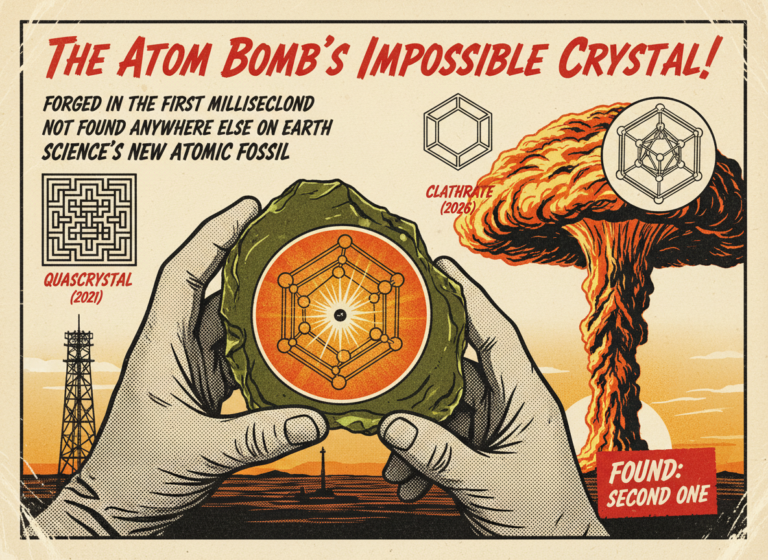
The First Nuclear Bomb Forged a Crystal That Doesn't Exist Anywhere Else on Earth. Scientists Just Found a Second One.
On July 16, 1945, at 5:29 a.m. in a remote stretch of desert in southern New Mexico, the United States Army detonated…
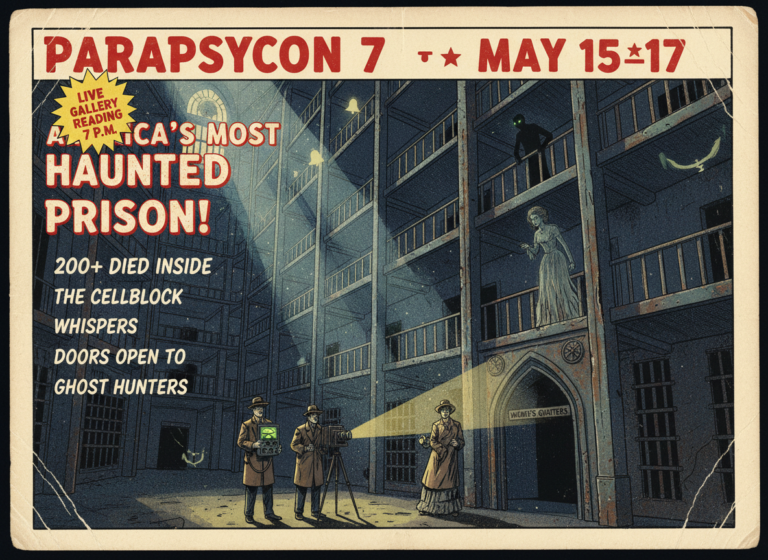
The Most Haunted Prison in America Opens Its Doors to Ghost Hunters Last Night. Over 200 People Died Inside.
The Ohio State Reformatory in Mansfield, Ohio, has been called the most haunted prison in America — and last night, May 14,…

A Neanderthal Had a Toothache 59,000 Years Ago. Someone Drilled It Out With a Stone Tool.
A tooth found in a Siberian cave just rewrote the history of medicine. Scientists confirmed on May 13, 2026, that a Neanderthal…