Original Story
A NASA Scientist Died Three Times Over 50 Years. Each Time She Came Back With the Same Description.
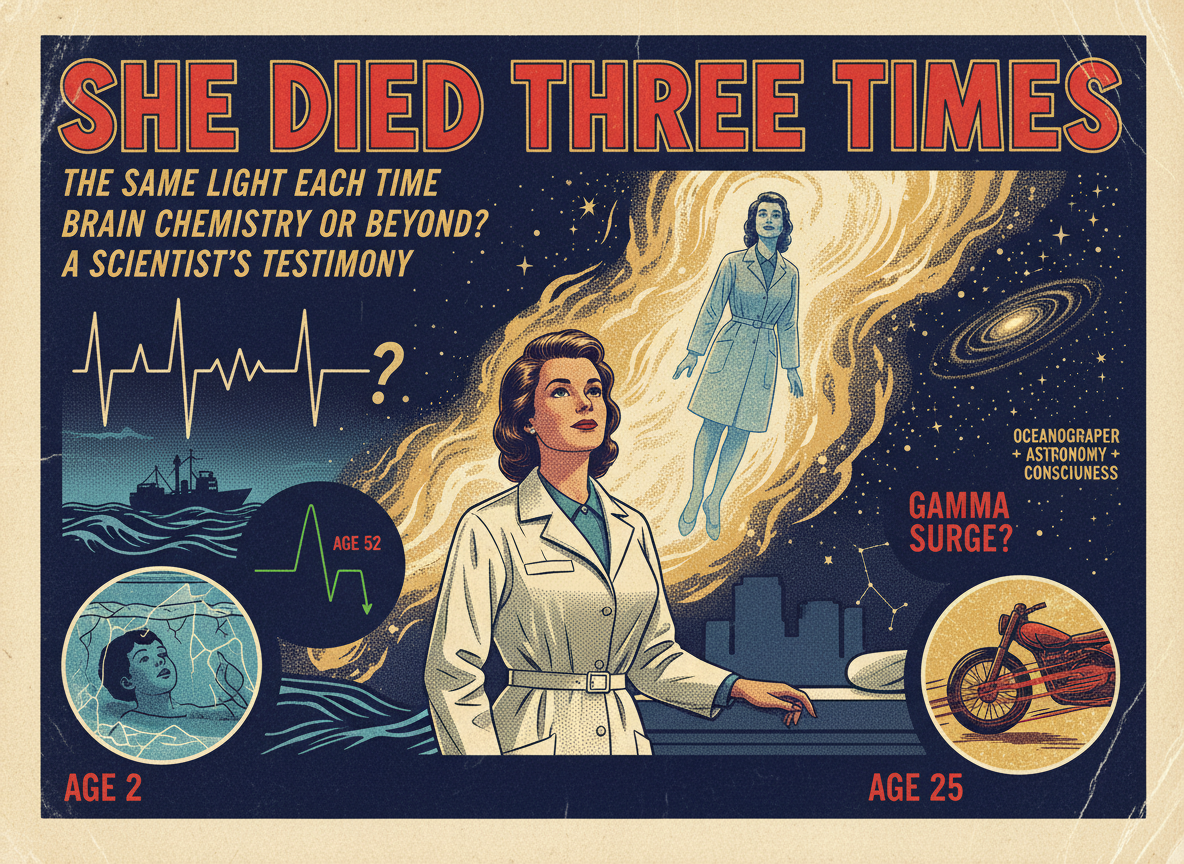
Ingrid Honkala is a 55-year-old former NASA oceanographer and marine biologist with a PhD in Marine Science who has worked for both the US Navy and NASA. She is also a person who has, by her account, been clinically dead three times: at age two, at age 25, and at age 52. What makes her case unusual within the already unusual world of near-death experience research is the consistency. Each time, she reports returning with the same account. The same sense of expanded awareness. The same dissolution of fear. The same perception that consciousness had become vast and interconnected rather than individual and isolated. The same understanding that what normally feels like the solid boundary of self had disappeared entirely. “It felt like entering a deeper layer of reality that exists beyond our physical senses,” Honkala told Jam Press. “In that state, consciousness felt vast, intelligent, and interconnected.” She was two years old the first time she said this was happening to her.
The first experience occurred in Bogotá, Colombia, where Honkala grew up. At age two, she fell into a tank of icy water. She describes the sequence of events in her memoir A Brightly Guided Life with the kind of detail that is hard to account for in a two-year-old: an initial panic that quickly gave way to stillness, a transition from feeling like a child in a body to feeling like “pure consciousness, a field of awareness and light,” and then an out-of-body perception that allowed her to see the surrounding area from above. In this state, she says she saw her mother, who was walking to a new job, and somehow communicated to her that she needed to come home. Her mother returned in time to revive her.
The near-drowning at age two is the episode that Honkala says initiated her lifelong relationship with the question of consciousness. She says it removed her fear of death, a common consequence reported in NDE research. It also set the direction of her career: “I wanted to understand the nature of reality through observation and research,” she said. “The experience inspired me to pursue science.”
Her second experience came at age 25, following a motorcycle accident. Her third occurred at age 52, when her blood pressure dropped dangerously during a surgical procedure.
In each of the three events, she reports entering the same state: complete calm, timelessness, dissolution of self-boundaries, and a perception of being deeply unified with something vast.
What Neuroscience Says Is Happening
The scientific explanation for near-death experiences is not settled, though several competing models exist. The most mechanistic argument holds that NDEs are the result of massive neurochemical activity in the dying brain. A 2024 study from the University of Michigan found a significant surge of gamma-wave brain activity in dying patients — gamma waves are associated with high-level cognitive processing — which researchers interpreted as evidence of a neurological event that could produce the vivid and coherent experiences NDE survivors describe.
The proposed mechanism involves a sudden release of neurotransmitters including serotonin and dopamine, which at high concentrations can produce profound alterations of consciousness not entirely unlike those produced by psychedelic compounds. Under this framework, the NDE is a kind of involuntary and physiologically extreme altered state, generated by the brain itself as it undergoes hypoxia.
Professor Emerita Janice Holden, President of the International Association of Near-Death Studies, has challenged this framework on specific grounds. Brief gamma wave surges, she argues, cannot account for the complexity, duration, and coherent narrative structure consistently reported in NDE accounts. She points specifically to verified out-of-body perceptions — cases where NDE survivors accurately describe events occurring in other rooms or at a distance from their bodies, details that are subsequently confirmed — as the part of the phenomenon that the neurological model struggles most to explain.
Honkala maintains that what she experienced was not a hallucination. “These experiences transformed my understanding of life itself,” she said. “Instead of seeing ourselves as isolated individuals struggling to survive, I began to understand that we may be expressions of consciousness experiencing life through a physical form.”
What She Now Believes and Why It Matters
Honkala is not claiming to have resolved the debate. She is not declaring that the afterlife exists, or that the soul is proven, or that the brain is irrelevant to experience. What she is doing is describing a pattern — three experiences, fifty years apart, each returning her to the same territory — and arguing that this consistency deserves to be taken seriously as data.
She has written about it in her memoir and in her new guide Dying to See the Light: A Scientist’s Guide to Reawakening (Without Nearly Dying). She currently works as an international speaker, bridging the gap between her scientific training and the experiences that shaped it.
The near-death experience research field has generated more than five decades of documented accounts from people across every culture, religion, and background on Earth. The details are remarkably consistent: the sense of leaving the body, the perception of a vast and luminous space, the dissolution of fear, and the return with the conviction that death is a transition rather than an ending. Honkala, who has a PhD and has worked at NASA, is describing the same things that a subsistence farmer in rural Ghana described in the 7th century BC. The content of the experience does not appear to depend on who is having it.
What that means — whether it reflects brain chemistry, consciousness itself, or something that cannot yet be described — is the question nobody has answered.
Sources: Yahoo Life / New York Post — NASA Scientist Claims She Died 3 Times, Revealing Her Peek at the Afterlife (May 5-6, 2026) — LatestLY — NASA Scientists’ Near-Death Experience: Dr Ingrid Honkala Shares What Lies Beyond (May 6, 2026) — Attack of the Fanboy — A NASA Scientist Died Three Times Across 50 Years, and Each Time She Came Back With the Exact Same Account (May 5, 2026) — Unexplained Mysteries — NASA Scientist Describes What She Saw During 3 Near-Death Experiences (May 6, 2026)
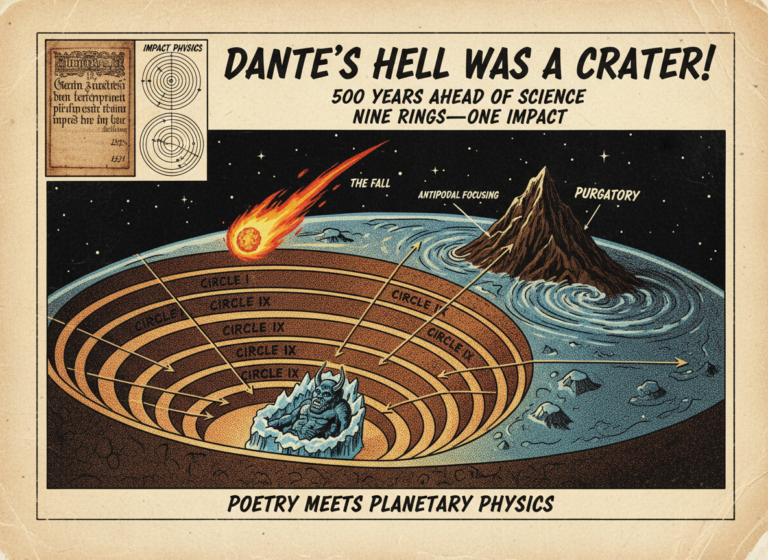
A Medieval Poet Described Hell as a Planetary Impact Crater 500 Years Before Science Had the Concept. Researchers Just Worked Out the Physics.
A new study presented at the European Geosciences Union General Assembly in Vienna in May 2026 makes a case that is extraordinary…
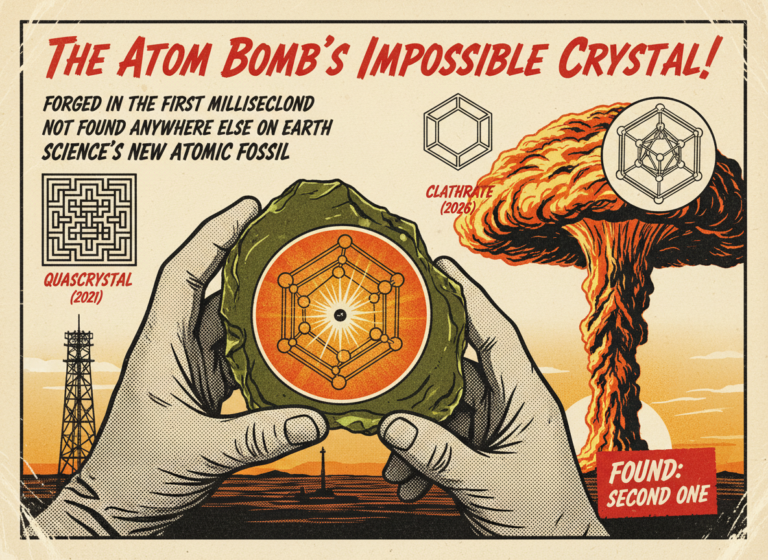
The First Nuclear Bomb Forged a Crystal That Doesn't Exist Anywhere Else on Earth. Scientists Just Found a Second One.
On July 16, 1945, at 5:29 a.m. in a remote stretch of desert in southern New Mexico, the United States Army detonated…
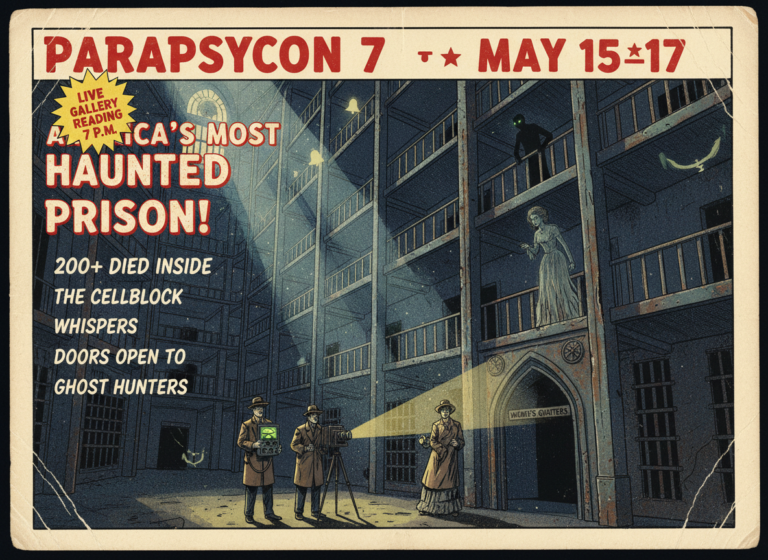
The Most Haunted Prison in America Opens Its Doors to Ghost Hunters Last Night. Over 200 People Died Inside.
The Ohio State Reformatory in Mansfield, Ohio, has been called the most haunted prison in America — and last night, May 14,…
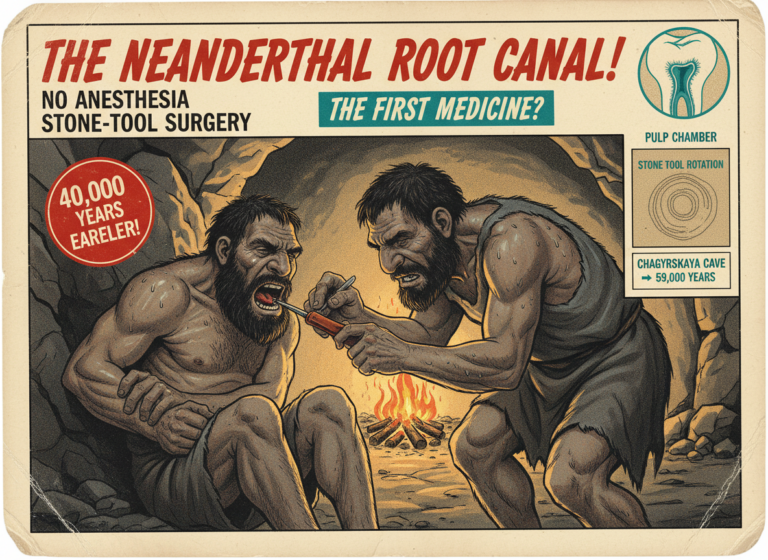
A Neanderthal Had a Toothache 59,000 Years Ago. Someone Drilled It Out With a Stone Tool.
A tooth found in a Siberian cave just rewrote the history of medicine. Scientists confirmed on May 13, 2026, that a Neanderthal…