Original Story
A Hamster-Sized Mammal That Lived Alongside Dinosaurs May Be the Ancestor That Made Everything That Came After Possible.
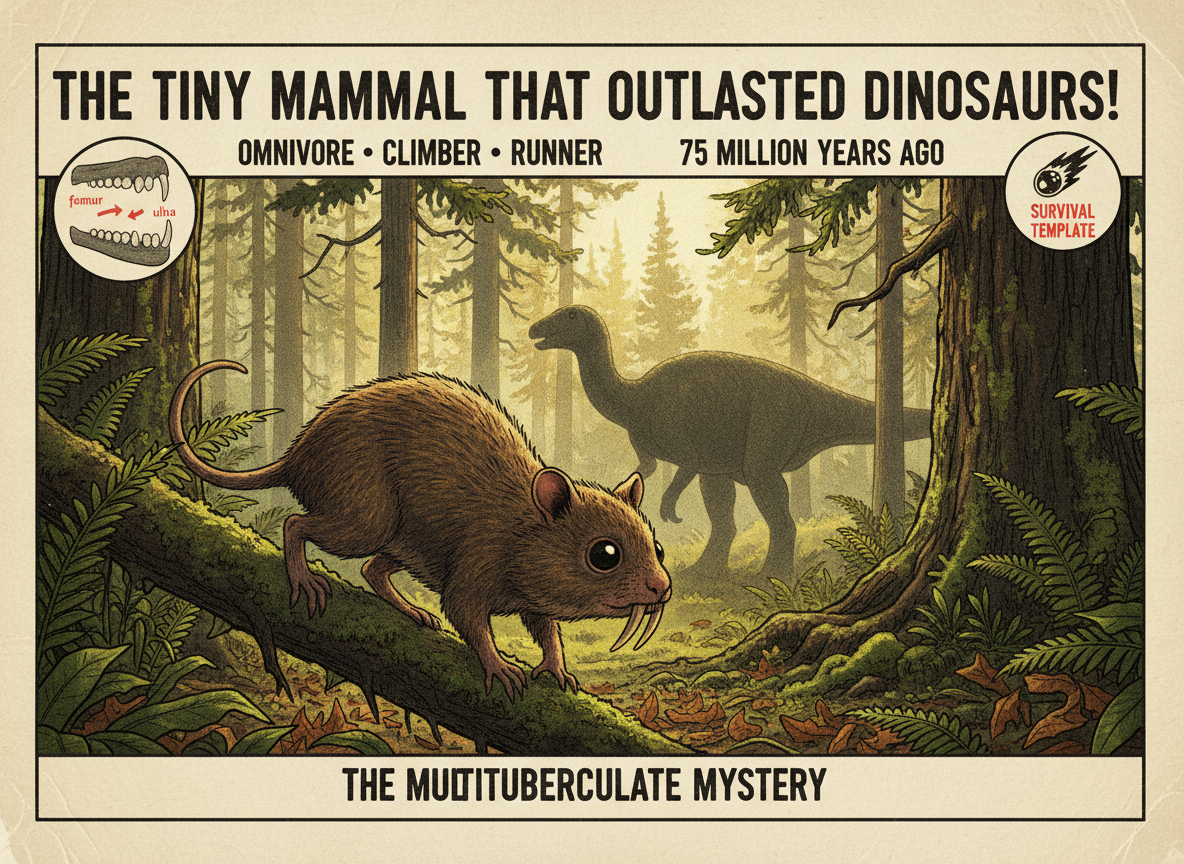
Researchers at the University of Washington have identified a previously unknown species of prehistoric mammal from a fossil discovered in Baja California, Mexico. The species, named Cimolodon desosai, lived approximately 75 million years ago — when the dinosaurs that would later become extinct were still the dominant animals on Earth — and was roughly the size of a golden hamster. It was small, flexible in its diet, and could move both on the ground and through trees. These are exactly the characteristics, according to lead author Gregory Wilson Mantilla, that made its lineage one of the key survivors of the mass extinction that wiped out approximately 75 percent of all life on Earth 66 million years ago. The study was published in the Journal of Vertebrate Paleontology and is circulating on fringe and science forums as of May 5, 2026.
The backstory on Cimolodon goes back to the Jurassic Period — roughly 200 million years ago — when the group of mammals called multituberculates first appeared. These were not direct ancestors of modern mammals in the way that the word “ancestor” sometimes implies a linear chain. They were a separate branch of the mammalian family tree, a long-running and diverse group that eventually died out about 33 million years ago during the Oligocene epoch. In the broadest sense, they were evolutionary cousins of the lineages that eventually became all living mammals.
What makes them fascinating is that they survived alongside dinosaurs for more than 100 million years — roughly as long as the time span from the Jurassic to the extinction of the non-bird dinosaurs — and that several of their lineages survived the extinction itself. Understanding how they did it is one of the central questions of Cretaceous paleontology.
The Cimolodon genus, to which the new species belongs, was widespread during the Late Cretaceous. Fossils have been found across a broad belt of western North America, from western Canada down through Mexico. The new specimen adds the southernmost confirmed occurrence to that range, from the El Gallo Formation of Baja California.
What the Fossil Contains and Why It Matters
Most Cimolodon fossils consist entirely of teeth. This is not surprising — teeth are the hardest structures in the vertebrate body and fossilize far more readily than bones, muscles, or soft tissue. Reconstructing an animal’s lifestyle and ecology from teeth alone is possible but inherently limited.
The new specimen from Baja California is different. It includes teeth, skull fragments, jawbones, and parts of the postcranial skeleton — specifically a femur (thigh bone) and an ulna (forearm bone). These are rare elements to have associated with a multituberculate from this period, and they allow the researchers to say things about how the animal moved that tooth-only fossils cannot.
The limb bone proportions and morphology are consistent with an animal that was both a ground runner and capable of climbing. This combination suggests a lifestyle that moved fluidly between environments, which is exactly the kind of behavioral flexibility that would be advantageous in a rapidly changing world. Following the mass extinction at the Cretaceous-Paleogene boundary, the forests and ecosystems that the surviving animals had to navigate were dramatically different from what existed before. Animals that could use both ground and canopy, eat both plant and animal material, and hide in small spaces had a major survival advantage over specialist large-bodied predators or grazers that depended on specific food sources.
“This new species, Cimolodon desosai, was ancestral to the species that survived the extinction event,” said Wilson Mantilla. “It and its descendants were relatively small and omnivorous — two traits that were advantageous for surviving.”
What 4,000 Generations of Small Survivors Built
The multituberculates and their survivors are often treated as an evolutionary footnote — a group that managed to hang on through the worst catastrophe in recent Earth history before eventually dying out themselves. That framing undersells their significance.
The mammals that survived the extinction and eventually diversified into the modern groups — rodents, primates, ungulates, carnivores, and ultimately humans — lived in the same basic ecological register as Cimolodon: small, flexible, nocturnal or crepuscular, hiding in the ecological cracks that dinosaur dominance left open. The habits that allowed mammals to survive 150 million years of dinosaur dominance were the same habits that allowed their descendants to inherit the planet after the asteroid hit.
Cimolodon desosai was not directly ancestral to any living species. But the way it lived — small, omnivorous, adaptable, mobile — was the template that made everything afterward possible.
Sources: [Journal of Vertebrate Paleontology — Wilson Mantilla et al., Cranial and Postcranial Remains of a New Species of Cimolodon (Mammalia, Multituberculata, Cimolodontidae) from the Upper Cretaceous El Gallo Formation of Baja California, México (April 22, 2026). DOI: 10.1080/02724634.2026.2641109] — ScienceDaily — This Tiny Mammal Survived the Dinosaur Apocalypse and Changed Life on Earth (April 27, 2026) — SciTechDaily — This Tiny Creature Survived a World of Dinosaurs and Changed What Came Next (May 3, 2026) — Phys.org — Before Dinosaurs Vanished, a Hamster-Sized Mammal Was Already Shaping What Survived Next on the Pacific Coast (April 25, 2026) — Knowridge — Scientists Discover 75-Million-Year-Old Mammal That Survived the Dinosaur Era (May 5, 2026) — Unexplained Mysteries forum — This Tiny Creature Survived a World of Dinosaurs and Changed What Came Next (May 5, 2026)
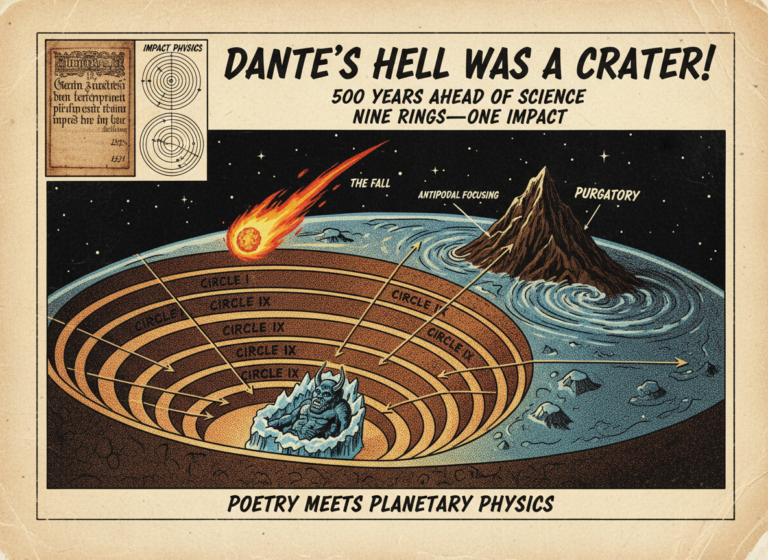
A Medieval Poet Described Hell as a Planetary Impact Crater 500 Years Before Science Had the Concept. Researchers Just Worked Out the Physics.
A new study presented at the European Geosciences Union General Assembly in Vienna in May 2026 makes a case that is extraordinary…
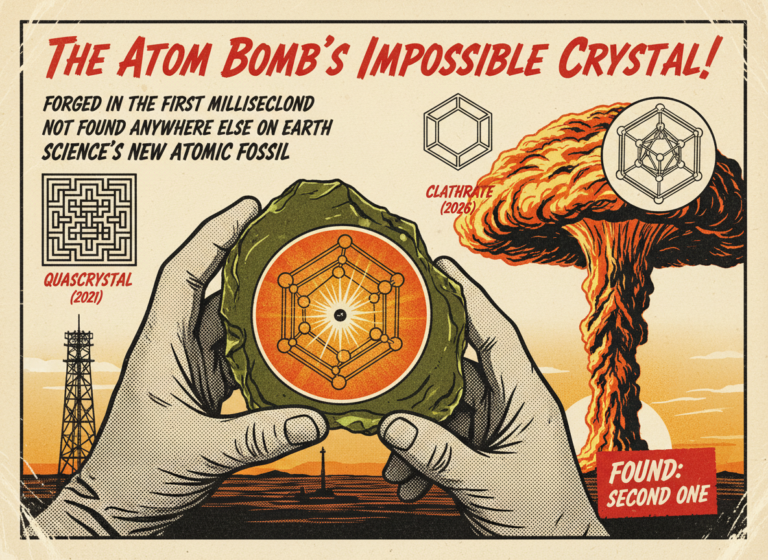
The First Nuclear Bomb Forged a Crystal That Doesn't Exist Anywhere Else on Earth. Scientists Just Found a Second One.
On July 16, 1945, at 5:29 a.m. in a remote stretch of desert in southern New Mexico, the United States Army detonated…

The Most Haunted Prison in America Opens Its Doors to Ghost Hunters Last Night. Over 200 People Died Inside.
The Ohio State Reformatory in Mansfield, Ohio, has been called the most haunted prison in America — and last night, May 14,…
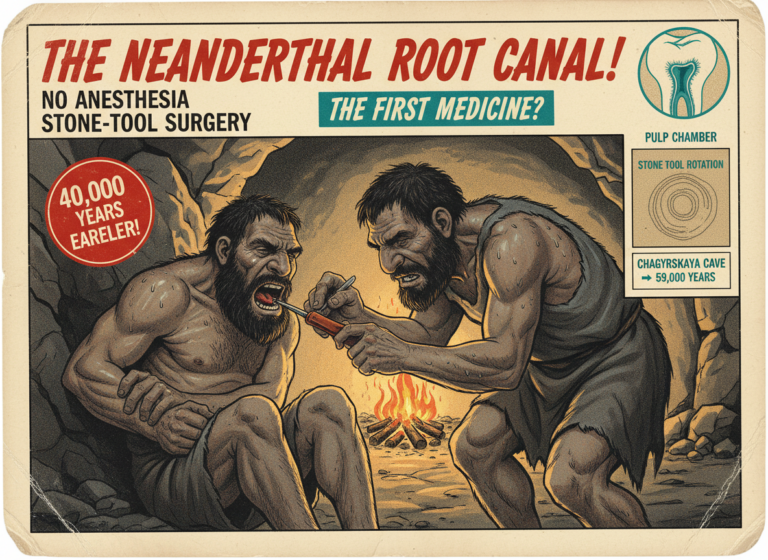
A Neanderthal Had a Toothache 59,000 Years Ago. Someone Drilled It Out With a Stone Tool.
A tooth found in a Siberian cave just rewrote the history of medicine. Scientists confirmed on May 13, 2026, that a Neanderthal…