Original Story
Scientists Just Proved That Trees Glow During Thunderstorms. This Was Theorized 100 Years Ago. Nobody Could See It Until Now.
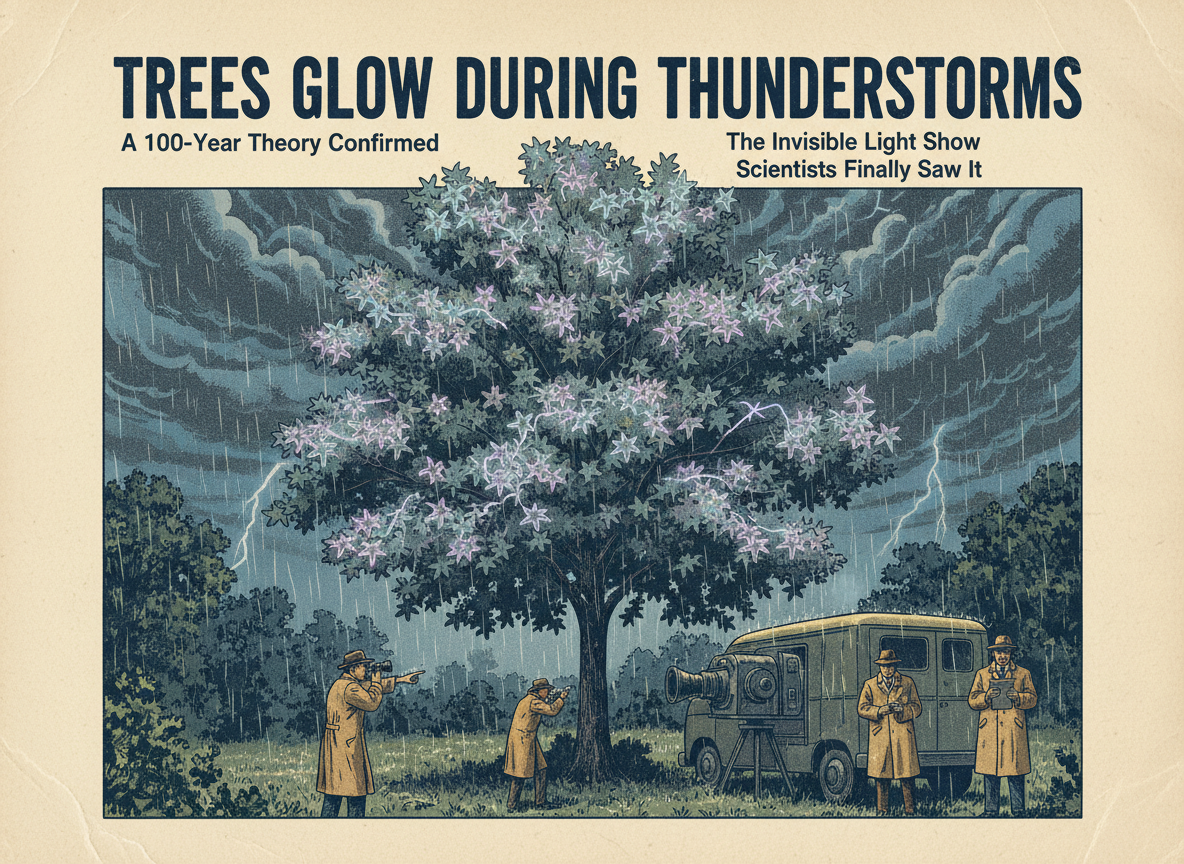
A team at Penn State University has captured the first-ever direct observations of corona discharges on living trees during actual thunderstorms. Published in Geophysical Research Letters in February 2026, the study confirms something hypothesized in the scientific literature for nearly a century: during storms, tree leaves generate a faint electrical glow invisible to the human eye. The phenomenon hops from leaf to leaf, can last several seconds, and produces atmospheric chemistry that nobody had previously accounted for. The fringe and spiritual communities have been talking about the energy fields of trees for generations. They were not entirely wrong about the glow.
The tree was a sweetgum. The storm was rolling over Pembroke, North Carolina. The camera pointed at the treetop was not a standard camera. It had been built from scratch by a team of meteorologists at Penn State specifically to detect a band of ultraviolet light that the ozone layer normally strips out of sunlight entirely — a UV band that, at ground level on a rain-soaked night, can only be produced by one of three things: electrical discharges, very hot fires, or specialized laboratory lamps.
No fires were burning. No labs were nearby. The UV signals the camera detected were coming from the leaves.
Patrick McFarland, a postdoctoral meteorologist who led the research, described watching the footage afterward. “We sit there and stare at this video while the thunderstorm’s raging overhead,” he said. “You’re looking for the faintest signals on a video feed of nothing. It’s really difficult to tell in real time if you’re seeing anything.” The later analysis made it clear. Over 90 minutes, the team recorded 41 separate corona discharges from the tips of leaves on that one tree. Some lasted fractions of a second. Some lasted up to three seconds. They did not stay in one place. They hopped — flickering from one leaf to the next, tracking with the branches as wind shifted the canopy.
What a Corona Discharge Is
A corona discharge is not lightning. It is not even close to lightning. Where lightning heats air to extreme temperatures and releases enormous energy in a single dramatic event, a corona is a cold discharge: a weak, faint plasma that forms when a strong electric field concentrates around a sharp point.
During a thunderstorm, storm clouds carry a strong negative charge. That charge induces the opposite — positive charge — in the ground below. Opposite charges seek each other out. In a forest, the positive charge flows up the electrically conductive trunks and branches of trees and concentrates at the sharpest available points: the very tips of leaves and needles. There, the localized field becomes strong enough to ionize the surrounding air molecules, creating a brief, flickering plasma. When those molecules relax and recombine, they release light — faint, ultraviolet, invisible to human eyes, but there.
The phenomenon was first described in the scientific literature almost a century ago. It had never been directly observed in nature. It had only been confirmed in laboratory settings where metal plates substituted for storm clouds. The instrument McFarland’s team built and mounted to a Toyota Sienna was the technology gap that closed the loop.
What It Actually Means
The implications go beyond the confirmation itself. The study calculates that corona discharges produce hydroxyl radicals — molecules sometimes called the atmosphere’s detergent because they break down methane, carbon monoxide, and other atmospheric pollutants. The rate at which trees generate these molecules during a thunderstorm, via corona alone, may exceed every other known production mechanism near a forest canopy.
The discharges can also subtly damage foliage over time. The oxidative stress from repeated corona events across storm-prone regions may be a factor in upper canopy health that forest researchers have not previously measured for.
And because the phenomenon appears to be universal — observed across multiple species, multiple storms, multiple geographic locations — the team estimates that during any active thunderstorm over a large forest, corona discharges may be firing simultaneously from millions of leaf tips at once. A silent, invisible electrical light show pulsing across the entire canopy while rain falls.
“These things actually happen,” McFarland said. “We’ve seen them. We know they exist now.”
Sources: The Debrief — Scientists Confirm Elusive Electrical Phenomenon That Evaded Scientists for a Century — Science AAAS — In a first, researchers film treetops glowing during thunderstorms — Study Finds — Scientists Capture First Direct Evidence of Trees Glowing With Corona — Geophysical Research Letters — Corona Discharges Glow on Trees Under Thunderstorms, McFarland et al. 2026
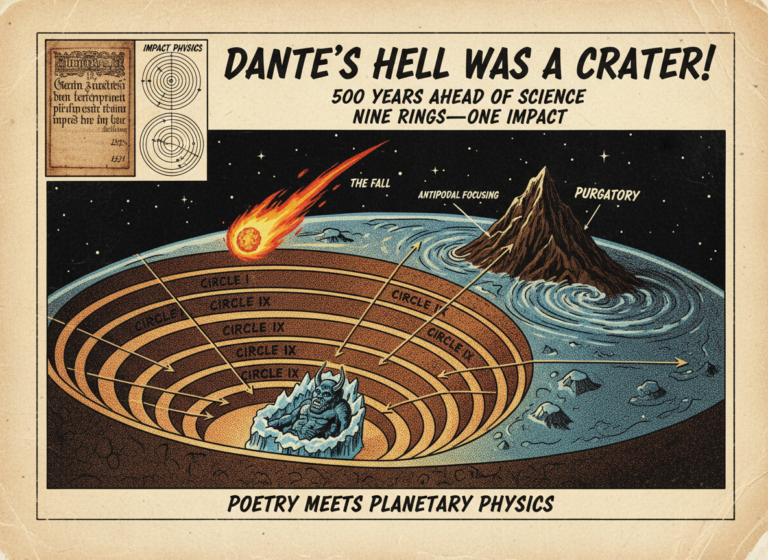
A Medieval Poet Described Hell as a Planetary Impact Crater 500 Years Before Science Had the Concept. Researchers Just Worked Out the Physics.
A new study presented at the European Geosciences Union General Assembly in Vienna in May 2026 makes a case that is extraordinary…
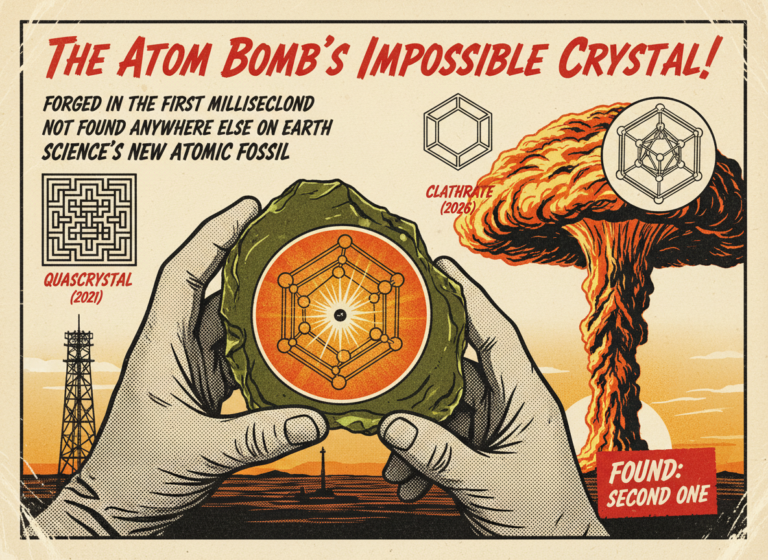
The First Nuclear Bomb Forged a Crystal That Doesn't Exist Anywhere Else on Earth. Scientists Just Found a Second One.
On July 16, 1945, at 5:29 a.m. in a remote stretch of desert in southern New Mexico, the United States Army detonated…
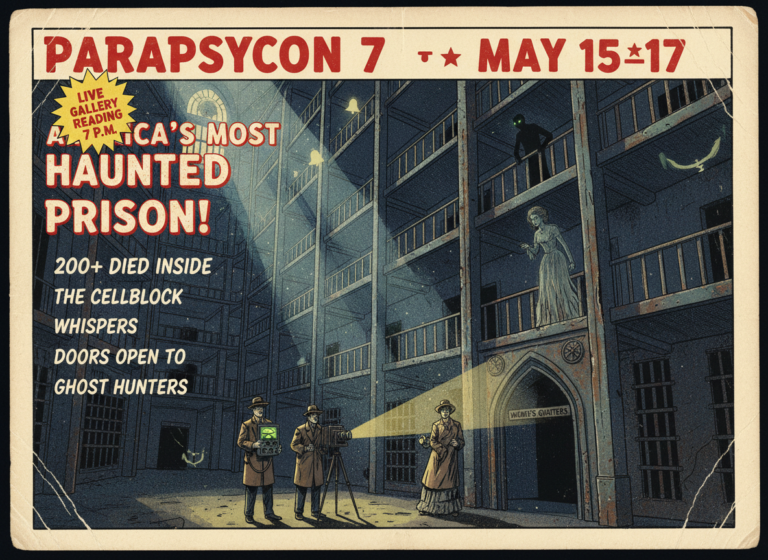
The Most Haunted Prison in America Opens Its Doors to Ghost Hunters Last Night. Over 200 People Died Inside.
The Ohio State Reformatory in Mansfield, Ohio, has been called the most haunted prison in America — and last night, May 14,…

A Neanderthal Had a Toothache 59,000 Years Ago. Someone Drilled It Out With a Stone Tool.
A tooth found in a Siberian cave just rewrote the history of medicine. Scientists confirmed on May 13, 2026, that a Neanderthal…