Original Story
Japan’s Parliament Is Pushing for a UAP Investigation Office. The Trigger Was a Nuclear Power Plant Incident Nobody Has Explained.
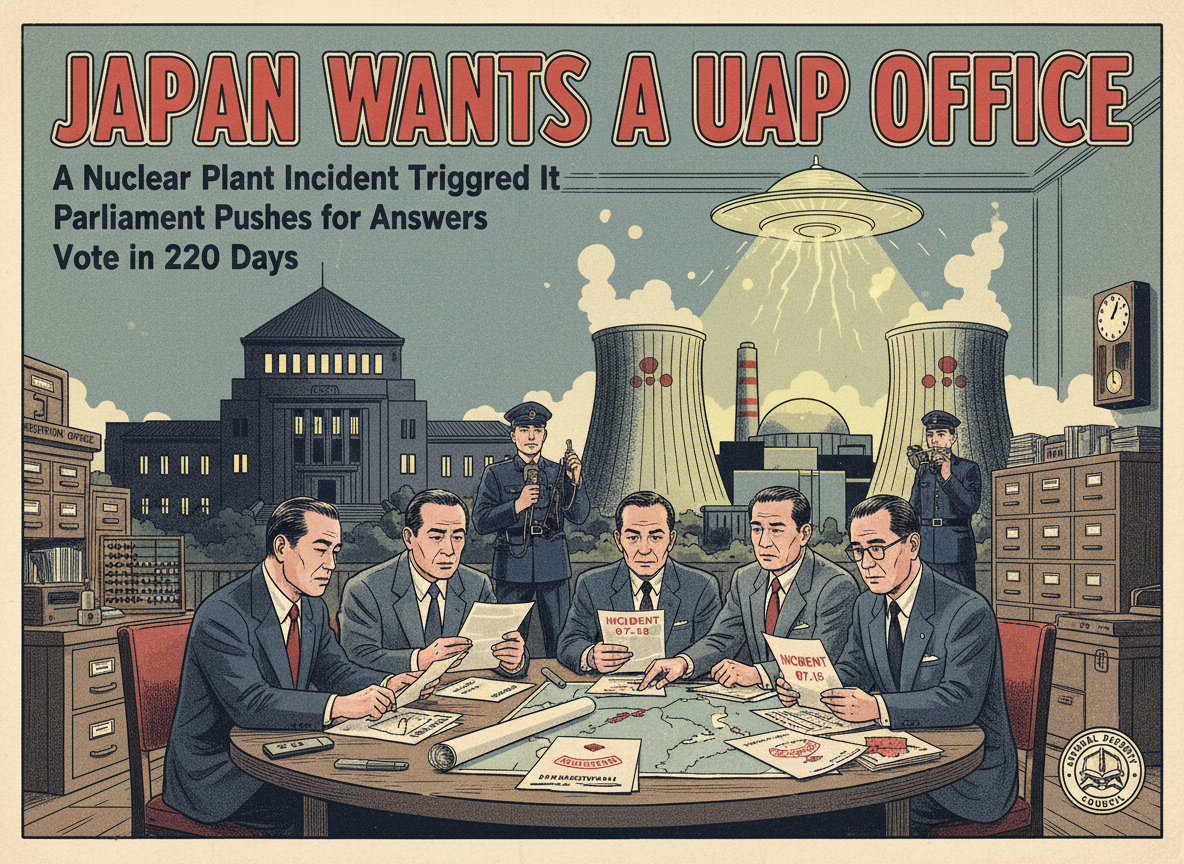
Japan’s bipartisan Parliamentary League for Unraveling UAP announced on March 24 that it will formally propose the creation of a government expert body to consolidate and analyze UAP information, to be placed directly under the Deputy Chief Cabinet Secretary for Crisis Management. The push comes in direct response to Trump’s February disclosure directive. But the specific incident driving the urgency is not a military encounter. It is an unresolved anomaly over the Genkai Nuclear Power Plant, where official records from Kyushu Electric Power and the Saga Prefectural Police do not agree.
Japan has treated UAP as an occult matter for decades. That framing held until Chinese surveillance balloons began appearing over Japanese airspace, unauthorized drones intruded into Self-Defense Force bases, and footage of a docked helicopter destroyer spread across Chinese social media after an apparent drone breach of a military facility. At that point, the political calculus changed.
The Parliamentary League for Unraveling UAP was founded in June 2024 and now counts more than 80 members, including former defense ministers. It is chaired by Yasukazu Hamada, a former defense minister who served on the group from the start and has publicly stated that dismissing UAP as unknowable is “extremely irresponsible.” The group has already formally proposed a dedicated UAP research office to Japan’s defense minister, who responded positively.
On March 24, 2026, the league announced it would go further: proposing a specialized government body directly under the Deputy Chief Cabinet Secretary for Crisis Management, with a vote planned for March 30. The announcement was explicitly linked to Trump’s February 20 directive ordering the release of all US government UAP files.
The Genkai Incident
What gives the new proposal its sense of urgency is a specific unresolved case: an anomalous event at the Genkai Nuclear Power Plant in Saga Prefecture.
The league states publicly that it has identified “irreconcilable contradictions” between the operational records of Kyushu Electric Power Company and the official explanation from the Saga Prefectural Police, which attributed the incident to a misidentified aircraft. The group characterizes these inconsistencies as a serious vulnerability in the security of Japan’s energy infrastructure.
The details of what actually occurred at Genkai have not been publicly confirmed by either party. What is confirmed is that Japan’s own parliamentary UAP group is on record saying the explanation does not hold and that the discrepancy represents a national security risk.
Japan is not the first US ally to treat UAP as a defense and infrastructure concern rather than a fringe curiosity. France has operated GEIPAN, its official UAP study bureau, since 1977. Chile has CEFAA. Canada launched a multiagency UAP survey in 2023. The Pentagon’s AARO has previously identified the region stretching from western Japan to China as a hotspot for UAP sightings based on data from 1996 to 2023.
The Intelligence Sharing Question
The league’s proposal is explicitly framed around intelligence sharing with the United States. Japan’s concern is not merely domestic. If the US begins releasing classified UAP files under Trump’s directive, Japan wants to be positioned to receive and evaluate any data that involves its own airspace or territorial waters. Building the institutional infrastructure now — before the disclosures arrive — is the stated rationale for the March 30 vote.
“It is extremely irresponsible of us to be resigned to the fact that something is unknowable, and to keep turning a blind eye to the unidentified,” Hamada has said.
The Genkai discrepancy has not been resolved. The proposal vote is in two days.
Sources: Sentinel News — Japan: Lawmakers Push for UAP Investigation Body — The Debrief — Japan Launches UAP Investigation Following US Report — The Conversation — Academic Researchers Studying UAP Face Stigma
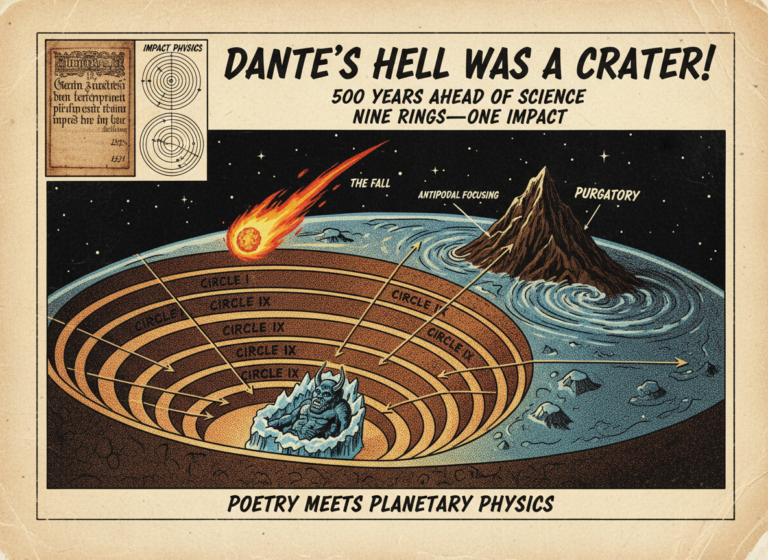
A Medieval Poet Described Hell as a Planetary Impact Crater 500 Years Before Science Had the Concept. Researchers Just Worked Out the Physics.
A new study presented at the European Geosciences Union General Assembly in Vienna in May 2026 makes a case that is extraordinary…
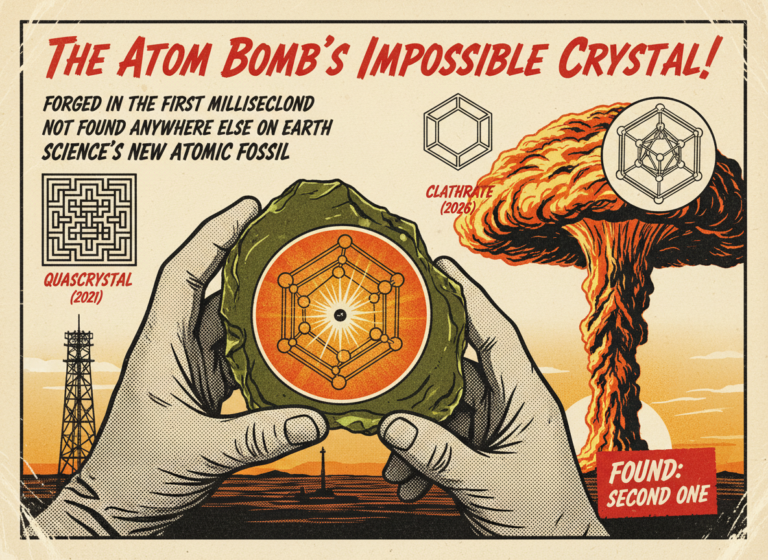
The First Nuclear Bomb Forged a Crystal That Doesn't Exist Anywhere Else on Earth. Scientists Just Found a Second One.
On July 16, 1945, at 5:29 a.m. in a remote stretch of desert in southern New Mexico, the United States Army detonated…

The Most Haunted Prison in America Opens Its Doors to Ghost Hunters Last Night. Over 200 People Died Inside.
The Ohio State Reformatory in Mansfield, Ohio, has been called the most haunted prison in America — and last night, May 14,…

A Neanderthal Had a Toothache 59,000 Years Ago. Someone Drilled It Out With a Stone Tool.
A tooth found in a Siberian cave just rewrote the history of medicine. Scientists confirmed on May 13, 2026, that a Neanderthal…