Original Story
Dying Children Are Waking Up. The Science Cannot Explain It. The Cases Are Real.
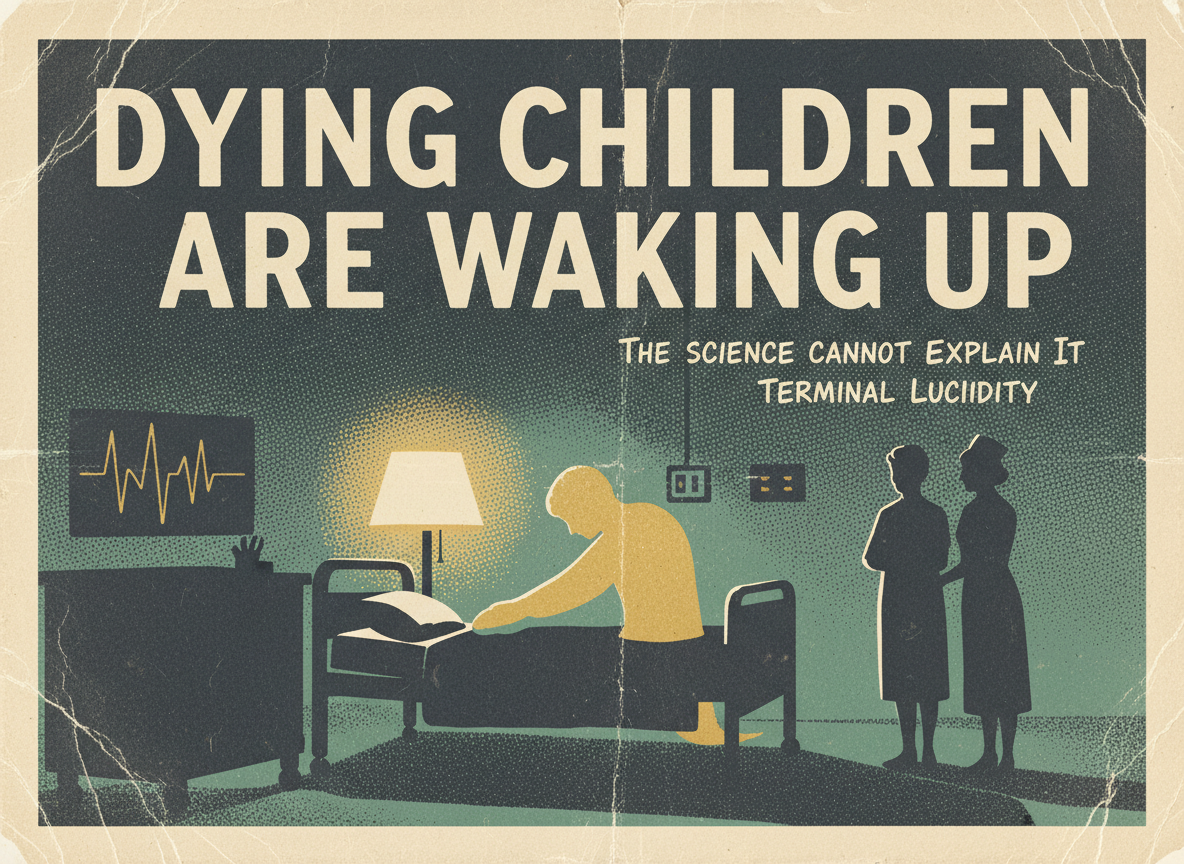
A peer-reviewed study published in February 2026 documents terminal lucidity in children under 16, including comatose patients who suddenly became alert, communicated normally, and expressed peace in the final hours before death. The phenomenon challenges the foundational assumption that consciousness requires a functioning brain. Nobody has explained the mechanism.
The phenomenon has a name. It is called terminal lucidity, and it has been recorded in medical literature for two hundred and fifty years. A person with severe and irreversible brain damage, whether from dementia, a tumor, a stroke, or years in a coma, suddenly regains clarity. They recognize people they had not recognized in years. They speak in complete sentences. They seem, in the most clinical sense of the word, present. And then, within hours or days, they die.
Until recently, almost all of the documented cases involved adults. A new study published in the journal Psychology of Consciousness: Theory, Research, and Practice in February 2026 changed that. Researchers led by psychologist Natasha Tassell-Matamua at Massey University in New Zealand collected case reports of terminal lucidity specifically in children under 16, gathering data from seven witnesses, six of whom were physicians, nurses, hospice workers, or social workers. Eleven cases in total.
The findings matched what has been recorded in adults. Terminal lucidity in the children studied tended to occur within the final hours to minutes before death. It manifested as sudden and notable improvement in mental ability alongside marked behavioral and emotional changes. Ten of the eleven children had been classified as having severe mental impairment before the episode. All of them, despite that impairment, displayed clear lucidity.
What the Cases Show
The case descriptions are precise. Case 7 shifted from a semi-comatose state into alertness and was able to communicate with nurses. Case 8, who had not been responding to healthcare providers or parents, began communicating normally. Case 3 was described by those present as being “her normal self, but not in pain and very peaceful.”
The historical record on this goes back further. A 13th-century account describes an infant in seemingly painful distress who suddenly became very alert, started to laugh, and lifted both arms before dying. A 17th-century case documents an 18-month-old girl who had been convulsing, stopped, opened her eyes, smiled, lifted her arms, and called out words in German before she died. A 2-year-old boy in the final stage of disease who had been unable to speak or move any muscles, including facial muscles and eyelids, opened his eyes, smiled, raised both arms, and then died. These are not anecdotes. They are documented case reports, recorded by people who were in the room.
Why It Is Unexplained
The central problem is not that the cases are disputed. The central problem is that they should not be possible.
The standard model of consciousness in neuroscience holds that mental clarity requires intact, functioning neural tissue. Terminal lucidity presents the opposite: mental clarity occurring specifically in conditions where the brain is most severely compromised. Stroke. Advanced dementia. Tumors. Coma. The dying process itself introduces oxygen deprivation, inflammatory toxins, and cellular breakdown, all of which should make cognition worse. In documented terminal lucidity cases, cognition improves.
EEG studies have recorded surges of organized neural activity in the final minutes before death, which some researchers cite as a possible mechanism. Others argue those surges are the result of cell membranes losing integrity under oxygen deprivation and are not related to lucidity at all. The honest position is that there is no consensus explanation for why a severely brain-damaged child in a semi-comatose state suddenly communicates normally to a nurse and then dies.
Tassell-Matamua told Nautilus that these experiences challenge existing models of consciousness. “Maybe we need to be looking at other hypotheses about consciousness and how it all works.”
The study describes its own findings as a necessary first step. What it documents is real. What it means is still open.
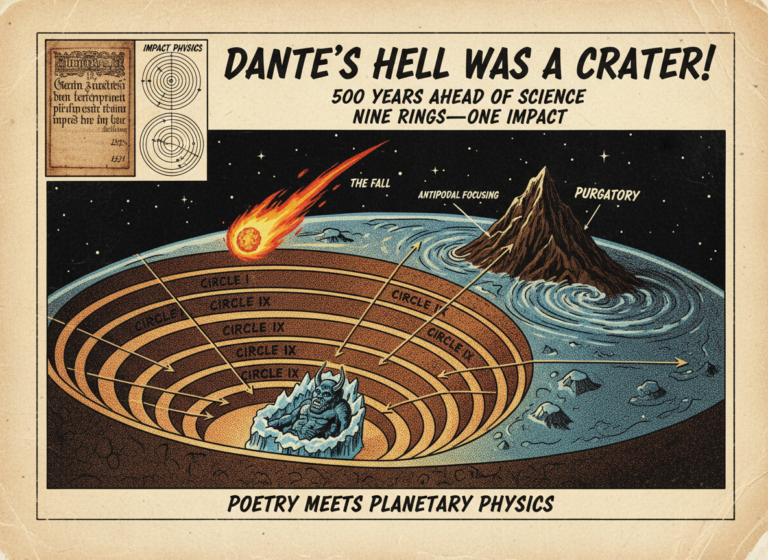
A Medieval Poet Described Hell as a Planetary Impact Crater 500 Years Before Science Had the Concept. Researchers Just Worked Out the Physics.
A new study presented at the European Geosciences Union General Assembly in Vienna in May 2026 makes a case that is extraordinary…

The First Nuclear Bomb Forged a Crystal That Doesn't Exist Anywhere Else on Earth. Scientists Just Found a Second One.
On July 16, 1945, at 5:29 a.m. in a remote stretch of desert in southern New Mexico, the United States Army detonated…
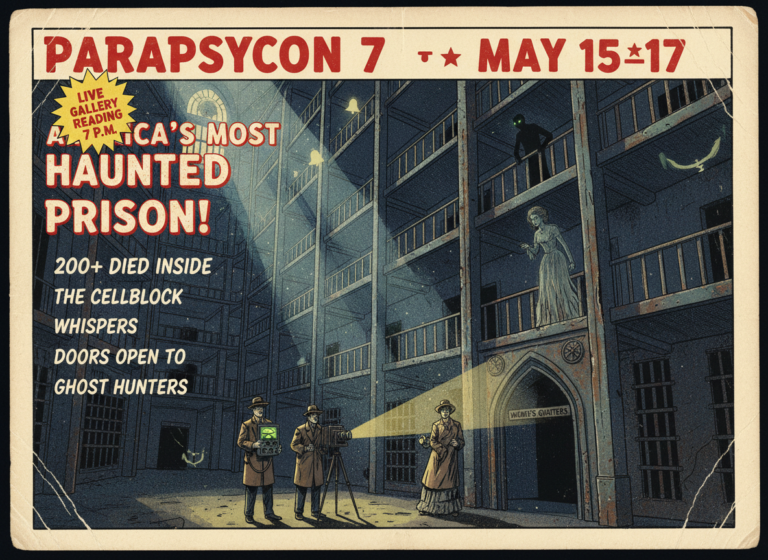
The Most Haunted Prison in America Opens Its Doors to Ghost Hunters Last Night. Over 200 People Died Inside.
The Ohio State Reformatory in Mansfield, Ohio, has been called the most haunted prison in America — and last night, May 14,…

A Neanderthal Had a Toothache 59,000 Years Ago. Someone Drilled It Out With a Stone Tool.
A tooth found in a Siberian cave just rewrote the history of medicine. Scientists confirmed on May 13, 2026, that a Neanderthal…