Original Story
Scientists Just Partially Revived a Cryopreserved Brain. The People in the Tanks Are Getting Closer.
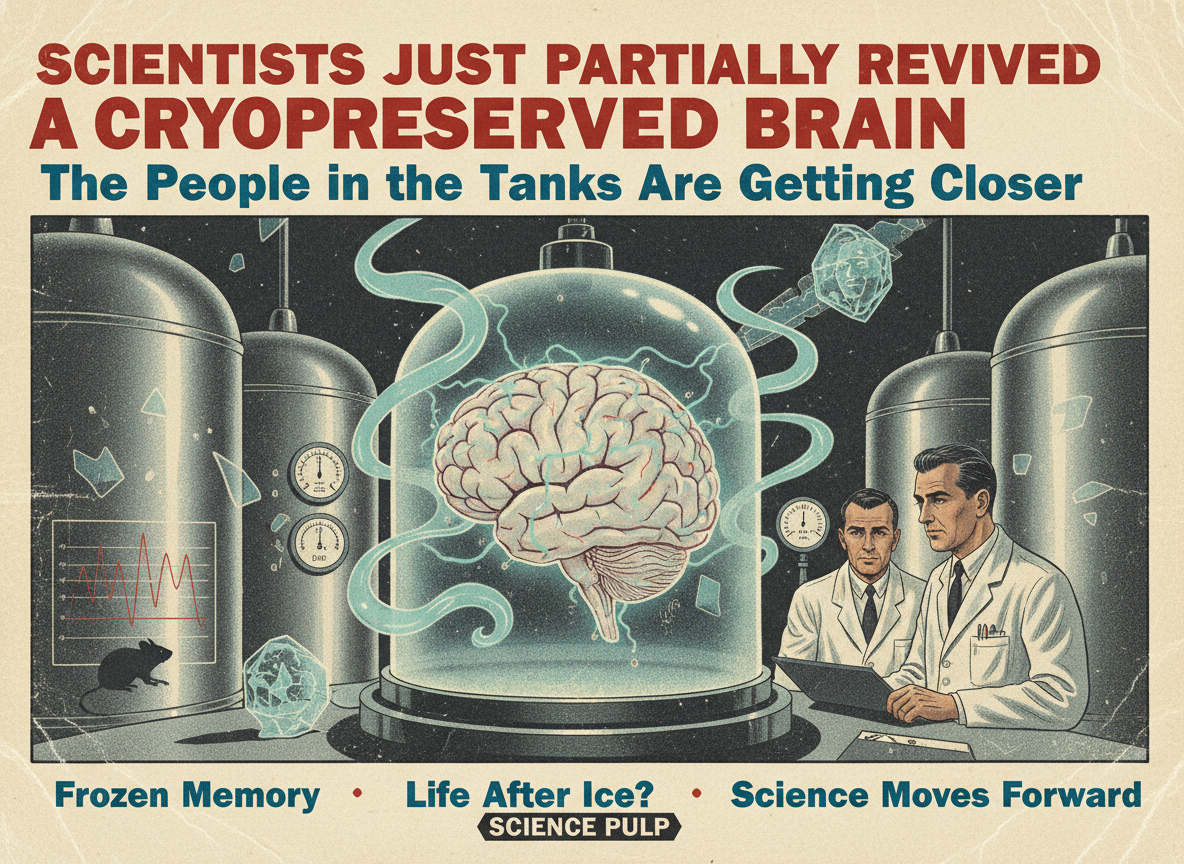
There are thousands of people currently in storage. Not metaphorically. Literally — their bodies or brains held at sub-zero temperatures inside stainless steel containment units at facilities in Arizona, Michigan, and Russia, among others. They signed contracts before they died. They paid, in some cases, hundreds of thousands of dollars. They are waiting for the science to catch up.
The science just moved.
Researchers in Germany have announced the first partial revival of brain tissue that had undergone vitrification — a cryopreservation method that replaces the water in biological tissue with a cocktail of chemicals designed to produce a glass-like, stable state rather than the ice crystals that normally form during freezing and destroy cell structure. The subject was a mouse. The results were not a complete success. But some of the preserved brain tissue samples showed restored activity in the neural processes associated with memory and learning.
That sentence needs to sit for a moment. A brain was frozen. Some of what makes a brain a brain — the processes that encode experience and thought — came back.
The central challenge of cryonics has always been the ice crystal problem. When water freezes inside biological tissue, the crystals that form are physically destructive — they pierce cell membranes, disrupt neural architecture, and cause damage at the microscopic scale that current medicine cannot repair. Vitrification was developed specifically to avoid this. Instead of freezing, the tissue is essentially turned into a glass. No crystals. No mechanical damage. The theory is that the structural information — the physical pattern that constitutes memory, identity, consciousness — is preserved intact.
What the German team has now shown is that this isn’t just theoretical. Vitrified mouse brain tissue, brought back from -196 degrees Celsius, exhibited neural activity. Not complete function. Not consciousness. Not a mouse waking up with its memories intact. But measurable, meaningful activity in tissue that had been frozen and thawed.
The team notes that the most immediately practical application of this research is not cryonics at all — it’s organ transplantation. If human tissue can be perfectly preserved and then restored, the current refrigeration window for donated organs (measured in hours) collapses as a constraint. Livers, hearts, kidneys — they could be vitrified and stored indefinitely, matched to recipients across any distance.
But the cryonics community has been watching this research closely for years, and they know what the progression means. Every incremental step toward reliable vitrification and tissue revival is a step toward the scenario that thousands of people have literally bet their afterlives on: that the pattern of who they are, encoded in the physical structure of their frozen brains, can eventually be read back into life by medicine advanced enough to do it.
The philosophical territory here is significant. If the neural processes that constitute memory and identity can be frozen, preserved structurally, and restored — what exactly was interrupted during the interval? Is it death? Is it something closer to an unusually long and cold sleep? The legal and ethical frameworks governing cryonics currently treat its subjects as deceased. The biology, increasingly, suggests that the question is more complicated than that.
The people in the tanks signed up for exactly this moment. The moment when the science stopped being purely speculative and started producing results. They’re still waiting. But the wait just got measurably shorter.
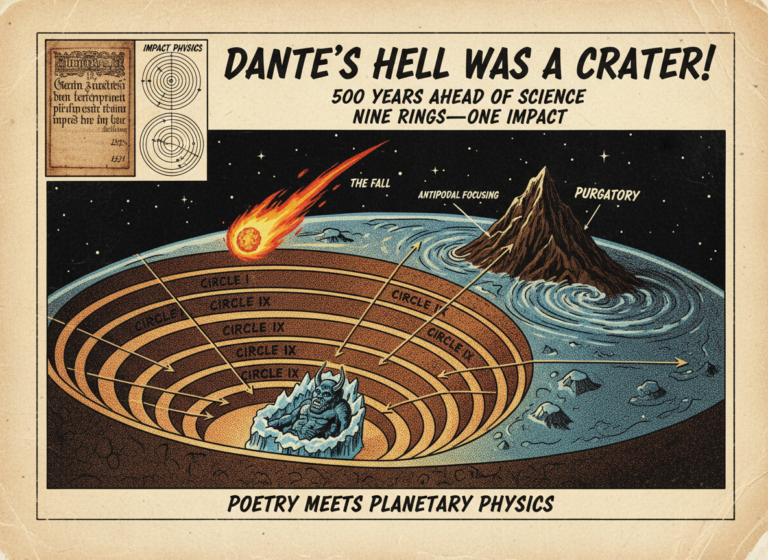
A Medieval Poet Described Hell as a Planetary Impact Crater 500 Years Before Science Had the Concept. Researchers Just Worked Out the Physics.
A new study presented at the European Geosciences Union General Assembly in Vienna in May 2026 makes a case that is extraordinary…
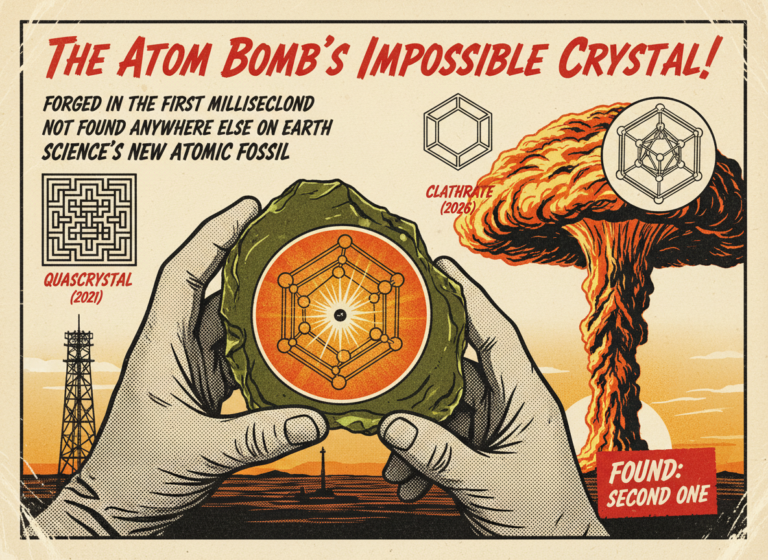
The First Nuclear Bomb Forged a Crystal That Doesn't Exist Anywhere Else on Earth. Scientists Just Found a Second One.
On July 16, 1945, at 5:29 a.m. in a remote stretch of desert in southern New Mexico, the United States Army detonated…
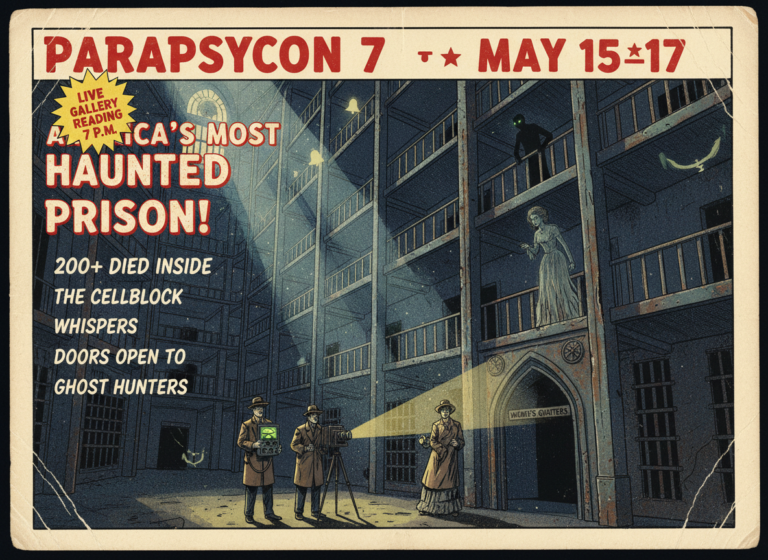
The Most Haunted Prison in America Opens Its Doors to Ghost Hunters Last Night. Over 200 People Died Inside.
The Ohio State Reformatory in Mansfield, Ohio, has been called the most haunted prison in America — and last night, May 14,…
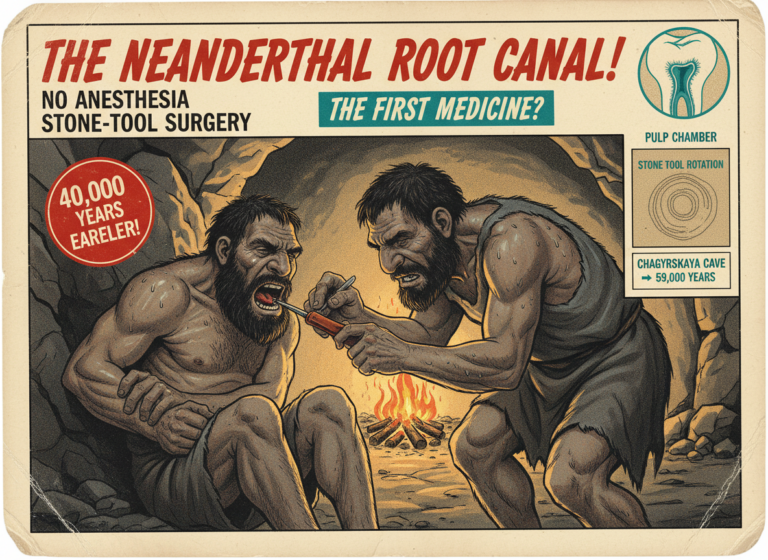
A Neanderthal Had a Toothache 59,000 Years Ago. Someone Drilled It Out With a Stone Tool.
A tooth found in a Siberian cave just rewrote the history of medicine. Scientists confirmed on May 13, 2026, that a Neanderthal…