Original Story
The Roman Head in the Mexican Tomb: The Artifact That Could Rewrite Who Got Here First
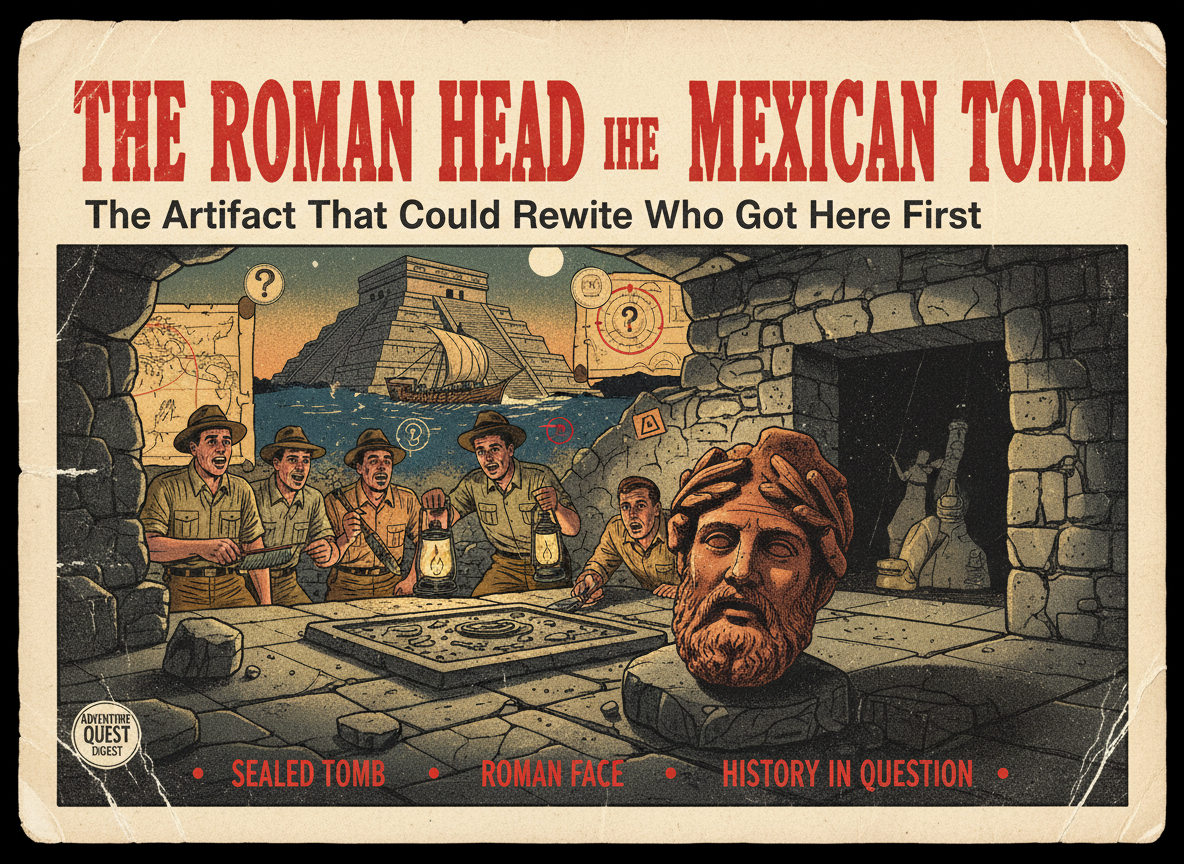
In 1933, a Mexican archaeologist named José García Payón was excavating a burial site in the Toluca Valley — about 65 kilometers northwest of what is now Mexico City — when his team uncovered something that has never been fully explained. Buried beneath two sealed, cemented floors inside a pre-Hispanic pyramidal structure, in a context that appeared completely undisturbed, was a small terracotta head.
It did not belong there. It did not look like anything else in the tomb. It did not look like anything else in Mesoamerica.
The head depicts a bearded man. The facial structure, the treatment of the beard, and the craftsmanship are consistent — according to multiple researchers who have examined it — not with indigenous Mesoamerican artistic tradition, but with objects produced in the ancient Mediterranean. In the 1960s, German archaeologist Bernard Andreae examined the piece and concluded it was, in his assessment, Roman without question, linking it stylistically to the Severian period of the Roman Empire — approximately 200 AD.
The artifact is known as the Tecaxic-Calixtlahuaca Head. It has been known in archaeological circles for nearly a century. This week, the story has resurfaced across mainstream platforms — the Daily Mail ran it as a front-page-level feature — and it is generating the same debate it always does, just louder this time, in a cultural moment that is significantly more receptive to the idea that official history has gaps.
Here is what the evidence actually shows.
The burial context in which the head was found strongly suggests it was placed there before the tomb was sealed — which, based on dating of the surrounding materials, appears to have occurred somewhere in the window between 1476 and 1510 AD. That places it at or just before the early European contact period. The head itself, if Roman in origin, is therefore an object from approximately 200 AD that somehow arrived in central Mexico roughly 1,300 years after it was made.
Thermoluminescence dating — a technique that measures when ceramic material was last fired by reading light emissions produced by heat — was applied to the head by researchers Romeo Hristov and Santiago Genovés. The results placed the object’s manufacture in a range that predates European colonization, lending weight to the argument that it was not introduced during the Spanish conquest.
The skeptical counter-arguments are not without merit. Payón was not always present during the excavation, creating documentation gaps that raise the possibility of an accidental or deliberate introduction of the object into the site. The broader theory of Roman contact with the Americas — while supported by the Calixtlahuaca head, by Roman amphorae recovered from Guanabara Bay in Brazil, and by scattered coin finds across North America — has not produced what archaeologists consider definitive evidence: a Roman settlement, a shipwreck with verifiable Atlantic provenance, or a written record of the journey.
But the head is real. The dating results are real. The sealed burial context is documented. And the stylistic analysis by multiple independent experts has consistently landed in the same place: this object is Roman, it was made around 200 AD, and no one has produced a satisfying explanation for how it ended up in a sealed pre-Columbian tomb in the Toluca Valley.
The Norse were dismissed as myth until L’Anse aux Meadows was excavated in Newfoundland and the physical evidence became impossible to ignore. History was rewritten. It happens.
The question the Tecaxic-Calixtlahuaca Head keeps asking is whether Roman sailors — following Phoenician trade routes, blown off course, deliberately exploring — could have crossed the Atlantic twelve hundred years before Columbus and left one small, bearded artifact behind as the only evidence anyone has ever found.
No one has answered it yet.
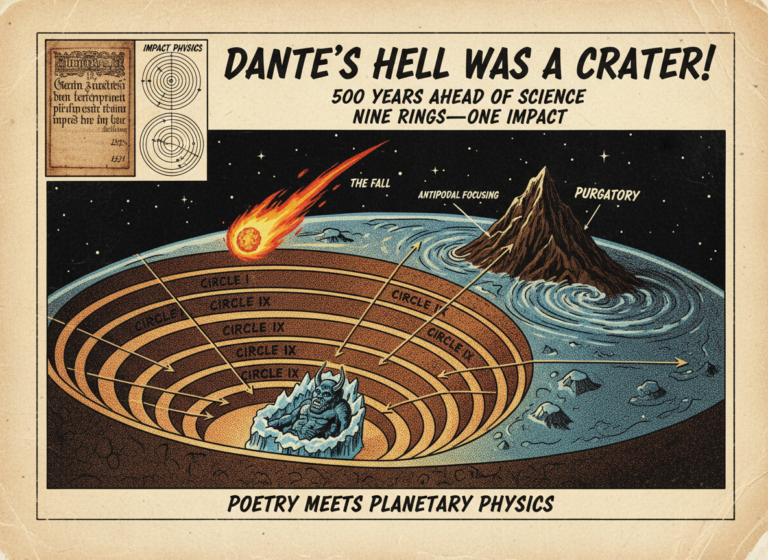
A Medieval Poet Described Hell as a Planetary Impact Crater 500 Years Before Science Had the Concept. Researchers Just Worked Out the Physics.
A new study presented at the European Geosciences Union General Assembly in Vienna in May 2026 makes a case that is extraordinary…
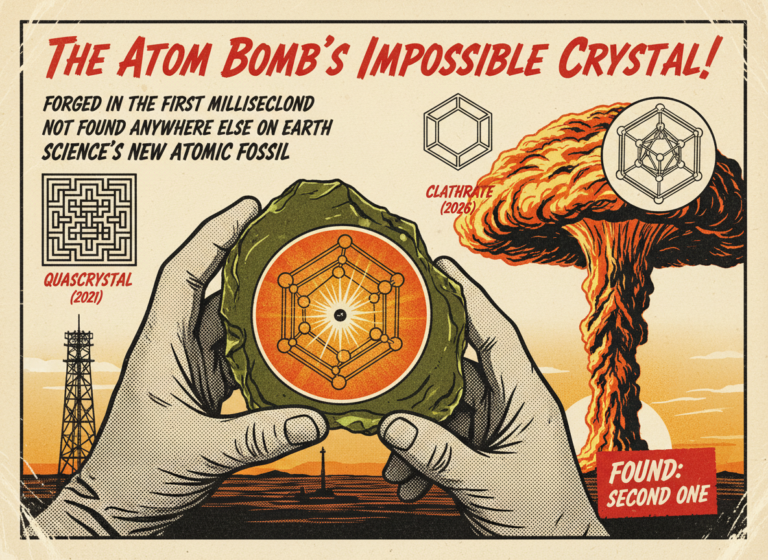
The First Nuclear Bomb Forged a Crystal That Doesn't Exist Anywhere Else on Earth. Scientists Just Found a Second One.
On July 16, 1945, at 5:29 a.m. in a remote stretch of desert in southern New Mexico, the United States Army detonated…
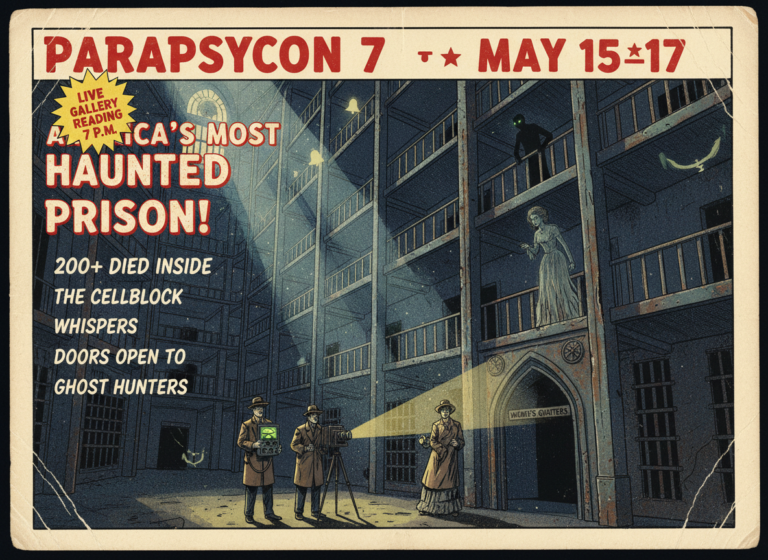
The Most Haunted Prison in America Opens Its Doors to Ghost Hunters Last Night. Over 200 People Died Inside.
The Ohio State Reformatory in Mansfield, Ohio, has been called the most haunted prison in America — and last night, May 14,…

A Neanderthal Had a Toothache 59,000 Years Ago. Someone Drilled It Out With a Stone Tool.
A tooth found in a Siberian cave just rewrote the history of medicine. Scientists confirmed on May 13, 2026, that a Neanderthal…