Original Story
They Have the Craft. They Can’t Figure Out How It Works. That May Be the Most Disturbing Part of the Disclosure Story.
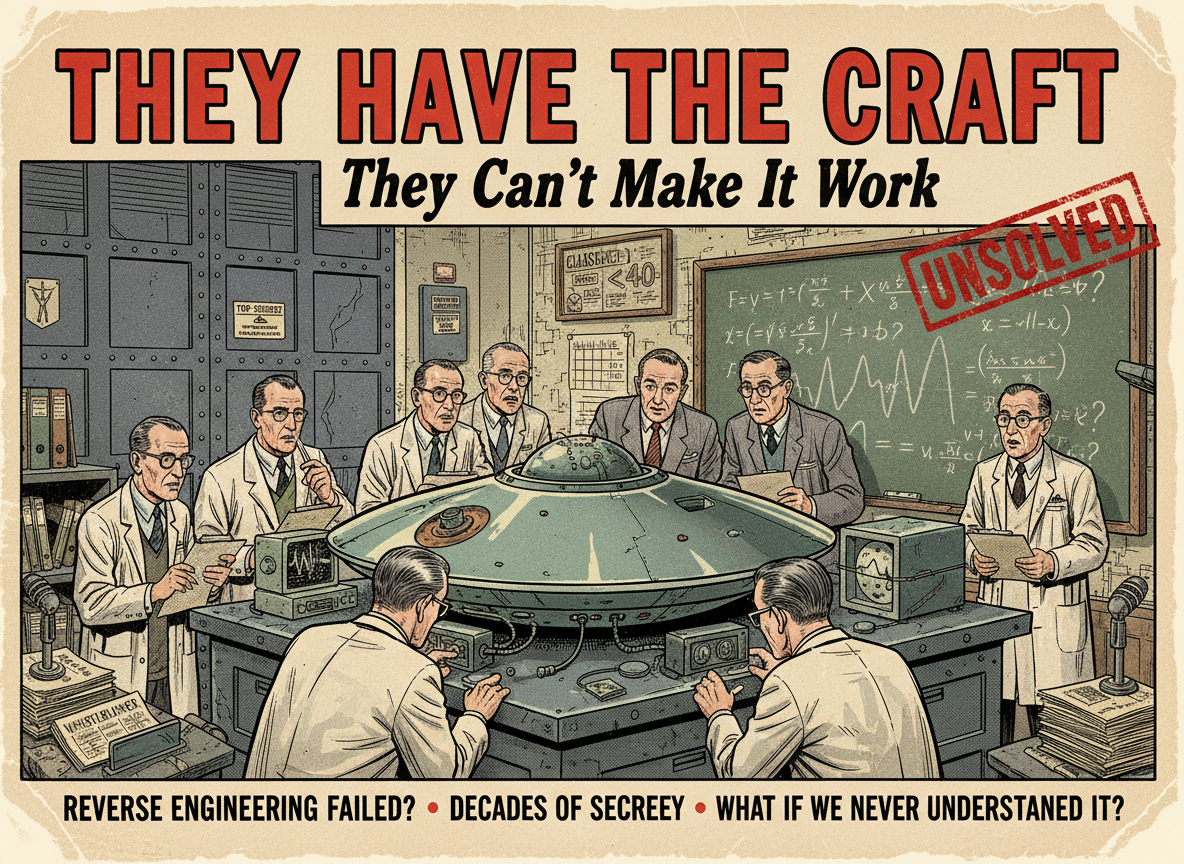
Robert Bigelow says reverse engineering has failed. Dr. Eric Davis puts the number of retrieved craft at fewer than 40 and says he’s personally met five people working on unsuccessful programs. If the insiders are right, we’ve been sitting on technology we cannot understand for decades.
The disclosure conversation has been dominated by one central question for years: does the U.S. government have recovered non-human craft? The whistleblower testimony, the congressional hearings, the AARO case files, the Intelligence Community Inspector General’s finding that David Grusch’s claims were “credible and urgent” — all of it circles that question. But a quieter and in some ways more unsettling thread has been developing alongside it, and this week it got significantly louder.
A March 14 analysis published by Dr. Michael Salla at Exopolitics.org pulled together several independent claims from named sources pointing toward the same conclusion: the reverse engineering programs, if they exist, have not worked. Decades of effort. Recovered material. And nothing we can replicate, understand, or use.
What the Sources Are Saying
Robert Bigelow — the aerospace entrepreneur who funded BAASS, the government contractor that operated the Advanced Aerospace Weapon System Applications Program alongside AATIP — has now publicly stated that attempts to reverse-engineer recovered alien craft have not succeeded. Bigelow’s credibility on this subject is not peripheral. He was one of the primary private-sector conduits through which UAP research was funded and conducted during the period when the government claimed no such programs existed.
Dr. Eric Davis, a physicist with long-standing connections to U.S. government UAP programs who has testified in classified sessions to congressional staffers, has offered a specific number: fewer than 40 craft retrievals total. He has also said he has personally met five individuals working on reverse engineering programs — and that none of them have succeeded.
Rep. Eric Burlison, the Missouri congressman who visited NAS Patuxent River earlier this year and found an empty hangar where evidence of a UAP program was allegedly supposed to exist, has added another dimension: his account includes claims from within the legacy program that whistleblowers have been killed to prevent disclosure. Salla’s analysis places this alongside the reverse engineering claims as part of a coherent picture — a program that has been running for decades, is known to a small and tightly controlled compartment, and has produced nothing technologically transferable.
Why This Matters More Than It Sounds
If the fringe community had spent the last 30 years arguing that the government had recovered craft and was secretly deploying alien technology, the Bigelow and Davis claims would be debunking that narrative. But that was never the dominant argument among serious researchers. The more persistent and credible claim has always been simpler: the government has the craft, and it cannot figure out how they work.
That framing makes the secrecy coherent in a different way. You don’t keep a program classified for decades because you’re afraid of what the public will do with the knowledge that alien technology exists. You keep it classified because the alternative — admitting that the most powerful military and scientific apparatus in human history has spent decades staring at recovered technology it fundamentally cannot comprehend — is its own kind of catastrophic admission.
NASA Administrator Jared Isaacman said this week that he has seen no evidence of extraterrestrial life. AARO maintains the same position. The insiders who have spoken to Salla are saying something slightly different, and the distinction is significant: not that the craft don’t exist, but that what’s inside them remains, after everything, out of reach.

Kennedy Pushed Hard on Dimona. Then He Was Killed. The Documents Are Real — the Question Is What They Mean.
The JFK-Dimona thread is back in the feed today via Conspiracy Unearthed. The documented history of what Kennedy was actually doing about…
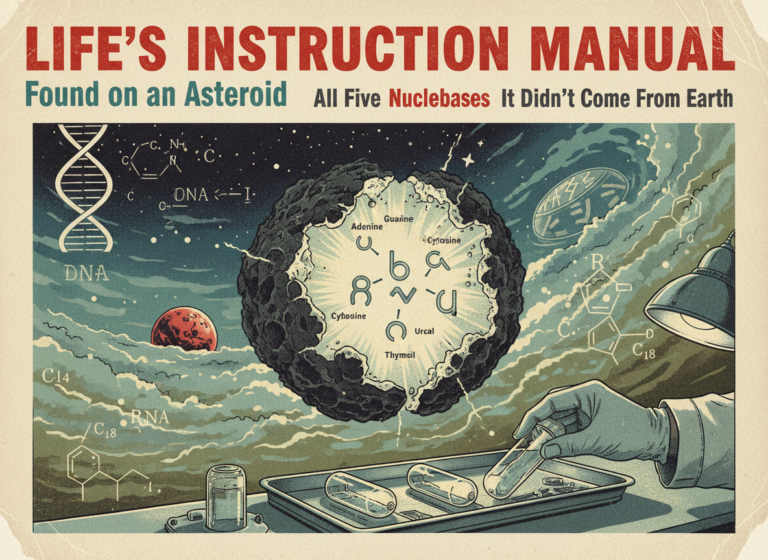
Life's Instruction Manual Was Found on an Asteroid — And It Didn't Come From Earth
Researchers at Hokkaido University have confirmed that samples from the asteroid Ryugu contain all five nucleobases — the molecular letters of DNA…

The Man Who Builds Autonomous Fighter Jets Says UFOs Probably Come From the Past — and He's Thought About the Physics
Palmer Luckey founded Oculus, sold it to Facebook for $2 billion, then built Anduril Industries — one of the most significant autonomous…

39 Shows in the Directory — Your Guide to the Fringe Feed Podcast Index
The Fringe Feed indexes 39 active fringe podcast shows across six categories. 🛸 If You're Here for UAP and Disclosure UFO Chronicles…