Original Story
UAP Disclosure Is a Process, Not a Revelation. The Paracast’s March Newsletter Says What Most Will Not.
The Paracast published its March 22, 2026 newsletter today. Author Tim Swartz argues that what is being called UAP disclosure is not a truth-telling event but a managed process, carefully designed to maintain public engagement while ensuring the deepest answers remain permanently out of reach. It is not a fringe position. It is a structural observation about how institutional disclosure works, and it lands differently in the week that alien.gov was registered with no explanation.
The newsletter went out today. The Paracast is one of the longest-running paranormal radio programs in existence, and its March 22 edition carries a column by Tim Swartz, an Emmy Award-winning television producer and author whose research has covered phenomena from the Great Pyramid to the Great Wall. The piece is not a sighting report or a document leak. It is an argument about the structure of disclosure itself.
Swartz’s position is direct. What is being called UAP disclosure is a process. It is carefully managed. Its promises are endlessly deferred. It keeps the public engaged while ensuring the deepest answers remain, as he puts it, “tantalizingly just out of reach.”
“Like the UFOs themselves, always visible but never quite close enough to touch.”
The Structural Argument
The argument Swartz is making is not that UAP phenomena are fake, or that the disclosure movement is a psyop in the conspiratorial sense. It is more specific and more difficult to dismiss than either of those positions. He is pointing to the observable pattern of how institutional truth-telling about sensitive subjects operates in practice: it releases enough to maintain credibility, withholds enough to maintain control, and perpetually positions the real revelation as arriving just ahead.
This pattern is well-documented outside of UAP research. Governments declassify files in tranches. Intelligence agencies release partial records. Inquiries produce findings that confirm the outline of a story while leaving the core undocumented. The mechanism Swartz is describing is not specific to UFOs. It is specific to how institutions manage information they cannot fully suppress but are not willing to fully release.
The question his piece raises is not whether UAP phenomena are real. It is whether a formal disclosure event, of the kind that Corbell, Brown, and the broader whistleblower community are pushing toward, can actually occur within the existing institutional framework, or whether the framework itself is structured to prevent it.
Why It Lands Differently This Week
The timing of the Paracast newsletter is worth noting. This is the week the U.S. government quietly registered alien.gov and aliens.gov with no explanation. Matthew Brown, the Immaculate Constellation whistleblower, says ODNI promised him protection and then called him a traitor. The Spielberg film is titled Disclosure Day and arrives in June. Every piece of the disclosure architecture is advancing. None of it has produced the revelation.
Swartz’s closing question cuts to the center of where the community sits right now. “In the final analysis, the question is not whether the truth will be revealed. It’s whether or not there’s any truth that can be revealed.”
That is not nihilism. It is a legitimate epistemological question about the nature of a subject where the primary evidence is classified, the witnesses are being smeared, the government registers domain names without comment, and the films are named after the thing everyone is waiting for. The Paracast has been asking these questions for longer than most of the current disclosure infrastructure has existed. The March 22 newsletter is worth reading in full.
A Bronze Age Spanish Treasure Sat in a Museum for 60 Years. Two Pieces of It Were Made from a Meteorite. Nobody Knew.
The Treasure of Villena — 66 objects found in 1963 near Alicante, Spain, dating to between 1400 and 1200 BCE — includes…
There Is a 7,000-Year-Old Stone Wall Sitting on the Ocean Floor off the Coast of France. Nobody Knew It Was There Until 2017.
A 120-meter granite wall built approximately 7,000 years ago has been confirmed beneath nine meters of water off the western tip of…
Israel's "Wheel of Ghosts" Has Been a Mystery Since 1968. AI Just Found 28 More of Them Hidden in Plain Sight.
Rujm el-Hiri — the Wheel of Ghosts — is a massive stone structure in the Golan Heights built from 40,000 tons of…
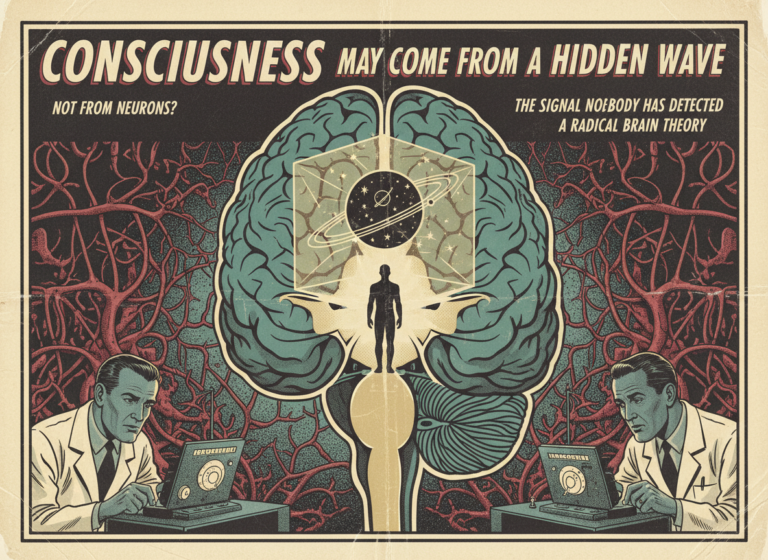
A New Theory Says Consciousness Is Not Produced by Neurons. It Comes from a Hidden Wave in the Brain That Has Never Been Detected.
A peer-reviewed paper published in Frontiers in Psychology in early 2026 proposes that conscious experience does not arise from neural computation at…