Original Story
They Built Stonehenge On Purpose — And We Still Don’t Know How
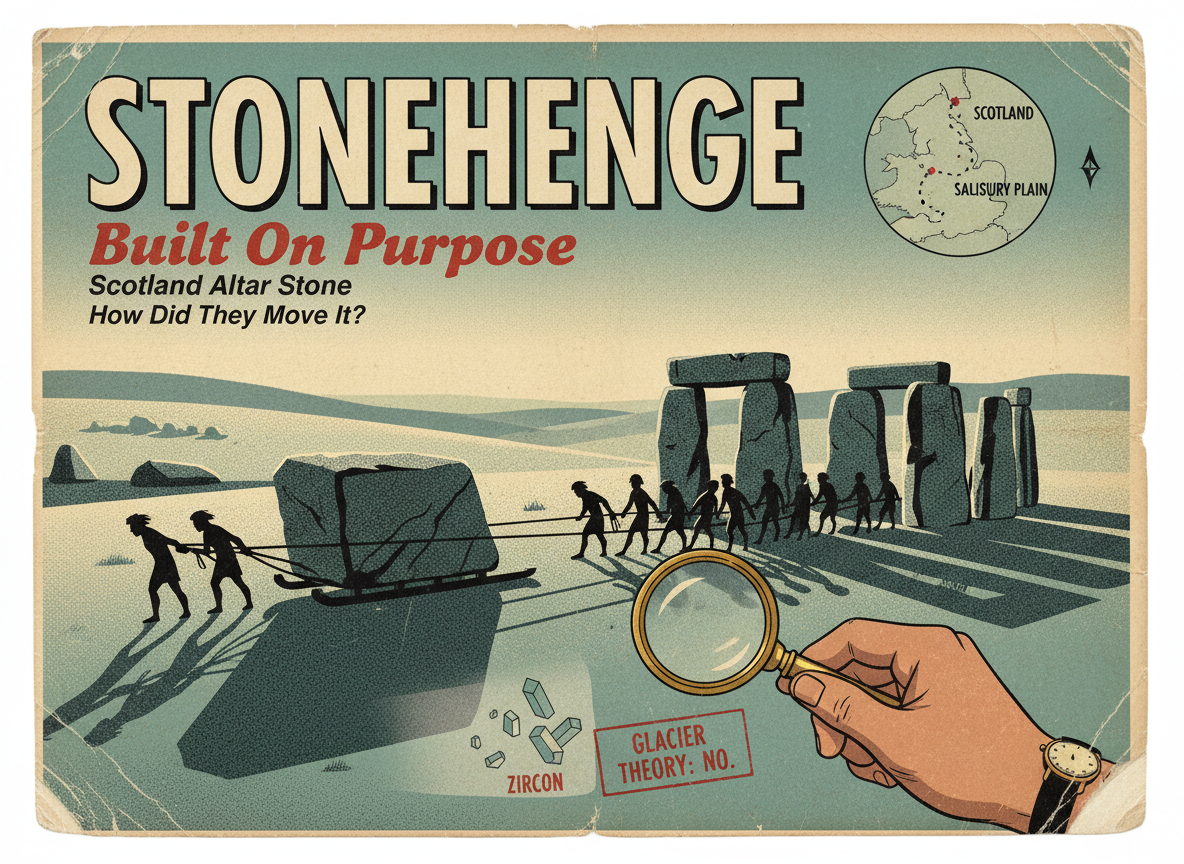
Science just quietly closed one chapter of the Stonehenge mystery — and opened a far stranger one.
For over a century, one of the competing theories to explain how those massive bluestones ended up on Salisbury Plain was straightforward, if unglamorous: glaciers carried them there. Ice moves mountains. Why not rocks? It was a convenient explanation that let humans off the hook for one of the most audacious engineering feats of the ancient world.
That theory is now effectively dead.
Researchers from Curtin University examined more than 500 zircon crystals from river sediments near Stonehenge, searching for the mineral signature that glaciers leave behind as they grind across landscapes — and found nothing. If ice had dragged stones from Wales or Scotland all the way to the Salisbury Plain, the geological evidence would be unmistakable. It isn’t there.
The findings build on a landmark 2024 Curtin-led discovery that traced the origin of the six-tonne Altar Stone to Scotland — meaning ancient Neolithic builders weren’t just hauling stones from Wales. They were sourcing materials from hundreds of miles away, across open water and rugged terrain, with no wheel, no draft animal, and no written language to coordinate it.
Which brings us to the real mystery: how?
The “glacier did it” theory was always partly a way of avoiding the more uncomfortable question — that the people of 3000 BC were doing something our modern engineering minds still can’t fully explain. There are experimental archaeology projects, rope-and-sledge demonstrations, raft simulations. None of them scale convincingly to a six-ton block of Scottish sandstone.
The study, published in the journal Communications Earth and Environment, makes clear that intentional human transport is now the only viable explanation — while the method itself remains entirely unknown.
The mainstream conclusion is that very determined, very organized ancient people moved these stones through sheer collective will. That may well be true. But if you’ve ever stood inside that circle at dawn, you know the place doesn’t feel like the product of logistics. It feels like it was built for something else entirely.

Kennedy Pushed Hard on Dimona. Then He Was Killed. The Documents Are Real — the Question Is What They Mean.
The JFK-Dimona thread is back in the feed today via Conspiracy Unearthed. The documented history of what Kennedy was actually doing about…
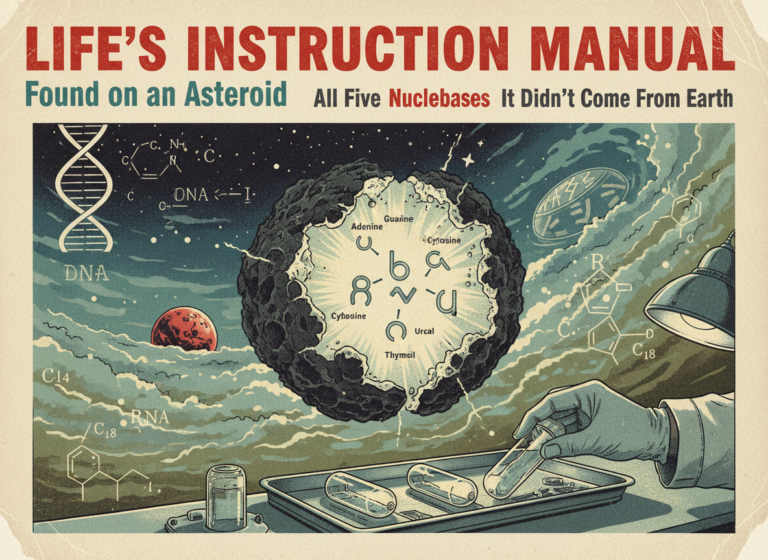
Life's Instruction Manual Was Found on an Asteroid — And It Didn't Come From Earth
Researchers at Hokkaido University have confirmed that samples from the asteroid Ryugu contain all five nucleobases — the molecular letters of DNA…
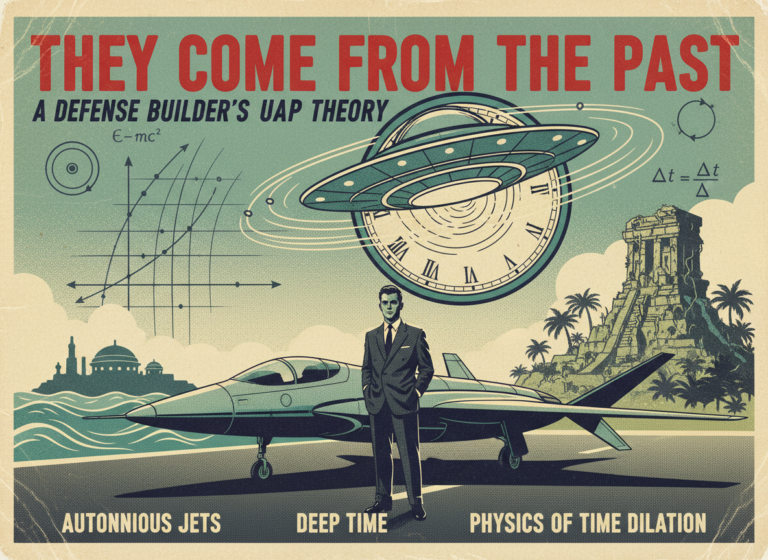
The Man Who Builds Autonomous Fighter Jets Says UFOs Probably Come From the Past — and He's Thought About the Physics
Palmer Luckey founded Oculus, sold it to Facebook for $2 billion, then built Anduril Industries — one of the most significant autonomous…
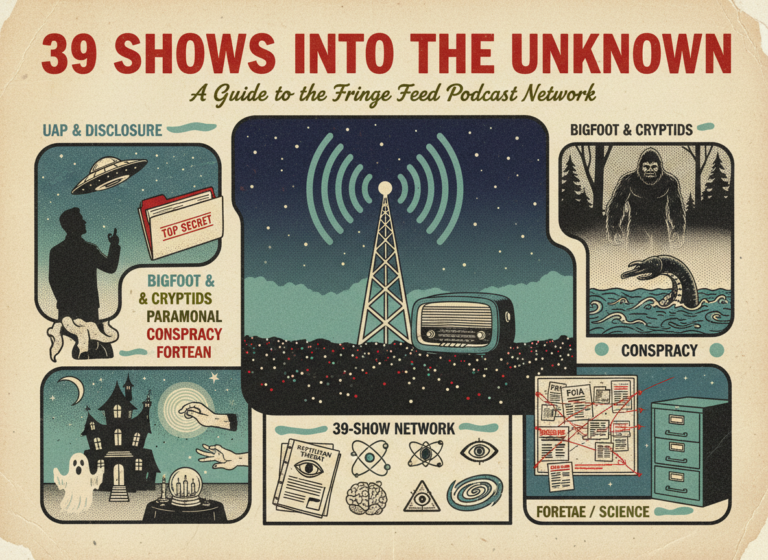
39 Shows in the Directory — Your Guide to the Fringe Feed Podcast Index
The Fringe Feed indexes 39 active fringe podcast shows across six categories. 🛸 If You're Here for UAP and Disclosure UFO Chronicles…