Original Story
Spielberg’s Disclosure Day Just Dropped a New Trailer — and the Conspiracy Around the Film Is Growing
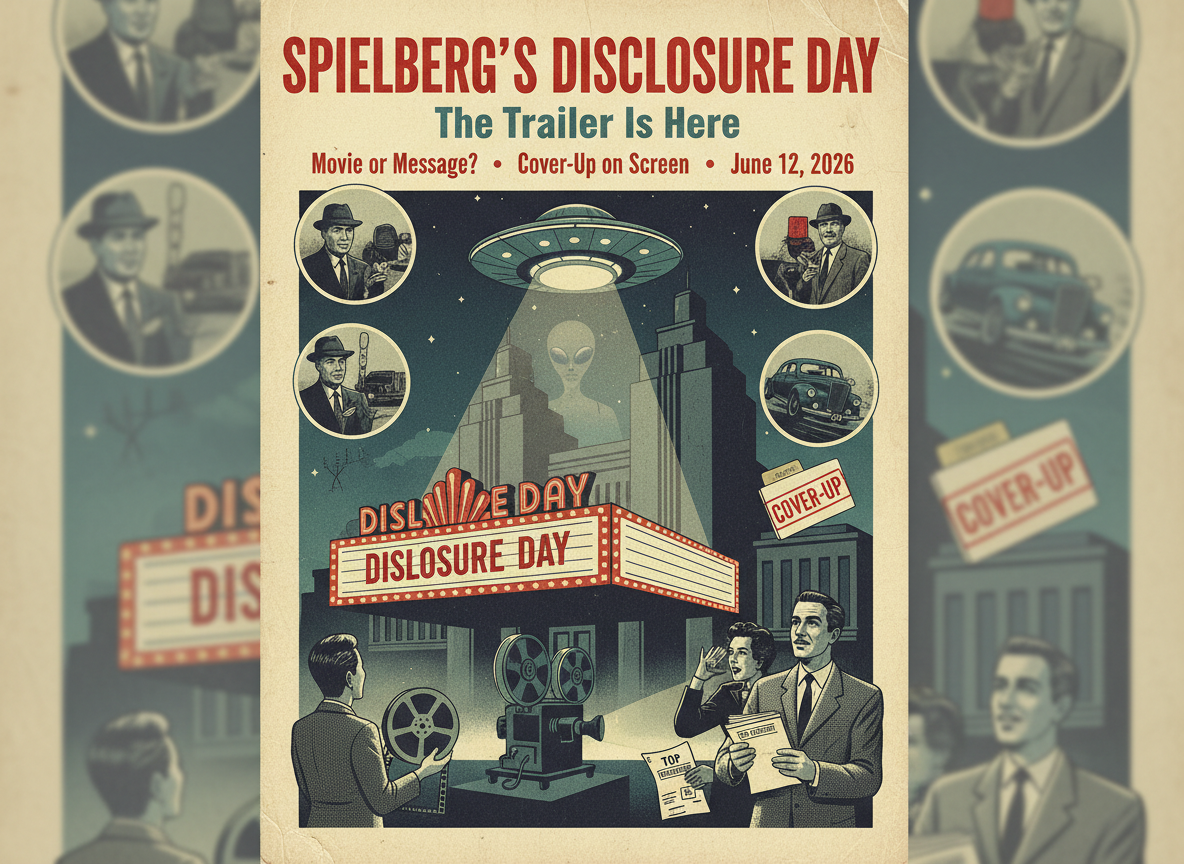
Steven Spielberg is no stranger to the contact genre. Close Encounters of the Third Kind in 1977. E.T. in 1982. Both films arrived during periods when UFO discourse was intensifying in the culture and both are now treated, by some researchers, as soft conditioning — a way of normalizing the idea of non-human intelligence before any formal acknowledgment arrived.
Now Spielberg is back in the same territory. His upcoming film, Disclosure Day, drops June 12, 2026 — and a brand new trailer released this week is not making the conspiracy quieter. It’s making it louder.
The new trailer, which surfaced Tuesday, offers glimpses of material not seen in the original December 2025 reveal: car chases, shadowy institutional figures, and repeated references to government cover-ups of information the public was never meant to access. The cast is substantial — Emily Blunt, Josh O’Connor, Colin Firth, Colman Domingo, and Eve Hewson — with a screenplay by David Koepp adapted from an original Spielberg story.
That’s the film. Here’s where it gets strange.
Almost immediately after the project was publicly announced last year, a parallel narrative began circulating online: that Disclosure Day is not a fictional film at all. That the title was chosen deliberately. That its development was kept unusually quiet for a production of this scale. That some of what appears on screen represents genuine footage or imagery of non-human craft and entities, embedded inside a theatrical release in a way that provides plausible deniability to any government or institutional actor who arranged the arrangement.
The people advancing this theory are not fringe in the classic sense. They are drawing from the same logic that has been applied, for decades, to the pattern of major UFO-themed entertainment arriving in advance of or alongside real-world disclosure events. Close Encounters arrived one year after the CIA declassified its Robertson Panel documentation. Independence Day dropped the same summer as the Defense Intelligence Agency began reorganizing its UAP collection functions. The timing is never provable as intentional. That’s the point.
Now it is 2026. Trump has issued a UAP disclosure directive. AARO is conducting active investigations. Neil McCasland — the retired USAF general who commanded the Air Force Research Laboratory at Wright-Patterson — has vanished. The U.S. government has quietly registered alien.gov and aliens.gov without explanation. And in the middle of all of this, the most famous director of alien contact cinema in history releases a film called Disclosure Day.
The timing either means nothing or it means everything. That’s the knife’s edge this story sits on.
The film itself may simply be a very good Spielberg thriller about government secrecy and first contact, built on a dramatic premise that happens to mirror current events with uncomfortable closeness. That is entirely possible. That is probably the most likely explanation.
But the community asking the harder question is not wrong to ask it. The history of this subject rewards exactly that skepticism. Whatever Disclosure Day actually is — fiction, coincidence, or something more deliberate — it will be one of the most culturally significant films of the year. Possibly of the decade.
June 12th is 85 days away.

A Bronze Age Spanish Treasure Sat in a Museum for 60 Years. Two Pieces of It Were Made from a Meteorite. Nobody Knew.
The Treasure of Villena — 66 objects found in 1963 near Alicante, Spain, dating to between 1400 and 1200 BCE — includes…
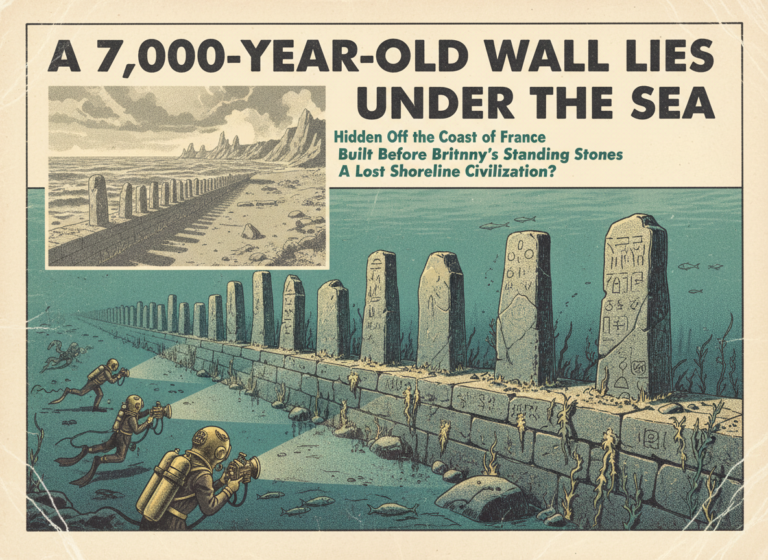
There Is a 7,000-Year-Old Stone Wall Sitting on the Ocean Floor off the Coast of France. Nobody Knew It Was There Until 2017.
A 120-meter granite wall built approximately 7,000 years ago has been confirmed beneath nine meters of water off the western tip of…
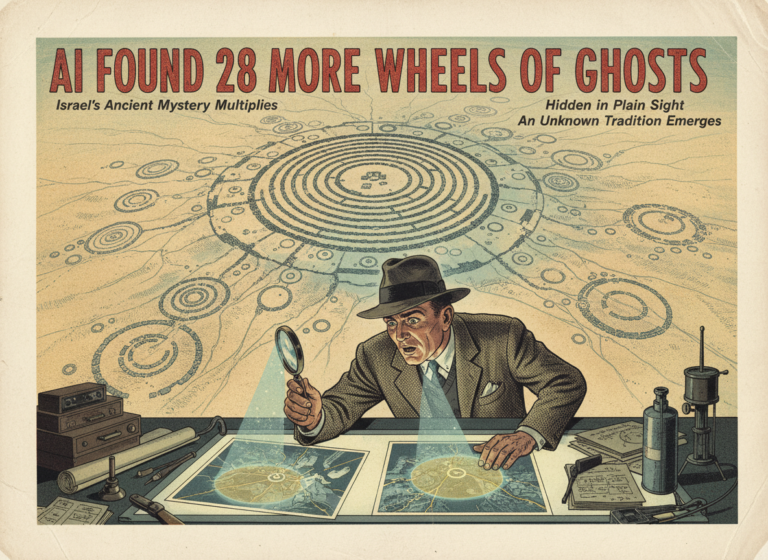
Israel's "Wheel of Ghosts" Has Been a Mystery Since 1968. AI Just Found 28 More of Them Hidden in Plain Sight.
Rujm el-Hiri — the Wheel of Ghosts — is a massive stone structure in the Golan Heights built from 40,000 tons of…
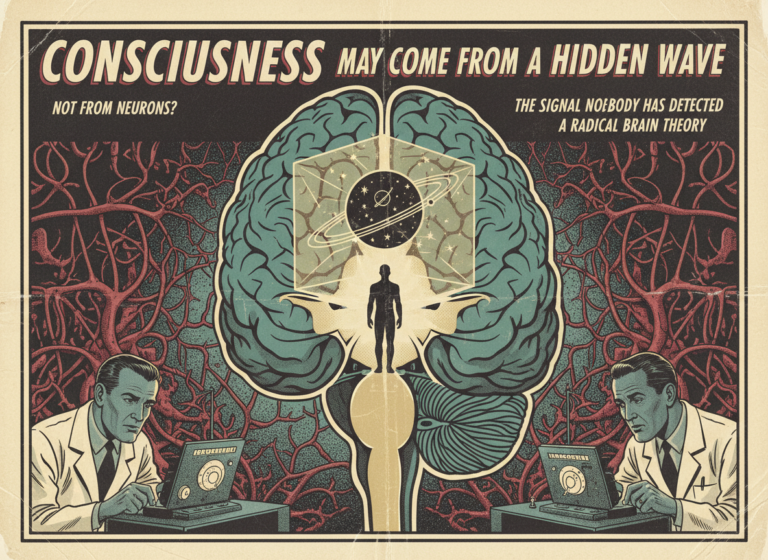
A New Theory Says Consciousness Is Not Produced by Neurons. It Comes from a Hidden Wave in the Brain That Has Never Been Detected.
A peer-reviewed paper published in Frontiers in Psychology in early 2026 proposes that conscious experience does not arise from neural computation at…