Original Story
The Luminous Migrants: Who Were the Blond, Blue-Eyed People Who Transformed the Ancient Levant — And Where Did They Come From?
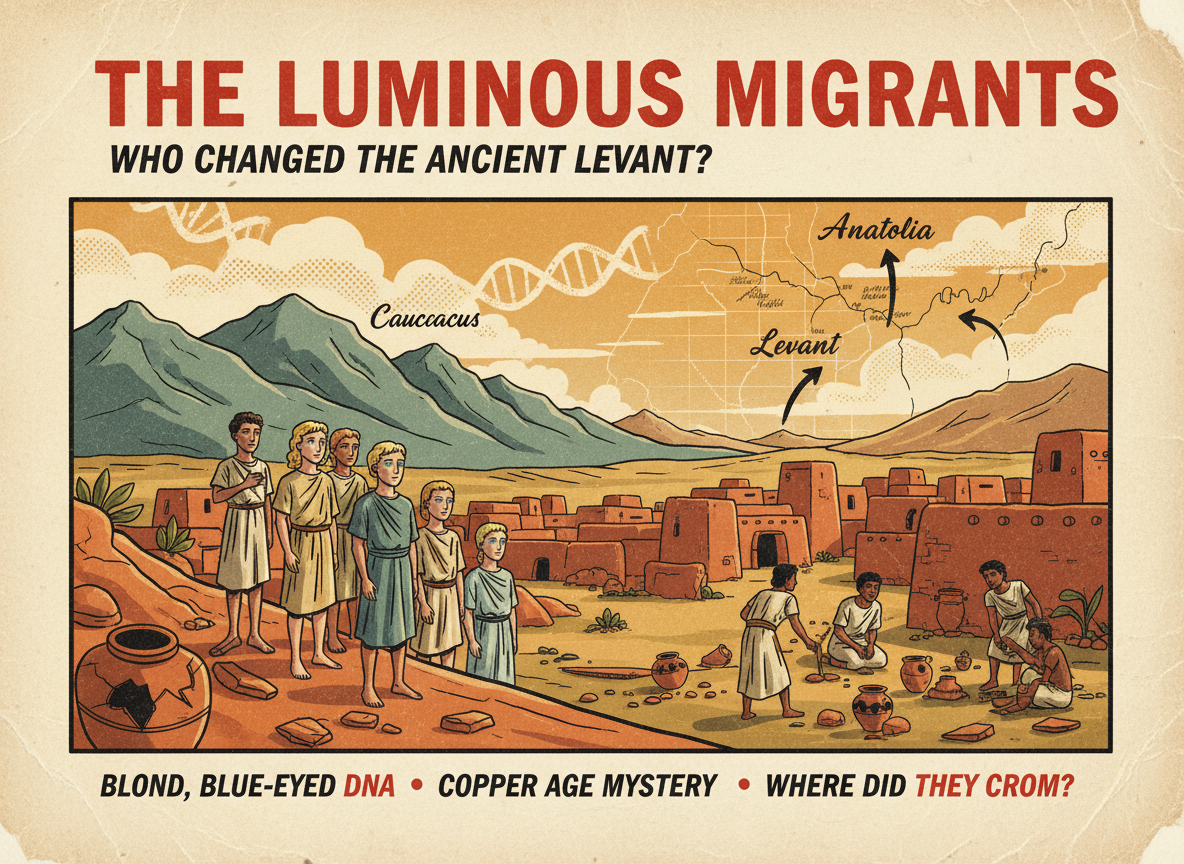
Ancient DNA analysis of Chalcolithic populations in the Near East has turned up something nobody expected: a wave of genetically distinct, light-featured people who arrived from somewhere to the north and left a permanent mark on the genetics of the region. Their origin is not settled. Their impact was enormous.
The standard model of the ancient Near East puts the Levant at the center of human civilization’s earliest chapters — the cradle of agriculture, the origin point for the genetic and cultural lineages that eventually produced the Bronze Age world. The people who built it were, in this model, descended from the indigenous populations of the region. Dark-featured, genetically consistent, continuous.
New ancient DNA analysis reported this week by Ancient Origins Unleashed and circulating through the fringe research community is complicating that model in ways that researchers are still working through. The Chalcolithic Levant — the Copper Age, roughly 4500 to 3300 BCE — shows genetic evidence of a significant population input from outside the region. The newcomers, reconstructed through genetic analysis of skeletal remains from multiple Chalcolithic sites, appear to have carried phenotypic markers consistent with light skin, blond or lighter hair, and blue or light-colored eyes. Features that, in this period and location, should not be there.
What the DNA Shows
The analysis draws on ancient DNA samples from multiple burial sites across the Levant dated to the Chalcolithic period. The incoming genetic signature is not subtle. It represents a meaningful proportion of the ancestry of later Levantine populations, indicating not a small group of migrants but a sustained movement of people — or a founding population that bred successfully with indigenous communities and left a lasting genomic footprint.
The genetic component being identified shows affinity with populations from north and northwest of the Levant. Possible origin points include Anatolia, the Caucasus, or populations from the Pontic-Caspian steppe that were themselves in significant movement during this period. The specific origin remains contested. What is not contested is that the component is there, it is distinct from the pre-existing Levantine genetic baseline, and it arrived in the Copper Age.
The phenotypic reconstruction — blond or lighter hair, blue or light eyes, relatively lighter skin — is derived from genetic markers associated with those traits in living populations. Ancient DNA research has repeatedly turned up light-featured individuals in unexpected times and places, and the finding tracks with a broader picture of prehistoric Europe and western Asia as more genetically mobile and phenotypically diverse than the traditional models assumed.
Why the Fringe Community Is Paying Attention
For researchers working in the intersection of ancient mysteries and genetics, this finding connects to a much wider set of questions. Ancient texts from multiple Levantine and Near Eastern traditions describe a category of figures — often divine, royal, or supernatural in character — with light or shining physical features that set them apart from the surrounding population. The Sumerian anunnaki, the biblical Nephilim, certain Egyptian royal lineages described in ways that don’t match the genetic baseline of the region — all have been discussed in the context of anomalous populations whose origins the written record doesn’t clearly establish.
The DNA evidence does not confirm any of these interpretations. What it does is establish, on firm scientific ground, that a genetically distinct and phenotypically unusual population did move into the Levant during the Chalcolithic — that the ancient texts describing light-featured people of elevated status in this region are not necessarily describing mythology, and that the origin of these people is, as of now, genuinely unresolved.
The mainstream archaeology is looking north. The fringe is asking a different version of the same question: where did they actually come from, and why did they arrive when they did?

Kennedy Pushed Hard on Dimona. Then He Was Killed. The Documents Are Real — the Question Is What They Mean.
The JFK-Dimona thread is back in the feed today via Conspiracy Unearthed. The documented history of what Kennedy was actually doing about…

Life's Instruction Manual Was Found on an Asteroid — And It Didn't Come From Earth
Researchers at Hokkaido University have confirmed that samples from the asteroid Ryugu contain all five nucleobases — the molecular letters of DNA…
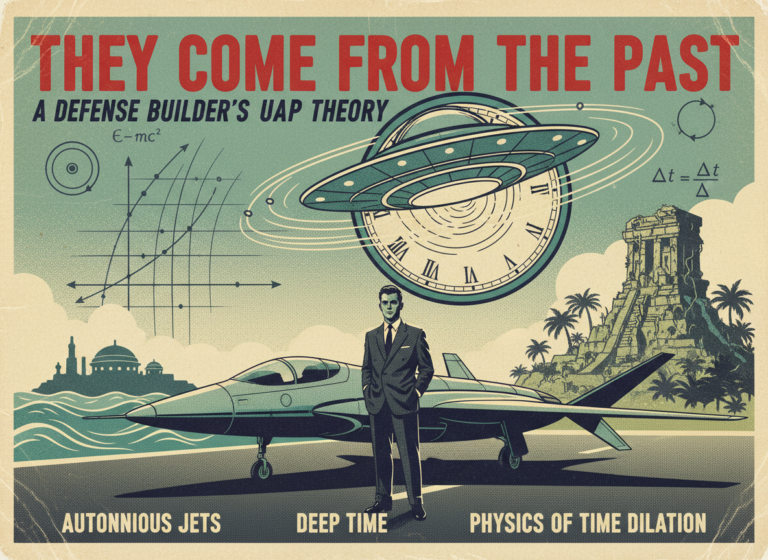
The Man Who Builds Autonomous Fighter Jets Says UFOs Probably Come From the Past — and He's Thought About the Physics
Palmer Luckey founded Oculus, sold it to Facebook for $2 billion, then built Anduril Industries — one of the most significant autonomous…

39 Shows in the Directory — Your Guide to the Fringe Feed Podcast Index
The Fringe Feed indexes 39 active fringe podcast shows across six categories. 🛸 If You're Here for UAP and Disclosure UFO Chronicles…