Original Story
They Were Nailing the Dead to the Ground in Ancient Rome — And New Excavations Show Why
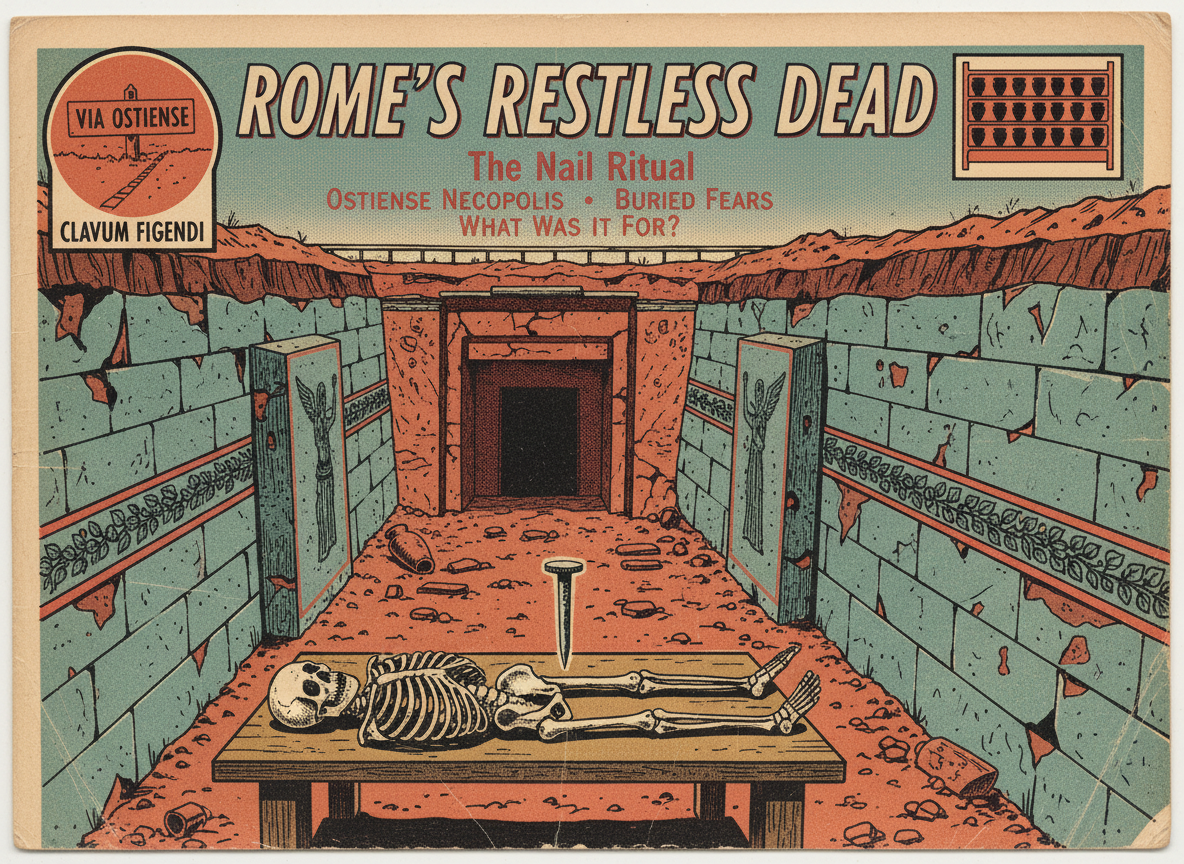
Archaeologists digging beneath a construction site in Rome have uncovered a section of the city’s oldest burial road — and found inside it a funerary ritual that suggests the Romans were genuinely afraid their dead might come back.
Rome does not give up its secrets easily. But when a university student housing project began excavation along the Via Ostiense last month — the ancient road that once connected the capital to its port at Ostia — crews hit something a meter below street level that stopped everything. What emerged was a previously unknown section of the Ostiense Necropolis, one of the largest burial grounds of the ancient world. And inside it, a ritual that nobody fully understands.
Among the bodies recovered from the site, at least one was found with an iron nail resting at chest height. According to researchers from the Special Superintendence of Rome, who are directing the excavation under Italy’s Ministry of Culture, the placement was deliberate. It was not accidental debris. It was put there on purpose — and the Romans had a name for why.
The Ritual: Clavum Figendi
The practice is documented in Roman and pre-Roman Etruscan culture under the name clavum figendi — the driving of a nail — a ritual performed at moments of significant transition to fix a state in place and prevent it from reversing. On one level, scholars say, the nail fixes death itself: it makes the condition permanent, closes the door, seals what has been opened. On another level, it is more explicit than that. Ancient sources including Pliny the Elder describe nails as protective objects, capable of warding off disease, evil, and — in burial contexts — the return of the deceased.
The Romans built the most sophisticated civilization the ancient world had ever seen. They were also quietly nailing their dead into the earth to make sure they stayed there.
What Else the Site Contains
The broader site is remarkable even without the nails. Five imperial-era funerary buildings have been uncovered so far, each featuring vaulted ceilings and interior walls painted with colored bands, plant motifs, praying female figures called orantes, and Winged Victories — figures the Romans associated with triumph over death and the hope of transcendence. The tombs are arranged along a northeast-southwest axis, with smaller auxiliary structures in front and a sixth building oriented perpendicularly, suggesting the whole complex was organized around a central courtyard where the living gathered to honor the dead.
Archaeologist Diletta Menghinello, scientific director of the excavation, describes the funerary buildings as likely columbaria — chambered structures with niches for holding cremation urns — though the excavation is still in early stages. Behind the imperial complex, a later and more modest burial ground was established during late antiquity, separated from the older tombs by a long wall of tuff blocks. The two phases tell a story of Rome’s long decline: magnificent death architecture giving way, over centuries, to simple pit graves with minimal offerings.
Why This Matters
For researchers, the site is significant beyond the ritual. The Ostiense Necropolis has long been associated with Rome’s elites and its documented religious communities. The newly uncovered sector appears to represent the city’s middle and working populations — the Romans who built the empire and whose burials have historically received less attention than those of the powerful.
The question of what exactly the nail was meant to do remains open. What the evidence makes clear is that the Romans who placed it there believed the boundary between the living and the dead needed reinforcement. They built walls around their cemeteries. They organized their rituals with precision. And then, just to be certain, they drove a nail into the chest of the person they were burying.
The excavation continues.

Kennedy Pushed Hard on Dimona. Then He Was Killed. The Documents Are Real — the Question Is What They Mean.
The JFK-Dimona thread is back in the feed today via Conspiracy Unearthed. The documented history of what Kennedy was actually doing about…
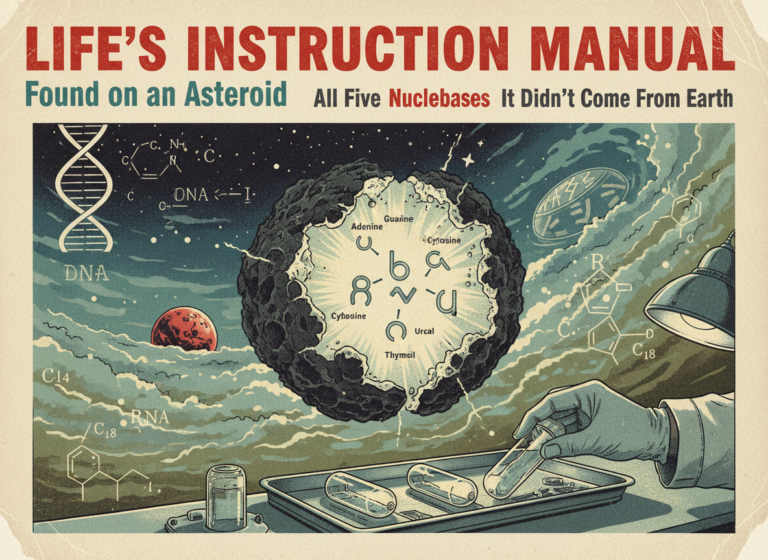
Life's Instruction Manual Was Found on an Asteroid — And It Didn't Come From Earth
Researchers at Hokkaido University have confirmed that samples from the asteroid Ryugu contain all five nucleobases — the molecular letters of DNA…
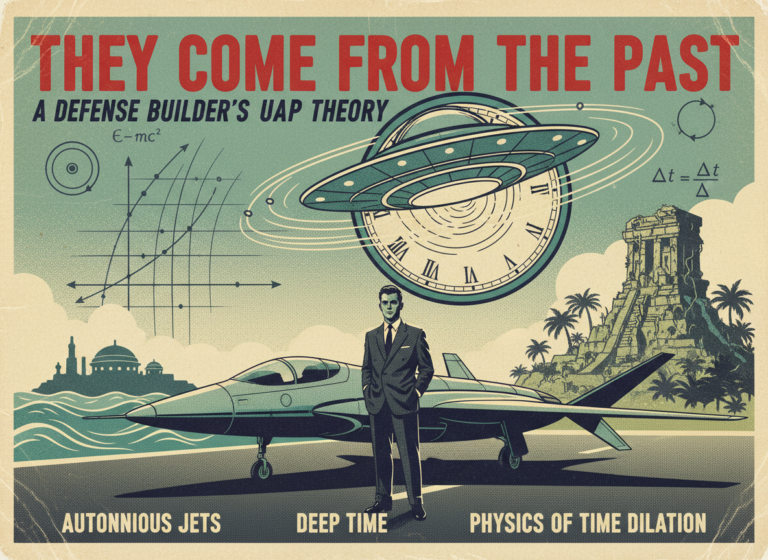
The Man Who Builds Autonomous Fighter Jets Says UFOs Probably Come From the Past — and He's Thought About the Physics
Palmer Luckey founded Oculus, sold it to Facebook for $2 billion, then built Anduril Industries — one of the most significant autonomous…

39 Shows in the Directory — Your Guide to the Fringe Feed Podcast Index
The Fringe Feed indexes 39 active fringe podcast shows across six categories. 🛸 If You're Here for UAP and Disclosure UFO Chronicles…