Original Story
The First Official Loch Ness Monster Sighting of 2026 Just Hit the Register. The Witness Drew a Sketch.
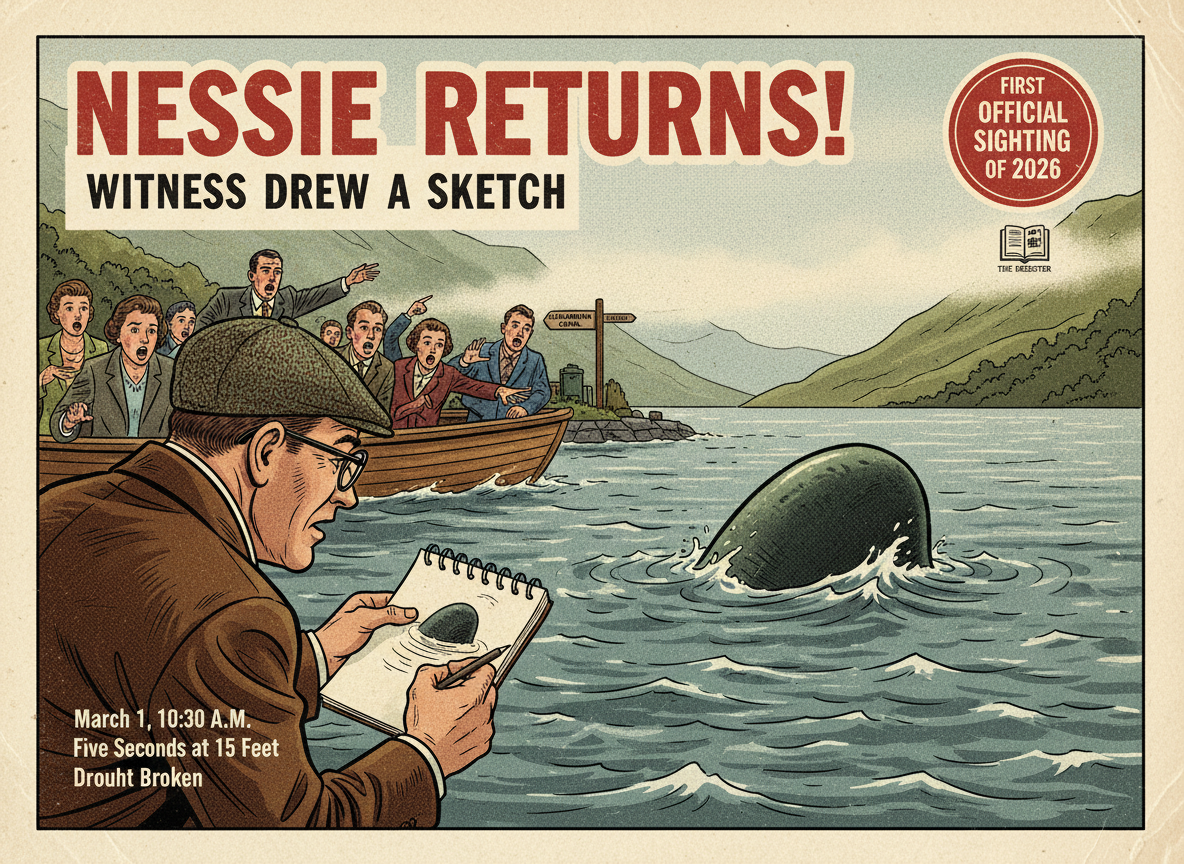
On the morning of March 1, 2026, American tourist Tony Inhorn was on a boat near the entrance to the Caledonian Canal at Loch Ness in Scotland when something broke the surface of the water approximately 15 feet from where he was standing. What he saw was a dark-greenish gray body, approximately five to ten feet in exposed length, rising about two feet out of the water at what he estimated to be a 45-degree angle. It was visible for roughly five seconds before submerging. He filed a written account with the Official Loch Ness Monster Sightings Register and produced a hand-drawn sketch of what he had observed. It has been logged as the first in-person sighting of 2026, ending a drought of reported sightings that stretched back to late October 2025.
Inhorn’s account, as submitted to the Register, describes the encounter with notable specificity. The time was 10:30 a.m. The location was near the opening for the Caledonian Canal, where Loch Ness connects to the broader waterway running across the Scottish Highlands. The color of the object was dark-greenish gray, clearly defined against the chop of the surface. He stated that the body “appeared clearly defined against the waves, leading me to believe it wasn’t just the current.”
His estimate of what he was seeing: “I estimate it was either the top of Nessie, her back, or the side, suggesting that she may have been emerging at a 45-degree angle. She came about two feet out of the water and her exposed portion was about 5-10 feet in length, suggesting it was just her very top.”
Inhorn produced a sketch, which was included with his report to the Register. The drawing shows a rounded, low-profile mass breaking the surface, consistent with his written description of a single humped or dorsal section briefly emerging before disappearing.
The sighting was confirmed and logged by the Official Loch Ness Monster Sightings Register, the primary documentation body for reported Nessie encounters at the loch, operated out of the Scottish Highlands.
A Second Sighting Days Later, Via Webcam
A second sighting followed within days. On the evening of March 5, Eoin Fagan was monitoring the Visit Inverness Loch Ness webcam, positioned near the Clansman, when he observed a “mysterious movement and shape” in the water. The object reportedly broke the surface four times, rising and dipping, while moving against the prevailing current in the area. Weather conditions at the time of the webcam sighting were cloudy with only a slight ripple on the surface, and no vessels had been visible before or after the event, potentially ruling out boat wakes as a cause. The sighting was approximately 200 yards out from the Clansman pier.
Both sightings were added to the Register together when reported, which the Strathspey Herald confirmed ended a gap stretching back to a late-October 2025 sighting, making March 2026 the first month with documented activity in several months.
The Register and What It Means to Be “Official”
The Official Loch Ness Monster Sightings Register is not a government agency. It is a community-maintained documentation project that records submitted accounts from witnesses, applies basic consistency checks, and publishes the results. Inclusion on the Register does not constitute scientific verification of the existence of an unidentified large animal in Loch Ness. What it does provide is a consistent, ongoing record of what people report seeing, spanning decades.
The Loch Ness investigation history is unusually deep. Rupert T. Gould spent two weeks at the loch in November 1933, interviewing witnesses and producing a book, The Loch Ness Monster and Others, published in 1934, that researcher Roland Watson recently made available in PDF format and describes as a classic reference that “remains a classic title to this day.” Watson, who runs the long-running Loch Ness Mystery blog, located the digitized version this week. The Gould text documents the early history of Nessie investigation at a period when public interest in the loch was at its first modern peak, less than a year after the first widely circulated modern sighting in April 1933.
Tony Inhorn was on a tourist boat, 15 feet from something, for five seconds at 10:30 in the morning, on the first day of March. He sketched it from memory. Whatever it was, the Register has it.
Sources: Strathspey Herald — Loch Ness Monster Sightings Bring Recent Nessie Drought to an End (April 13, 2026) — Coast to Coast AM — American Tourist Credited with First Official Nessie Sighting of 2026 (April 13, 2026) — Official Loch Ness Monster Sightings Register (lochnesssightings.com) — Anomalist — April 15 update referencing the C2C report and Gould’s 1934 Book Now in PDF (April 15, 2026)

For 2,000 Years Nobody Could Read the Writing on the Walls of Teotihuacan. Two Researchers in Copenhagen Just Changed That.
Teotihuacan is one of the largest cities the ancient world ever produced. At its peak, around 400 CE, it housed more than…
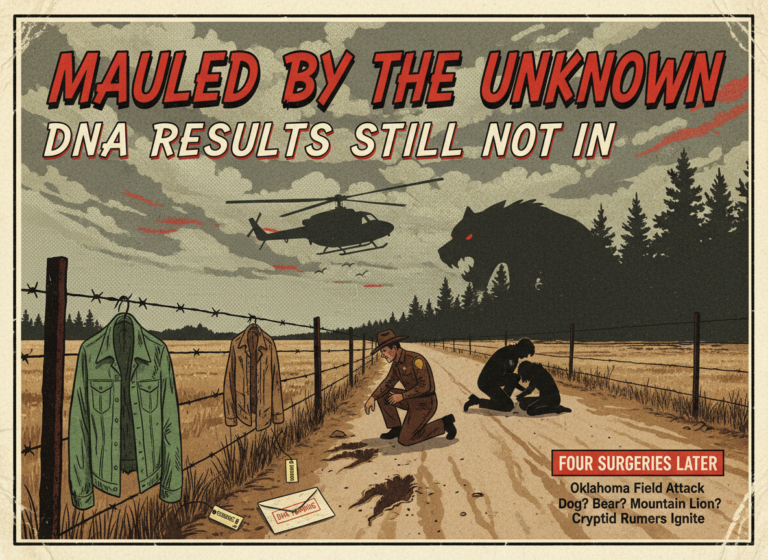
An Oklahoma Woman Was Mauled by Something Nobody Can Identify. Four Surgeries Later, the DNA Results Still Aren't In.
On the morning of March 29, 2026, a 38-year-old mother named Alicia Maxey was found unconscious and badly injured near Blanco in…
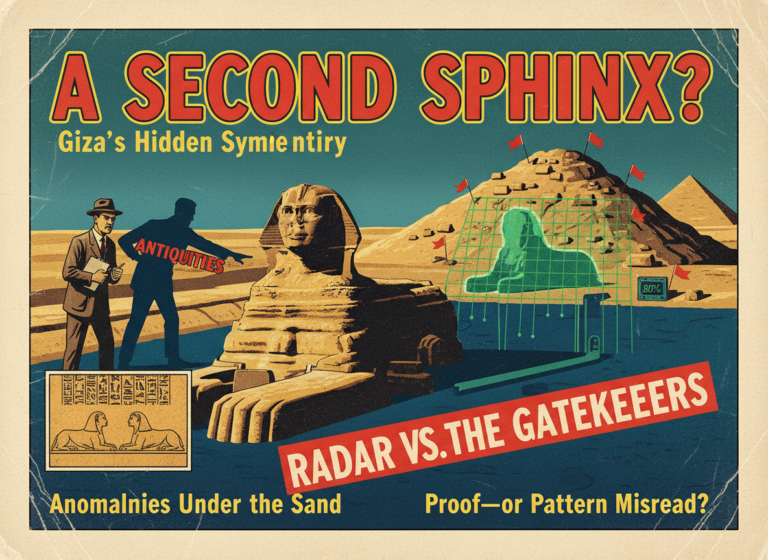
An Italian Radar Engineer Says There Is a Second Sphinx Buried at Giza, and the Evidence Is Not Nothing
Filippo Biondi and his team used satellite-based Synthetic Aperture Radar to scan the Giza Plateau and say they found a buried structure…
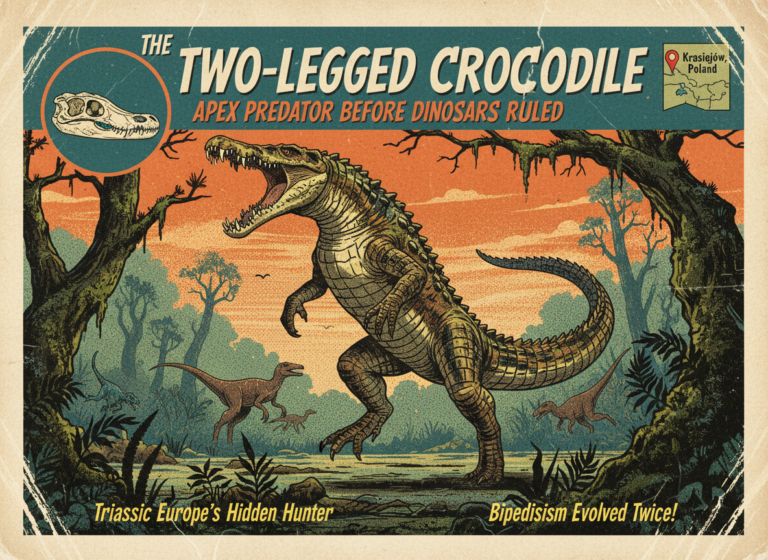
Scientists Found a Crocodile Relative That Walked on Two Legs. It Was the Apex Predator of Its Time, and Nobody Knew It Existed.
A newly described prehistoric species — Proexochokefalos steineri — has been identified from fossils found in what is now Poland. It lived…