Original Story
Congress Gave the Pentagon One Week to Hand Over 46 Classified UFO Videos, and the Clock Is Running

Rep. Anna Paulina Luna’s Task Force set an April 14 deadline for the Department of War to surrender five years of secret military UAP footage, including cockpit video from the Lake Huron shootdown, spherical objects diving near a U.S. submarine, and a formation of four craft over Iran. The list is so specific it could only have come from an insider.
On March 31, 2026, Congresswoman Anna Paulina Luna sent a formal letter to Secretary of War Pete Hegseth. The letter was not a general inquiry about UAP policy. It was not a request for a briefing. It was a list of 46 specific classified video files, with exact operational callsigns, precise dates, and geographic coordinates, and a hard deadline of April 14 for their delivery to Congress.
The deadline is now one week away.
Luna chairs the House Federal Secrets Task Force on the Declassification of Federal Secrets, and she has been doing this long enough to know how these conversations usually go. Agencies get asked vague questions, return vague answers, and the public learns nothing. This letter was built to foreclose that option. The level of operational specificity embedded in the file list, exact callsigns, exact dates, exact locations, makes it functionally impossible for the Pentagon to claim it does not know what is being requested. Someone gave Luna the file names. Someone who knows exactly what AARO is holding and has chosen not to release.
That detail is not a footnote. It is the story.
What the 46 Videos Actually Show
The contents of the list, as detailed in the congressional letter and reporting from multiple defense outlets, read less like a curiosity file and more like a five-year surveillance log of things the United States military cannot explain.
Among the most significant entries:
A 2022 recording captures a formation of four UAP over Iran. The objects are described as moving in formation over airspace that is routinely monitored by U.S. intelligence assets, and the footage was collected from military platforms.
A 2021 clip documents a UAP making what the letter describes as an instant acceleration in Syrian airspace. Instant acceleration in this context means a velocity change inconsistent with any known aircraft or drone, a maneuver that generates no visible propulsion signature and violates the basic physics of conventional aerodynamics.
A 2020 video shows multiple UAP tracked by MQ-9 drones over the Persian Gulf, with objects appearing and disappearing from formation in ways that do not correspond to weather phenomena or equipment error.
A January 2023 clip was captured by a fifth-generation fighter aircraft. The platform and callsign are specified in the letter. The content of the footage has not been publicly described, but the classification level attached to it suggests it is not a weather balloon.
A 2022 recording shows multiple spherical objects entering and exiting the water near a U.S. submarine. This category of incident is documented in military reporting as USO activity, Unidentified Submerged Object, a designation that has existed in naval intelligence files since the Cold War era but has rarely surfaced in public congressional proceedings until now. Objects that transition seamlessly between aerial and underwater environments do not fit any known human or natural category.
And then there is the Lake Huron footage.
The Shootdown Nobody Saw
On February 12, 2023, an Air National Guard F-16 carrying callsign AESIR11 fired an AIM-9X missile over Lake Huron and brought down an unidentified object. That much is publicly confirmed. The Pentagon acknowledged it. The incident was reported by The War Zone and multiple major defense publications. The authenticated cockpit audio from that mission, documented in reporting from The War Zone, has the pilot describing the object as octagonal in shape, unlike any balloon he had ever seen.
The sensor footage and infrared video from that shootdown have never been released. They are on Luna’s list.
This matters because the Lake Huron shootdown was one of four objects taken down by the U.S. military during a roughly one-week period in February 2023, a period that was itself remarkable for how quickly the official narrative shifted. The Biden administration initially said the objects could not be identified. Then, over the following days, varying explanations emerged. The official position settled on benign civilian or commercial objects, possibly a hobby balloon. The pilot who described an octagonal object was not publicly contradicted, but the footage that would resolve the question has remained classified for three years.
AARO Has Been “Less Than Adequate”
The letter’s language about the All-Domain Anomaly Resolution Office deserves attention. Luna writes that the Task Force has found AARO’s responses, when questioned about UAP sightings and provided with data, to be “less than adequate.”
AARO was created by Congress specifically to serve as the central clearinghouse for UAP reporting and investigation. It has a congressional mandate and a legal obligation to report its findings. It reports annually, and its annual reports have consistently maintained that there is no evidence of extraterrestrial origin for any documented UAP incident.
What the letter implies, and what the September 2025 Task Force hearing with whistleblowers made explicit, is that AARO’s public reporting does not reflect what AARO actually holds. Whistleblowers who testified before the Task Force provided the exact file names and callsigns that appear in Luna’s letter. Those witnesses are asserting, under oath and with enough detail to be operationally verifiable, that the office created to be transparent with Congress is sitting on footage it has not disclosed.
Secretary Hegseth, when asked about the UAP file release in February 2026, responded with what has become a widely quoted line: “I did not have that on my bingo card at all.” He pledged full compliance with Trump’s February 19 executive order directing agencies to begin releasing UAP-related materials. As of the writing of this article, no videos have been released, and Hegseth has not provided a specific timeline.
The Pattern Behind the Push
The April 14 deadline does not exist in isolation. It sits inside a longer arc of congressional pressure that has been building for roughly five years, and which has accelerated sharply since Trump’s February disclosure order.
That order came after former President Barack Obama told a podcast host that aliens are “real,” a statement he later qualified to mean only that the statistical likelihood of extraterrestrial life somewhere in the universe is high. The clarification did not slow the news cycle. Within days, Trump posted on social media directing the Secretary of War and other agency heads to begin identifying and releasing government files related to extraterrestrial life, UAP, and UFOs.
The Office of the Director of National Intelligence subsequently posted on social media that files related to “alien and extraterrestrial life, UAPs, and UFOs” would “soon” be declassified. That was in early March. The deadline for that declaration, like most deadlines in this space, has come and gone without visible follow-through.
Luna’s letter is a different kind of pressure. It is not a tweet and it is not a campaign promise. It is a formal congressional demand attached to specific file identifiers, addressed to a cabinet secretary, with a named deadline. The federal government is not required to produce classified materials simply because a congressional representative requests them, but the political cost of refusing a direct congressional demand, during an administration that has publicly committed to disclosure, is higher than it has ever been.
Christopher Mellon, former Deputy Assistant Secretary of Defense for Intelligence and a persistent voice for UAP transparency, has described the interagency review process as genuinely complex. Security officers have to review each document or file line by line, understanding not just the content but the classification rationale, and that process is slow by design. The people capable of doing that work are rare and are already managing competing demands. A two-week deadline for 46 classified video files, each embedded in operational military data, is aggressive by any bureaucratic measure.
Whether aggressive is enough is the open question.
Why the Specific Numbers Matter
The number 46 is not accidental, and 45 of those 46 videos have never been publicly released. Luna’s office confirmed to IBTimes that 45 of the clips are entirely new to the public record. One, presumably the Lake Huron shootdown, is at least partially known through the authenticated cockpit audio. The video from that incident is not.
What makes the list credible, beyond the specificity of the file names, is the inclusion of USO footage. Unidentified Submerged Objects have been discussed at the margins of UAP discourse for decades, but they have almost never appeared in formal congressional requests. The fact that Luna’s letter specifically includes footage of spherical objects entering and exiting the water near a submarine suggests that the whistleblowers who supplied the file names were not selecting for dramatic optics. They were selecting for a comprehensive picture of what AARO has documented.
The framing of the letter is also significant. Luna’s office frames the requested footage not primarily as evidence of extraterrestrial activity, but as a national security question. Objects operating in restricted military airspace and in the vicinity of U.S. naval assets represent a threat to military readiness regardless of their origin. If they are adversary technology, that is a crisis of a different kind than if they are something else entirely. The letter forces the conversation away from the extraterrestrial framing, which is easy to dismiss, and toward the national security framing, which is harder to wave away.
What Happens on April 15
Two scenarios.
The Department of War complies, fully or partially, and some or all of the 46 videos become part of the public record. What those videos show is genuinely unknown. The people most familiar with the UAP evidence space have suggested, in congressional testimony and in public statements, that the footage is compelling. Sean Kirkpatrick, the first director of AARO, has said that people expecting evidence of alien life will be disappointed. Christopher Mellon, who has seen considerably more than Kirkpatrick has disclosed, has said things that suggest the opposite.
Or the deadline passes without full compliance, with national security exemptions cited, partial releases offered, or bureaucratic delay deployed. In that case, the story shifts from what the videos show to why the Pentagon is defying a direct congressional demand during an administration that has publicly committed to transparency. That story is also significant, and it is one that Luna and her Task Force will not let go quietly.
The April 14 deadline falls next Monday. The clock is running.
Sources: UFO News, Congress Sets Deadline for 46 Secret UFO Videos, IBTimes, Congress Demands the Release of 46 Secret UFO Videos From Dept of War, IBTimes UK, UFO Showdown: Pentagon Ordered to Surrender Secret Tic Tac Files, Unexplained Mysteries, Congress Sets New Deadline for Release of 46 Secretive UFO Videos, Conservative Institute, Congress Demands Pentagon Release 46 Classified Military UFO Videos by Mid-April, Charisma Magazine, Very Real Threat: Congress Pushes Pentagon to Release UFO Videos, The War Zone, F-16 Shoots Down Octagonal Object Over Lake Huron

Nick Pope Is Gone, and the Field He Helped Build Has Never Mattered More
The man who ran Britain's government UFO desk, gave the phenomenon its credibility bridge to the mainstream, and spent his final weeks…
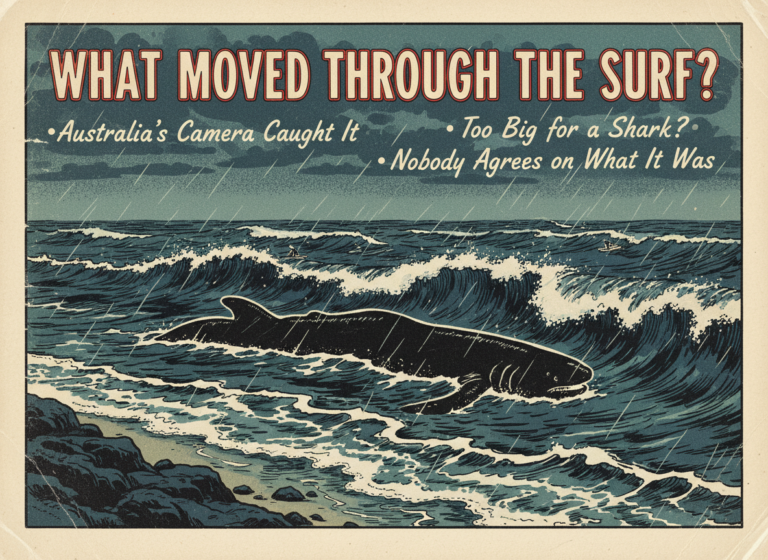
A Surf Cam in Western Australia Caught Something Large Moving Through the Water. Nobody Agrees on What It Is.
Swellnet operates a network of surf monitoring cameras along the Australian coastline. Their camera positioned at Scarborough, Western Australia, was rolling on…

Luis Elizondo Survived a Near-Fatal Motorcycle Crash on St. Patrick's Day. He Had Less Than 50% Chance of Living.
Luis Elizondo, the former Pentagon intelligence officer who ran the Advanced Aerospace Threat Identification Program and became the most prominent public face…

A Game Camera in an Alabama Backyard Photographed a 4-by-8-Foot Glowing Orb Standing Among Deer for Hours. The Deer Didn't Flinch.
A property owner in Wilmer, Alabama, submitted a series of game camera photographs to the National UFO Reporting Center (NUFORC) in late…