Original Story
Scientists Just Named the 45 Best Candidates for an Inhabited Planet. Here Is What They Are Looking For.
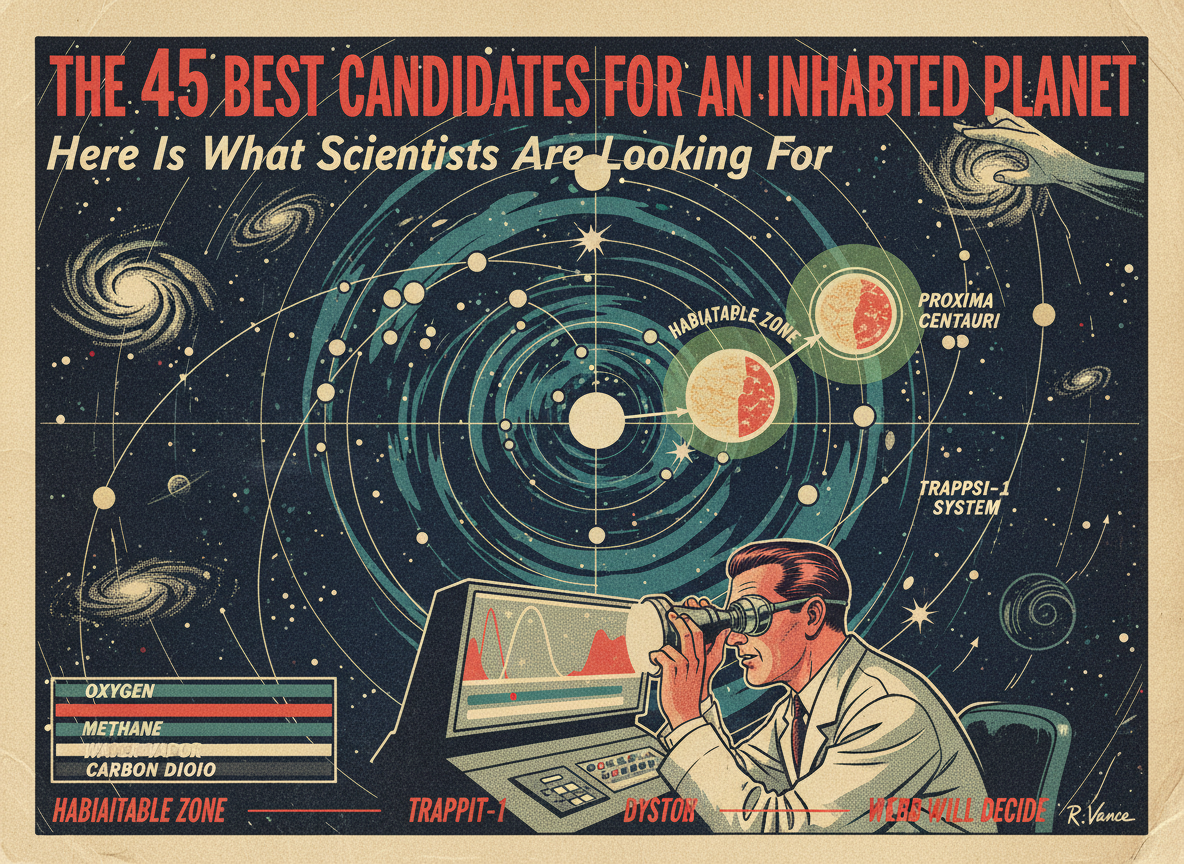
Researchers filtered more than 6,000 known extrasolar worlds down to a shortlist of 45 prime candidates for habitability, selected from a range of factors including position in the parent star’s habitable zone and planetary size. Proxima Centauri b made the list. Several TRAPPIST-1 worlds made the list. The James Webb Space Telescope is already capable of scanning their atmospheres. The question is what it will find.
The number of known extrasolar planets currently stands at more than 6,000. A new study has reduced that to a working shortlist of 45 worlds considered the most likely candidates for conditions that could support life, selected based on measurable habitability criteria.
The research was published this week. Study author Gillis Lowry explained the goal directly: “While it’s hard to say what makes something more likely to have life, identifying where to look is the first key step. So the goal of our project was to say ‘here are the best targets for observation.'”
What Makes the Shortlist
The primary filter is the habitable zone, the range of orbital distances from a parent star where surface temperatures allow liquid water to exist. Liquid water is the central requirement in every current model of life-compatible chemistry. A planet orbiting too close burns. A planet orbiting too far freezes. The 45 worlds on this list orbit in the band where neither is necessarily true.
Secondary factors include planetary size and composition. Rocky worlds in the terrestrial mass range are prioritized over gas giants, which are unlikely to host surface life as currently understood. Stellar type also matters: some stars emit radiation levels hostile to complex chemistry, others are stable enough to sustain habitable conditions over geological timescales.
Proxima Centauri b, which orbits the star closest to our own solar system at just over four light-years away, made the list. Several worlds in the TRAPPIST-1 system, located approximately 40 light-years from Earth, are also included. TRAPPIST-1 has been a sustained focus of habitability research since its seven-planet system was characterized in detail by the Hubble and Spitzer space telescopes.
How We Would Know
The next step is atmospheric analysis. If a planet in the habitable zone has an atmosphere composed of the same gases that life produces on Earth, specifically oxygen, methane, water vapor, and carbon dioxide in proportions that cannot be explained by non-biological chemistry, that would be a significant signal.
The James Webb Space Telescope is already capable of performing this analysis on some of the closer candidates, depending on the planet’s size and orbital geometry. The upcoming Nancy Grace Roman Space Telescope will extend that capability further.
Finding a near-identical atmospheric signature to Earth’s would not be definitive proof of life. The only way to be certain would be direct observation, which for any planet beyond our own solar system is not currently possible with any technology under development.
What the shortlist does is focus the question. Of more than 6,000 candidates, these 45 are where the search should be concentrating. Given that asteroid samples have confirmed all five DNA and RNA nucleobases formed in space before Earth existed, and that 95 percent of surveyed scientists in a Harvard study considered extraterrestrial life more probable than not, the question of which world to look at first is not a fringe question anymore.
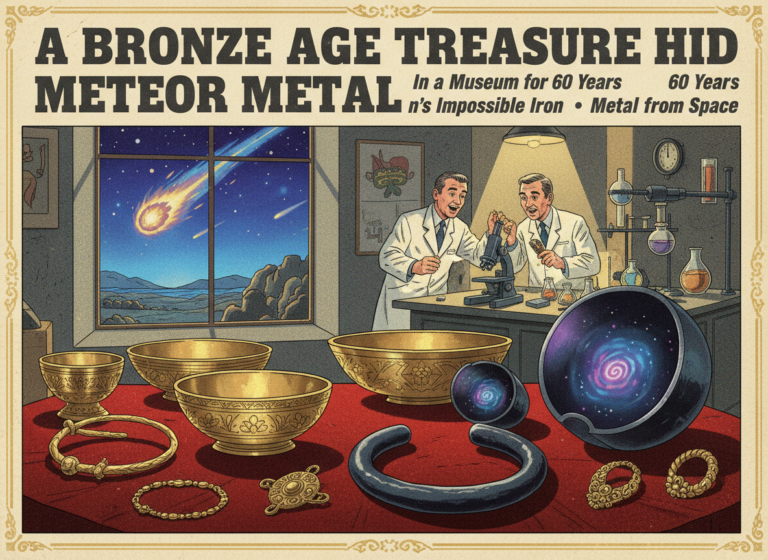
A Bronze Age Spanish Treasure Sat in a Museum for 60 Years. Two Pieces of It Were Made from a Meteorite. Nobody Knew.
The Treasure of Villena — 66 objects found in 1963 near Alicante, Spain, dating to between 1400 and 1200 BCE — includes…
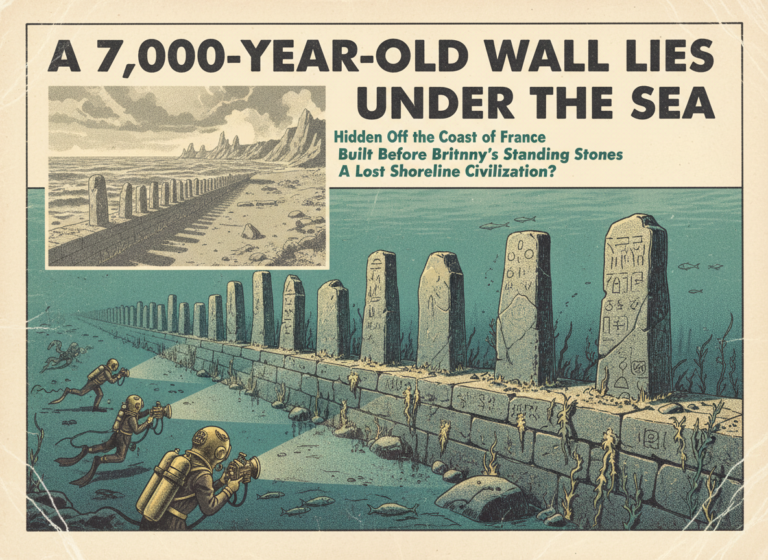
There Is a 7,000-Year-Old Stone Wall Sitting on the Ocean Floor off the Coast of France. Nobody Knew It Was There Until 2017.
A 120-meter granite wall built approximately 7,000 years ago has been confirmed beneath nine meters of water off the western tip of…
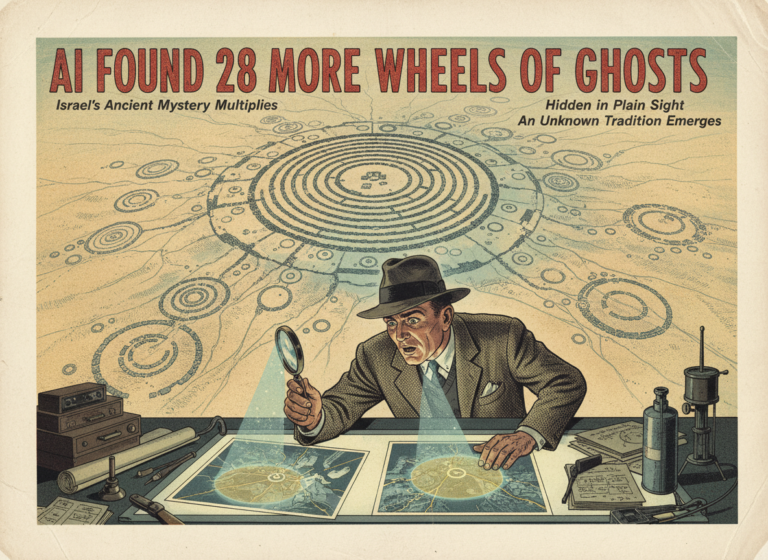
Israel's "Wheel of Ghosts" Has Been a Mystery Since 1968. AI Just Found 28 More of Them Hidden in Plain Sight.
Rujm el-Hiri — the Wheel of Ghosts — is a massive stone structure in the Golan Heights built from 40,000 tons of…
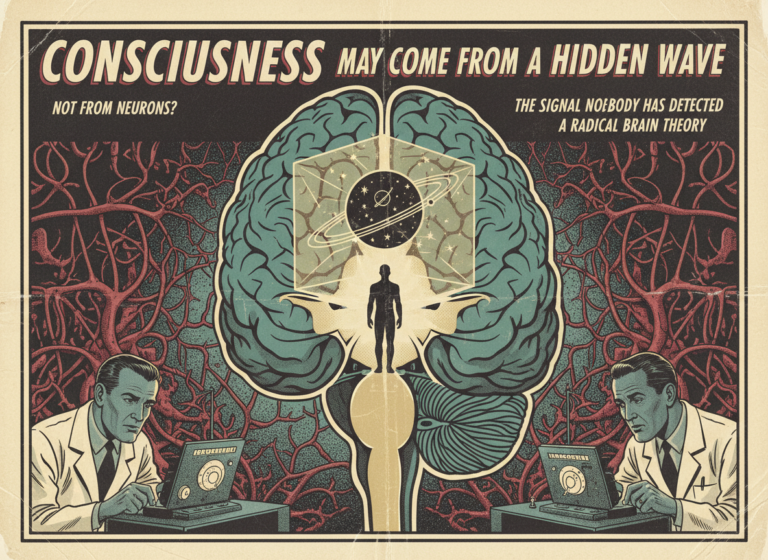
A New Theory Says Consciousness Is Not Produced by Neurons. It Comes from a Hidden Wave in the Brain That Has Never Been Detected.
A peer-reviewed paper published in Frontiers in Psychology in early 2026 proposes that conscious experience does not arise from neural computation at…